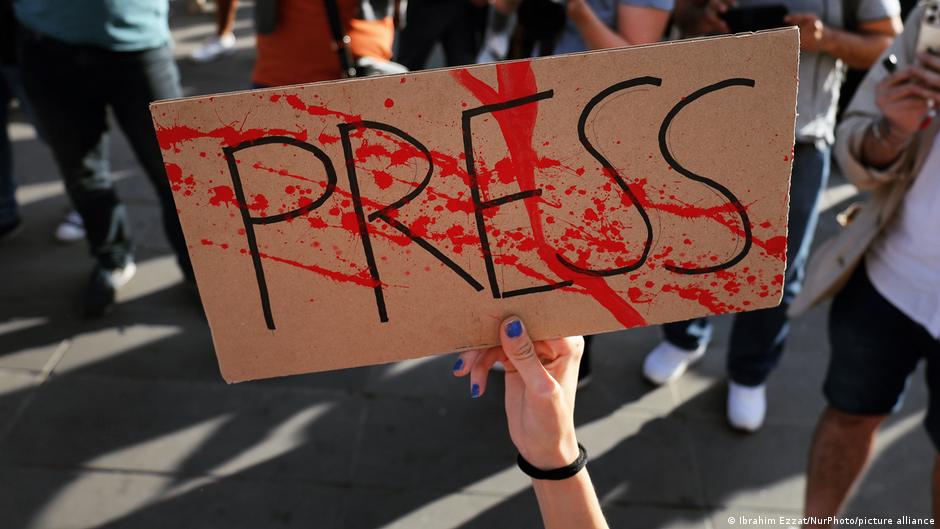
The 2026 RSF World Press Freedom Index shows press conditions worsening globally, with about three-fourths of the 180 countries evaluated now rated "problematic" or worse and only 17 countries improving since 2013. The article highlights political attacks on journalists in countries including Poland, Slovakia, Argentina and the United States, as well as conflict-driven deterioration in places such as Gaza, Iraq, Sudan, South Sudan and Yemen. While the story is broad and structural rather than market-specific, it underscores rising governance and rule-of-law risk for media and related industries.
The economically relevant signal is not the headline decline in press freedom itself, but the regime transition it implies for information quality. Once governments normalize intimidation of media, the market loses an early-warning mechanism for corruption, procurement abuse, and policy reversals; that raises the probability of abrupt repricing in sovereign risk, FX, and domestic equities, especially in mid-cap financials, infrastructure, and state-adjacent names that depend on clean disclosure. In practice, the first-order equity impact is modest, but the second-order impact is higher cost of capital and a wider governance discount that can persist for years. The fastest deterioration appears in countries where leadership incentives favor grievance politics and centralized control. That tends to be bullish for incumbents with direct state access and bearish for local independent media, consumer platforms, and any business exposed to licensing, permits, or tax discretion. It also raises tail risk for event-driven positioning: a press-hostile administration often precedes more aggressive moves on courts, regulators, and election administration, which can create discontinuous selloffs rather than gradual multiple compression. The contrarian angle is that markets usually underprice the persistence of institutional erosion until it shows up in earnings quality or capital flows. That creates a window to buy protection before the narrative becomes consensus: journalists under pressure are an imperfect but useful proxy for broader rule-of-law drift. The cleanest expression is to short or underweight markets where governance is deteriorating faster than macro data suggests, while preferring jurisdictions where civil society and institutional checks still constrain policy volatility. For global investors, the actionable takeaway is to treat press-freedom deterioration as a leading indicator for sovereign and currency stress rather than a pure ESG story. The likely time horizon is 6-18 months for market impact, but the reversal catalyst is political: an election, coalition collapse, or judicial constraint that restores media independence. Until then, the risk is that the deterioration compounds quietly and then gaps wider during a shock.
AI-powered research, real-time alerts, and portfolio analytics for institutional investors.
Request DemoOverall Sentiment
moderately negative
Sentiment Score
-0.45
