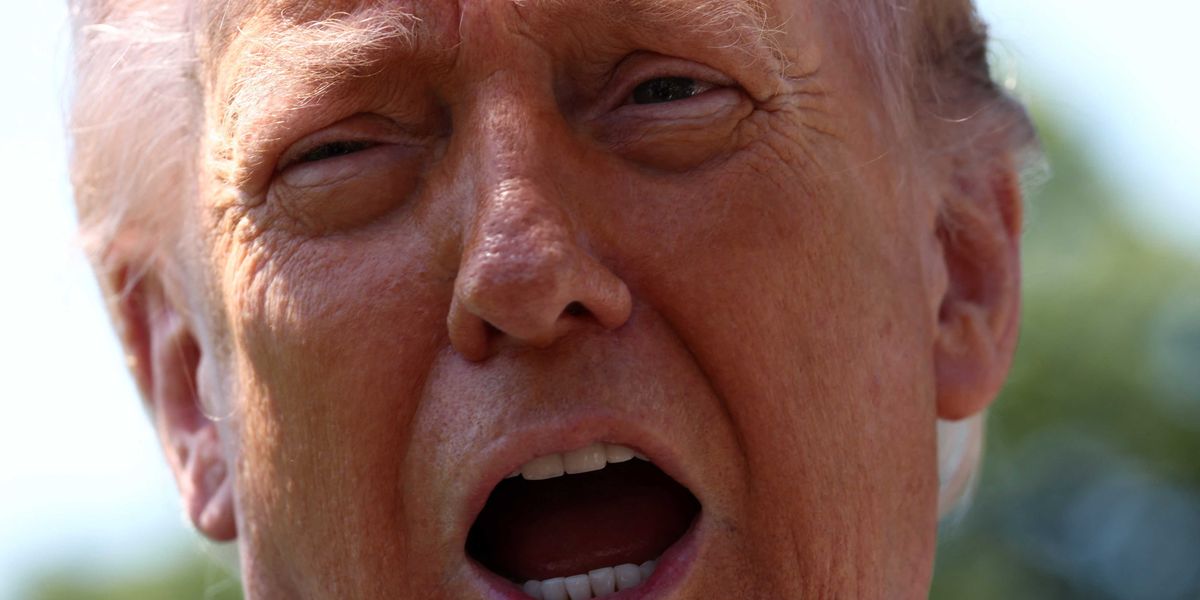
Republicans are reportedly worried Trump is distracting from his economic message while polling near 37%, raising concerns about a potential House wipeout heading into the fall. The article says the administration’s narrative is being complicated by gas prices around $5, the Iran war, and the push to defend the "Big Beautiful Bill," which cut taxes but reduced Medicaid and food assistance by over $1 trillion over the next decade. The likely market impact is limited, but the political backdrop is negative for policy certainty and sentiment around consumer-facing spending and energy-related pressures.
The market implication here is not “who wins the messaging war,” but that a deteriorating approval backdrop raises the probability of policy drift and fiscal improvisation. If the White House leans harder into negative campaigning, it implicitly concedes weaker growth optics and lower consumer confidence, which argues for a broader risk-off tilt in domestically sensitive names rather than a clean sector-specific trade. The second-order effect is that retailers, small-cap consumer discretionary, and local/regional credit exposures should underperform if households increasingly internalize higher taxes, weaker transfer support, and persistent energy pressure. Energy is the most immediate transmission channel. Elevated gasoline prices act like a regressive tax with a fast pass-through into real spending, so the biggest loser is not just consumers but any company reliant on near-term traffic, basket size, or financing-sensitive demand. That creates a window where staples, discount retail, and select defense names can outperform on relative safety, while housing-related and lower-income discretionary exposure remain vulnerable over the next 1-3 months if fuel stays near current levels. The contrarian angle is that political fear often produces a late-cycle policy pivot. If polling worsens enough, expect attempts to blunt the pain via rhetoric, energy headlines, or targeted fiscal gestures, which could cap the downside in oil-linked assets and create reflexive rallies in consumer names. The consensus may be overestimating how linear the negative consumption effect is: affluent consumers absorb $4-$5 gas, but the marginal damage is concentrated in lower-income cohorts, so the trade is less “broad recession” and more “K-shaped spending compression.”
AI-powered research, real-time alerts, and portfolio analytics for institutional investors.
Overall Sentiment
moderately negative
Sentiment Score
-0.35
