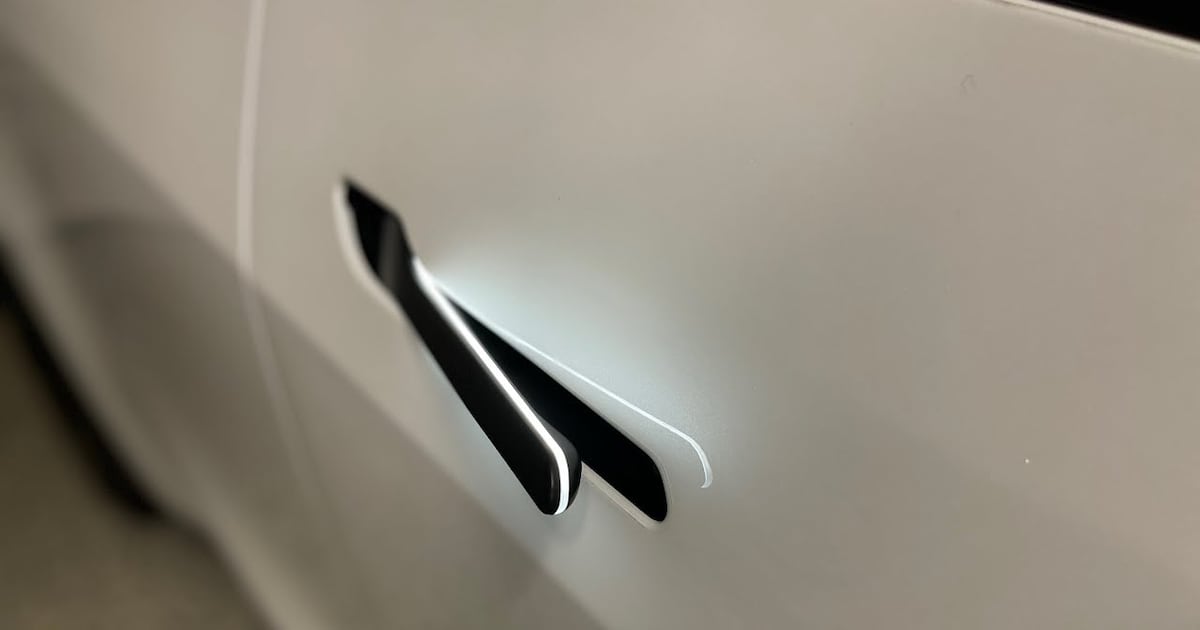
Korean authorities have raised safety concerns about embedded electronic door handles, prompting domestic alarm and international probes that could lead to investigations, inspections or recalls. The issue increases regulatory and reputational risk for affected automakers and suppliers, with potential for production disruption, retrofit costs and contingent liabilities that warrant close monitoring of company-specific exposure and potential impacts on supply chains.
Market structure: OEMs that heavily use embedded electronic door handles (notably Hyundai Motor Co — HYMTF — and Kia — KIMTF) are immediate losers because recalls or mandated redesigns create direct warranty/recall costs (comfortably $200–$800m for a large OEM; ~0.5–2% of revenue) and push buyers to conservative designs. Winners include low‑tech latch/mechanical suppliers and aftermarket players (Magna MGA, parts distributors) who can capture replacement demand and gain pricing power if OEMs cut features. Cross‑asset: expect 3–7bp widening in CDS for larger Korean OEMs, 1–3% near‑term KRW weakness vs USD on sentiment, and elevated equity implied vol for affected autos for 30–90 days.
Risk assessment: tail scenarios include (A) a multi‑jurisdiction recall across EU/US/KR leading to 5–15% unit downgrades over 6–12 months and litigation >$1bn; (B) a software OTA fix that obviates hardware replacement, limiting losses to <0.2% revenue. Immediate (days) risk is headline‑driven equity/vol spikes; short term (weeks–months) is regulator findings and recall decisions; long term (quarters–years) is redesign capex and permanent share shifts. Hidden dependency: many systems rely on suppliers of sensors/firmware — a software patch could neutralize hardware winners.
Trade implications: tactical: buy 3‑month 25‑delta puts on HYMTF sizing 1.5–2% notional to cap downside while avoiding long‑term allocation; pair trade long MGA (1–2% position) vs short HYMTF (1% equity) as relative value — MGA benefits from replacement demand. Use options: buy strangles on HYMTF 1–3 month tenors to capture skew; hedge FX by buying 1–3% USD/KRW forward protection if exposure to Korean equities.
Contrarian angles: consensus may overstate permanent demand loss for embedded handles — if regulators allow phased fixes, affected OEMs' stock moves will be overdone (20–30% IV spike). Historical parallel: 2014 Takata airbag scare hit OEM equity deeply then recovered over 24–36 months after replacements and limited brand decay; similar playbook could create a buying window 3–6 months out. Watch for OTA remediation announcements which would flip winners/losers quickly.
AI-powered research, real-time alerts, and portfolio analytics for institutional investors.
Request DemoOverall Sentiment
moderately negative
Sentiment Score
-0.50
