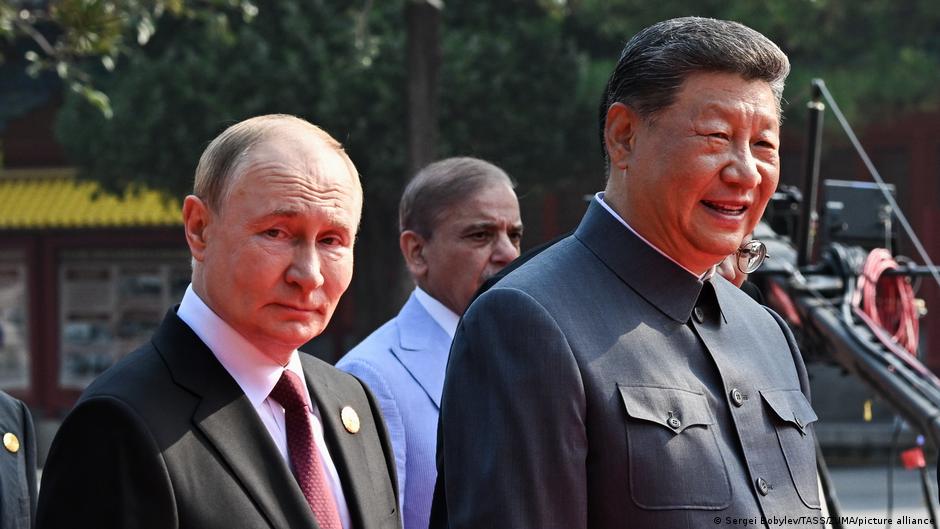
Russia’s dependence on China has intensified, with China buying over €319 billion of Russian fossil fuels since the war began and supplying roughly 90% of Russia’s sanctioned technology imports in 2025. Bilateral trade is increasingly yuan-based, with more than 99% of settlements reportedly in rubles and yuan, but this creates higher borrowing costs and greater leverage for Beijing over Moscow. The article highlights expanded energy, technology and payment-system dependence as sanctions continue to constrain Russia’s options.
Russia’s bargaining power is deteriorating even if headline trade volumes stay elevated. The key second-order effect is that China is no longer just a buyer of discounted commodities; it is becoming the critical choke point for Russia’s industrial base, payments plumbing, and military replenishment cycle. That means the Kremlin’s optionality shrinks over time: any attempt to diversify away from China would require rebuilding logistics, financing, and tech supply chains that sanctions have already broken.
For markets, the more important implication is not Russia exposure per se, but the precedent for sanctioned-state adaptation. Beijing has shown it can route around export controls with third-country networks and local-currency settlement, which makes enforcement a moving target rather than a one-time event. Over a 6-18 month horizon, this raises the premium on firms that provide sanctions screening, trade finance compliance, alternative routing, and non-China industrial substitution — the beneficiaries of a more fragmented trade regime.
The contrarian takeaway is that the market may be overestimating the durability of the Russia-China alignment as a strategic bloc. China’s incentive is transactional: it wants discounted energy and leverage, but it also has too much to lose from a direct rupture with the US/EU if trade and tech negotiations stabilize. A modest thaw in US-China relations would likely cap the upside in Russia-linked energy volumes and could even tighten Beijing’s enforcement discipline on dual-use exports to avoid secondary-sanctions exposure.
Tail risk cuts both ways: a Taiwan crisis would sharply increase the strategic value of overland energy corridors and accelerate pipeline deals, while also forcing China to choose between sanction-risk mitigation and Russian support. Near term, watch for any concrete movement on new pipeline capacity or settlement terms; those would be the clearest signal that Beijing is deepening control over Russia’s export base rather than merely extracting rent.
AI-powered research, real-time alerts, and portfolio analytics for institutional investors.
Request DemoOverall Sentiment
moderately negative
Sentiment Score
-0.35
