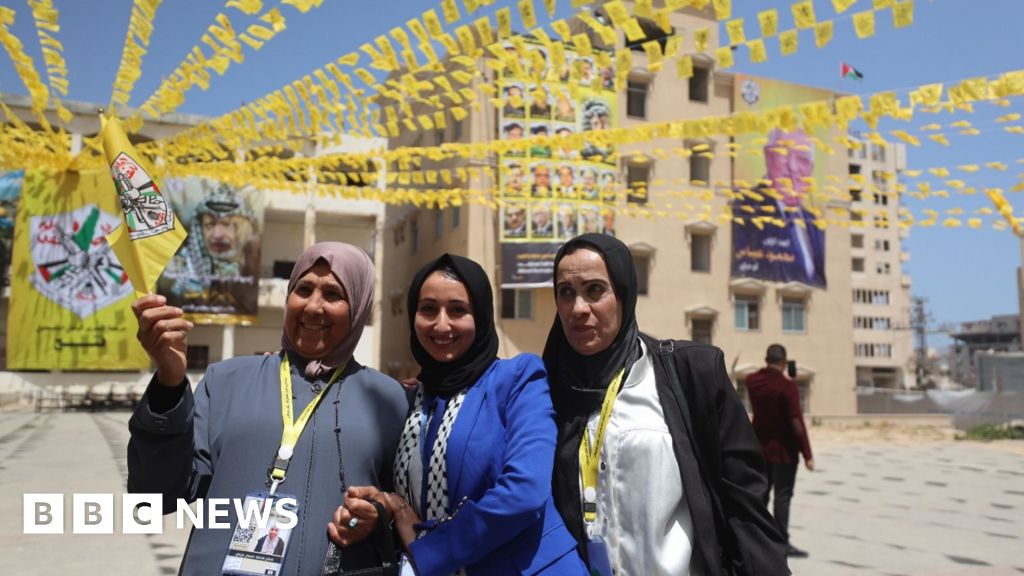
Fatah is holding its first major conference in a decade amid deep public discontent, with polls showing 80% of Palestinians want President Mahmoud Abbas to resign. The article highlights succession tensions, alleged cronyism, and governance concerns as Abbas promises elections without a timeline and the PA faces a roughly $5bn tax-transfer shortfall. Broader instability from the Gaza war, settlements, and weakened PA legitimacy adds to the negative backdrop, though direct market impact is limited.
This is less a headline on Palestinian politics than a signal that the West Bank status quo is getting more brittle without a clean successor framework. In market terms, the key second-order effect is not a direct asset read-through but a rising probability of administrative dysfunction: delayed wages, weaker tax collection pass-through, and more frequent security coordination breakdowns all raise tail risk for localized unrest. That matters because the PA is already operating like a distressed quasi-sovereign, so any added legitimacy shock can translate quickly into payroll stress, protest risk, and donor fatigue. The most important medium-term catalyst is succession. A managed transition could temporarily stabilize the system, but a contested handoff would likely produce a 3-6 month period of policy drift, internal factional competition, and sharper friction with donors over governance benchmarks. The appearance of family succession is especially toxic because it lowers confidence that reform pledges will be credible enough to unlock external support or tax-transfer normalization. From a regional risk perspective, this adds modest but non-trivial upside to Israel risk premia and a larger latent risk to Jordan and Lebanon via spillover psychology rather than direct military escalation. The market is probably underpricing how fast fiscal stress can compound into security stress in low-legitimacy systems: once civil servants are paid irregularly for multiple months, compliance, policing, and local mediation weaken nonlinearly. That is a slow-burn catalyst, but it can reprice abruptly if protests, strikes, or donor suspensions cluster. The contrarian view is that the consensus may be overstating immediate regime change risk and underestimating the PA’s coercive and patronage capacity. In the near term, survival incentives usually win over rupture, so the base case is continued muddle rather than collapse. That said, the longer the reform timeline remains vague, the more optionality shifts toward a disorderly succession later this year or next.
AI-powered research, real-time alerts, and portfolio analytics for institutional investors.
Request DemoOverall Sentiment
strongly negative
Sentiment Score
-0.55
