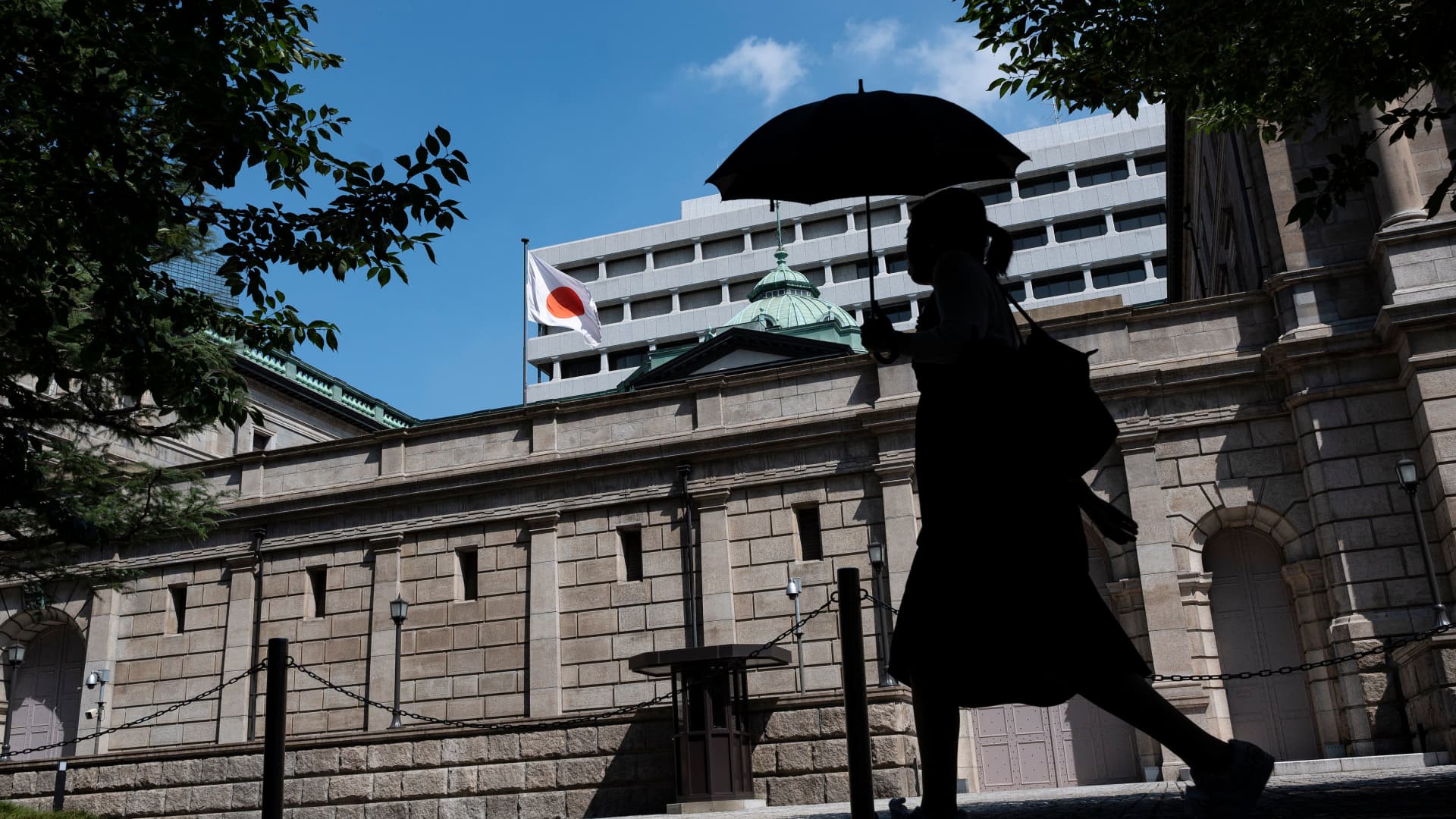
The Bank of Japan (BOJ) maintained its benchmark interest rate at 0.5% and announced a slower pace of government bond purchase reductions starting April 2025, decreasing by ¥200 billion per quarter instead of ¥400 billion. This decision comes amid rising growth risks, with Japan's GDP contracting 0.2% in the first quarter and inflation remaining above the BOJ's 2% target for over three years, driven partly by factors like rice shortages. BOJ Governor Ueda indicated further rate hikes are contingent on greater confidence in underlying inflation approaching 2%.
The Bank of Japan maintained its benchmark interest rate at 0.5%, a decision aligned with economists' forecasts, but signaled a more cautious approach to monetary normalization by announcing a slowdown in the pace of its government bond purchases starting April 2025. While the specifics of this slowdown were not detailed in the announcement, the BOJ reiterated its existing framework to continue reducing monthly Japanese Government Bond (JGB) purchases by approximately ¥400 billion per quarter, aiming for holdings of around ¥3 trillion by March 2026. Subsequently, the pace of reduction is set to decrease further to ¥200 billion per quarter from April 2026 through March 2027, with an interim assessment of this plan scheduled for its June 2026 monetary policy meeting. This policy stance comes against a challenging economic backdrop: Japan's GDP contracted by 0.2% in the quarter ending March compared to the preceding period, marking the first such decline in a year, primarily driven by falling exports. Simultaneously, inflation remains persistently high, with the country's headline inflation rate for April recorded at 3.5%, significantly above the BOJ's 2% target for over three years, partly exacerbated by supply-side issues such as a rice shortage leading to price surges. BOJ Governor Kazuo Ueda has indicated that any future interest rate hikes are contingent upon increased conviction that underlying inflation will sustainably approach or hover around the 2% target, underscoring the central bank's cautious navigation between managing inflation and addressing rising economic growth risks.
AI-powered research, real-time alerts, and portfolio analytics for institutional investors.
Overall Sentiment
moderately negative
Sentiment Score
-0.40
