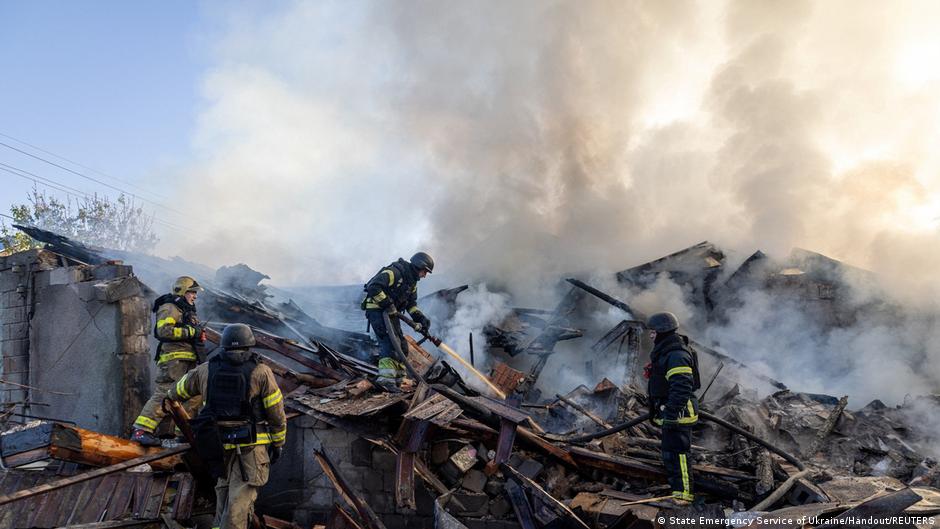
Russia launched more than 500 drones and over 20 ballistic and cruise missiles overnight, killing four people in northern Ukraine and injuring more than two dozen civilians, while Ukraine said Russian attacks also damaged port infrastructure in Izmail. Moscow then began three days of nationwide nuclear weapons drills involving thousands of troops from May 19 to 21, heightening geopolitical risk. The escalation in cross-border attacks and nuclear exercises keeps the war front center and increases risk to regional infrastructure, logistics, and energy assets.
The immediate market read is not “more war” in the abstract, but a higher probability of sustained disruption to the Black Sea logistics stack and a larger tail on European risk premia. The combination of cross-border drone saturation and nuclear signaling raises the odds that insurers, shippers, and port operators begin repricing routes even without a formal blockade; that tends to hit freight rates, marine insurance, and working-capital cycles before it shows up in headline commodity prices. The second-order winner is not only defense primes, but the entire counter-UAS and infrastructure-hardening ecosystem: radars, electronic warfare, secure comms, perimeter sensors, and power backup. These programs are budgetable now because they are framed as homeland resilience rather than offensive procurement, which makes them sticky over a multi-year horizon even if front-line activity cools. On the loser side, any asset with thin margin and high asset-turn dependence on regional transport — especially agribusiness, bulk shipping, and midstream/logistics nodes exposed to the Black Sea corridor — faces a risk of intermittent volume losses and higher insurance deductibles. Energy is the cleaner near-term expression, but the trade is asymmetric by asset class. Physical disruption risk supports diesel, power, and refined-product spreads more than headline crude, because local infrastructure hits and export friction can tighten middle distillates while macro demand expectations stay weak. The contrarian miss is that nuclear drill headlines may be more about deterrence management than imminent escalation; if so, the market can fade the geopolitical premium quickly unless there is a sustained increase in strikes against export infrastructure over the next 2-6 weeks.
AI-powered research, real-time alerts, and portfolio analytics for institutional investors.
Request DemoOverall Sentiment
strongly negative
Sentiment Score
-0.70
