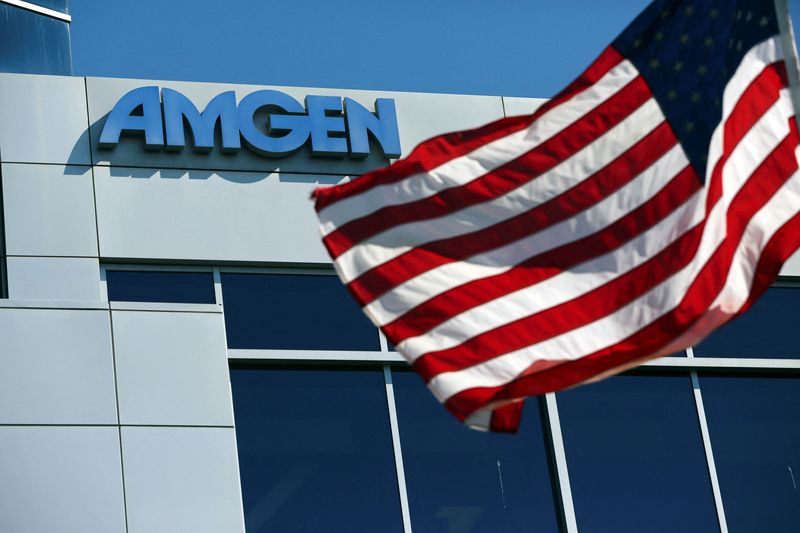
Viridian Therapeutics shares fell 25.2% after Amgen reported positive Phase 3 TEPEZZA OBI results showing ~77% proptosis response versus 19.6% for placebo at 24 weeks. TEPEZZA OBI delivered a 76.7% absolute proptosis response and a 57% placebo-adjusted improvement, versus elegrobart’s 54% (36% placebo-adjusted) Q4W and 63% (45% placebo-adjusted) Q8W, with safety consistent with known TEPEZZA IV profile. Dosing convenience favors Viridian (as few as 4 subcutaneous injections over 24 weeks) versus Amgen’s on-body injector Q2W (12 doses), and analysts maintained ratings/price targets on Viridian (Stifel Buy $48; RBC Outperform $42; Leerink Outperform $50).
Amgen’s read of superior on-trial efficacy will reprice the clinical hierarchy, but commercial outcomes will be determined by payer math, administration burden and device logistics more than headline percentages. Expect 6–18 month windows where formulary committees and PBMs parse total cost of care (drug + clinic visits + device disposables) — this is where Viridian’s lower-touch dosing can negate a pure efficacy delta.
Operationally, Amgen’s on-body injector creates a new supply chain vector: manufacture of single-use pump housings, sterilization capacity and training for Q2W administration; any kink in scale-up or sterilization validation can create a 3–9 month rollout lag and transient uptake softness. Conversely, a lower-frequency autoinjector ramps with fewer moving parts, making real-world adherence and lower service costs a second-order commercial moat for Viridian if payers prize convenience.
Key catalysts to watch are the first payer coverage decisions and real-world safety signals (injection-site or device malfunctions) over the next 6–12 months — either can sharply shift market share. M&A is a realistic 12-month tail: a sizable sell-off in VRDN could attract a strategic buyer looking to consolidate modalities; equally, a device failure would materially impair Amgen’s pricing leverage despite its scale.
The market reaction appears driven by a headline efficacy comparison rather than an integrated commercialization model; that makes the current dislocation actionable but asymmetric — downside for Viridian exists if payers prioritize pure efficacy, while upside is underappreciated if convenience and total cost of care drive uptake.
AI-powered research, real-time alerts, and portfolio analytics for institutional investors.
Request DemoOverall Sentiment
mixed
Sentiment Score
0.05
Ticker Sentiment
