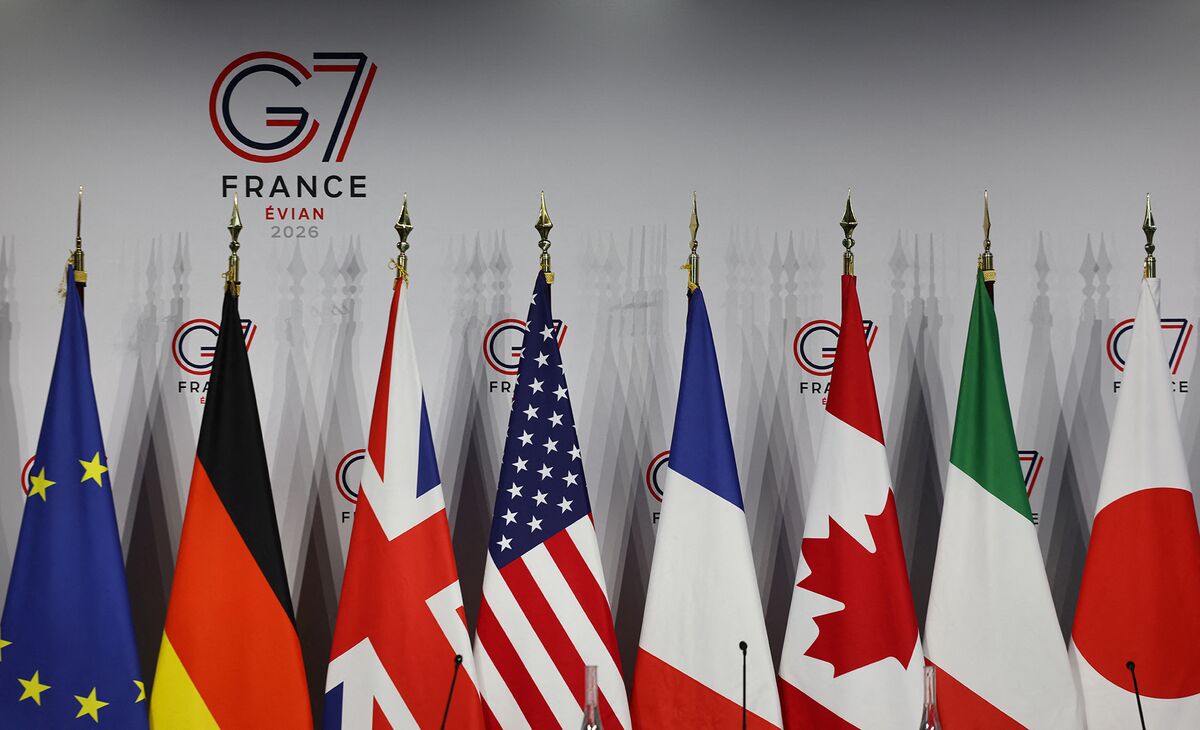
France revoked South Africa's invitation to the G7 leaders' summit in Évian-les-Bains (June 15-17) after pressure from the United States, the office of President Cyril Ramaphosa said. The development highlights bilateral diplomatic tensions and elevated geopolitical risk perceptions for South Africa, but is unlikely to have a material market impact beyond localized emerging-market sentiment shifts.
A deterioration in high-level diplomatic ties between a middle-power and Western capitals raises political-risk premia that typically show up first in FX, sovereign credit and equity flows rather than headline geopolitics. Expect a discrete move in ZAR and SA local yields in the near-term (days–weeks): a 50–150bp widening in 10y spreads and a 5–15% ZAR depreciation are plausible if market participants re-price access to Western capital and export-insurance risk.
Second-order supply effects matter: South Africa supplies concentrated volumes of PGMs and critical-minerals inputs to auto catalysts and certain industrial processes, so sustained diplomatic divergence that nudges procurement toward non-Western partners can tighten market access and raise risk premia on these commodities over 6–18 months. That creates an asymmetric setup where miners with operational leverage in PGMs stand to benefit from price shock while finance-dependent corporates and service providers to international trade flow suffer.
Policy reversal is the primary catalyst to unwind moves — quiet diplomacy, trade concessions, or a shift in domestic politics can normalize flows within 1–3 months. Conversely, escalation (reciprocal measures, exclusion from export-control forums, or a visible pivot to alternate security partners) could entrench decoupling and extend impacts into multi-year contract realignments and supply-chain re-routing.
Given the ambiguity, trade implementations should prefer defined-risk option structures and cross-asset pairs that capture both FX/credit repricing and commodity upside while protecting against rapid policy backtracks.
AI-powered research, real-time alerts, and portfolio analytics for institutional investors.
Request DemoOverall Sentiment
neutral
Sentiment Score
0.00
