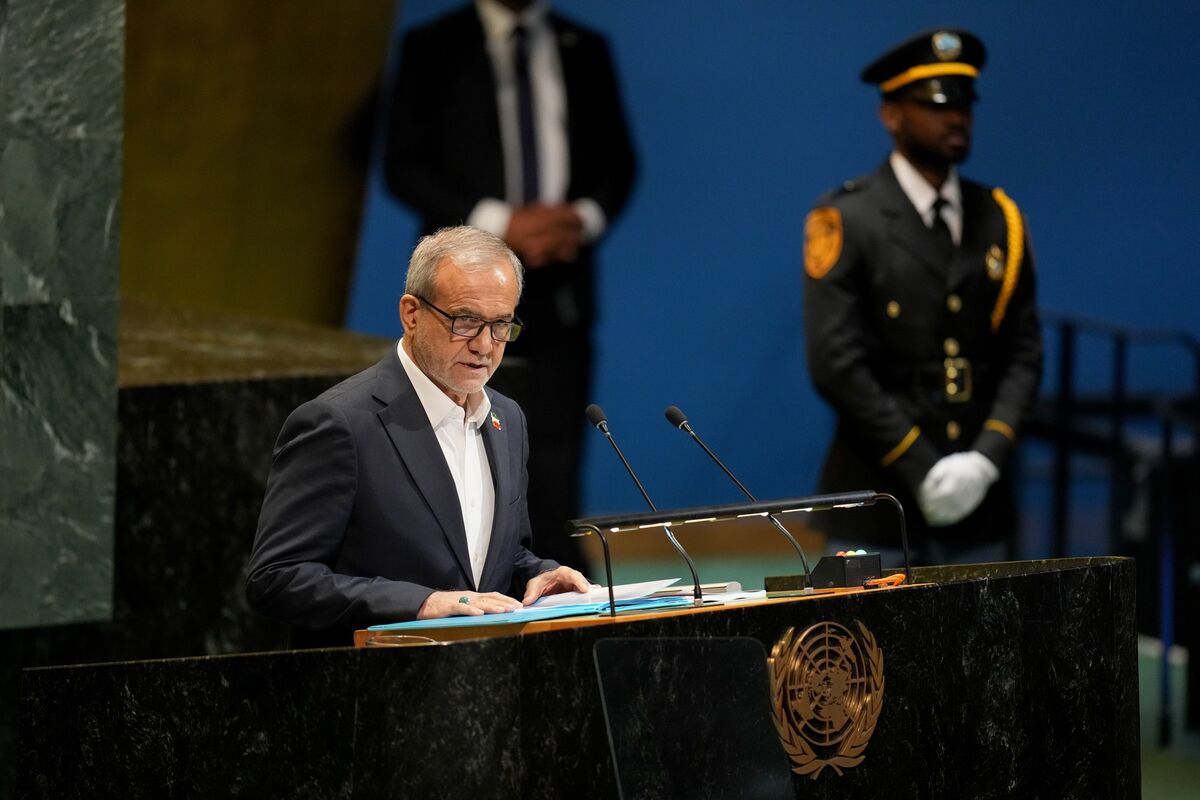
Iranian President Masoud Pezeshkian affirmed the country's commitment to the Nuclear Non-Proliferation Treaty (NPT), stating it will not withdraw despite the looming threat of renewed UN sanctions and internal pressure for a more aggressive stance. This declaration, made in New York, signals a potential de-escalation of nuclear proliferation concerns, which could influence geopolitical stability and related market sensitivities.
Iranian President Masoud Pezeshkian's public affirmation that Iran will remain a party to the Nuclear Non-Proliferation Treaty (NPT) serves as a key de-escalatory signal amid heightened geopolitical tensions. This statement, delivered in New York, is particularly significant as it directly counters the looming threat of renewed UN sanctions and a domestic push from lawmakers advocating for a more aggressive nuclear posture. While not a resolution to the underlying conflict, the commitment to the NPT framework suggests a preference for diplomatic engagement over escalating confrontation. This development is viewed as mildly positive for market stability, as it can temporarily reduce the geopolitical risk premium that influences global asset prices, most notably in the energy sector. The moderate market impact score of 0.5 underscores that while the statement is stabilizing, the situation remains fluid and subject to the material actions of both Iran and international bodies regarding sanctions.
AI-powered research, real-time alerts, and portfolio analytics for institutional investors.
Request DemoOverall Sentiment
mildly positive
Sentiment Score
0.25
