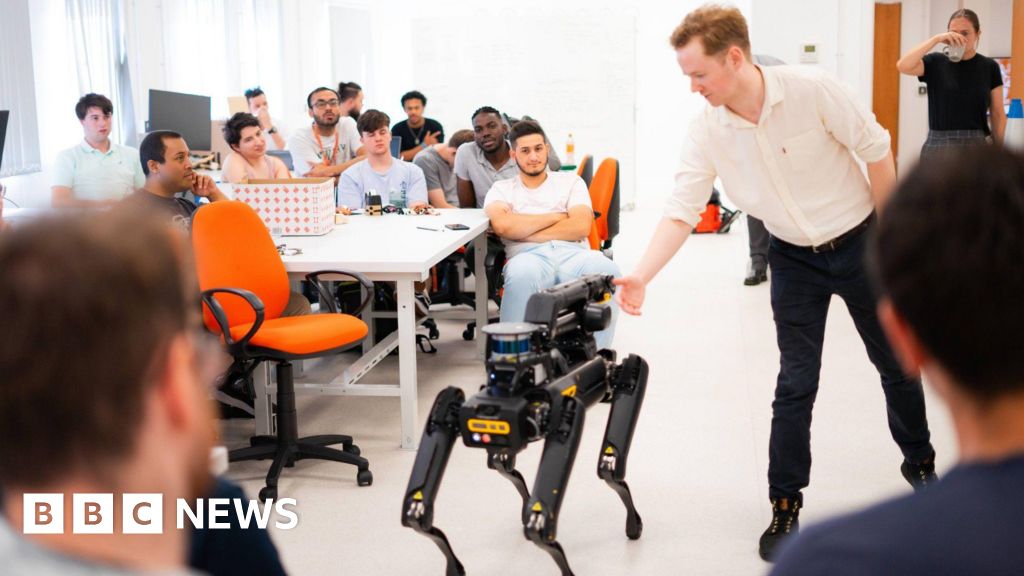
The New Model Institute for Technology and Engineering (NMITE) has partnered with the UK Armed Forces to launch a three-year MEng in Autonomous Systems with a strong focus on drone technologies, admitting its first students in September 2026; the programme is explicitly positioned to train the “next generation of drone warfare specialists” while also supporting civilian, commercial and humanitarian uses. Senior military figures including Head of the Armed Forces Sir Richard Knighton and Armed Forces Minister Al Carns framed the degree as a response to a “new era of threat” and a way to bolster defence lethality and technical skills. Led by Prof Alexandru Stancu, an experienced robotics and AI researcher, NMITE says the course will quickly fill national skills gaps, attract investment to Herefordshire and underpin a growing local defence ecosystem.
The New Model Institute for Technology and Engineering (NMITE) has partnered with the UK Armed Forces to launch a three-year MEng in Autonomous Systems focused on drone technologies, with the first intake scheduled for September 2026, explicitly framed to "train the next generation of drone warfare specialists" by senior military leaders including Sir Richard Knighton and Armed Forces Minister Al Carns. The programme is designed to serve defence priorities while also targeting civilian, commercial and humanitarian applications, positioning the degree as a dual-use talent pipeline rather than a single-purpose military course.
Academic lead Prof Alexandru Stancu brings more than 25 years' robotics, AI and autonomous-systems experience and a track record at the University of Manchester and Manchester Robotics Ltd, lending technical credibility to NMITE's rapid curriculum deployment claim made by CEO James Newby. Local political backing from MP Jesse Norman highlights anticipated regional economic benefits and a planned defence ecosystem in Herefordshire that could attract supply-chain investment and specialized hires.
The announcement matters because it addresses a stated national skills gap in autonomous technologies and may accelerate talent-driven R&D and procurement cycles for UK defence and dual-use drone industries; however, timelines to first graduates (2029 for a three-year MEng starting 2026) and scale, as well as potential public or regulatory scrutiny of military-focused drone training, represent execution and reputational risks investors should monitor.
AI-powered research, real-time alerts, and portfolio analytics for institutional investors.
Request DemoOverall Sentiment
mildly positive
Sentiment Score
0.25
Ticker Sentiment
