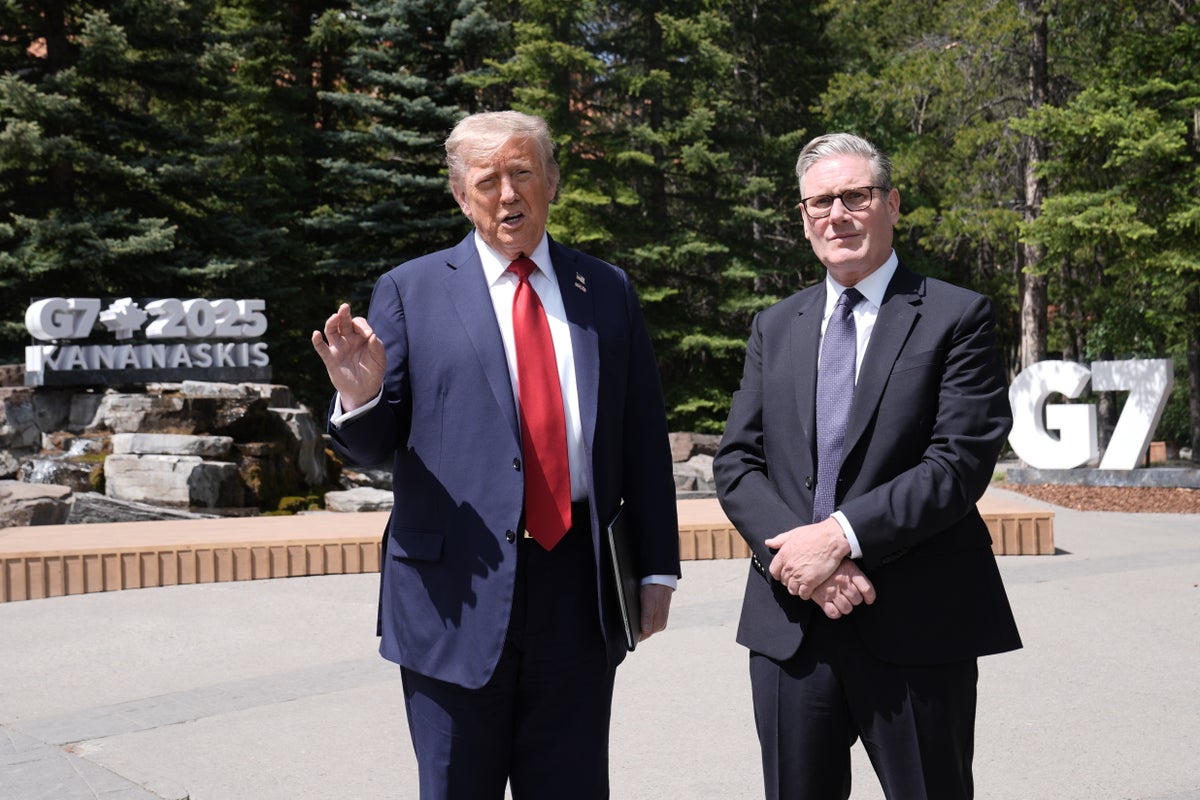
Amid escalating tensions between Israel and Iran, the UK is urging the US to de-escalate the situation and avoid direct military action against Iran, following President Trump's hints of potential US airstrikes. UK officials emphasize the need for restraint and diplomacy, citing concerns about Iran's nuclear program and the risk of regional conflict akin to Gaza, while Israel's defense minister stated that Iran's leader "cannot continue to exist" after missiles struck a hospital in southern Israel.
The geopolitical landscape in the Middle East is experiencing heightened tension, marked by direct exchanges of fire between Israel and Iran and significant concerns over potential US military intervention. UK officials, including Sir Keir Starmer’s spokesman and Foreign Secretary David Lammy, are actively urging the US, under President Trump, to prioritize de-escalation and diplomacy, warning against actions that could "ramp up the situation." This diplomatic pressure arises amidst President Trump's statements that he "may" authorize strikes on Iran and that "the next week is going to be very big," leading to civilian concern in Tehran. The conflict has already seen Israeli airstrikes targeting Iran, reportedly aimed at preventing nuclear weapon development and resulting in at least 639 fatalities, and Iranian missile attacks, including a direct hit on Soroka Medical Center in southern Israel causing "extensive damage." The UK government acknowledges Israel's right to self-defense but underscores the "real risk of escalation" that could impact the region and global economy, drawing parallels to the Gaza conflict. A central point of concern is Iran's nuclear program, described by a UK spokesman as "never...as advanced as it is today" and a "clear threat to international peace and security," though Iran maintains its program is peaceful. The situation is characterized by a strongly negative sentiment (score -0.7) and a high market impact score (0.8), reflecting the severe risk of broader conflict and its economic repercussions, particularly concerning energy markets and regional stability.
AI-powered research, real-time alerts, and portfolio analytics for institutional investors.
Overall Sentiment
strongly negative
Sentiment Score
-0.70
