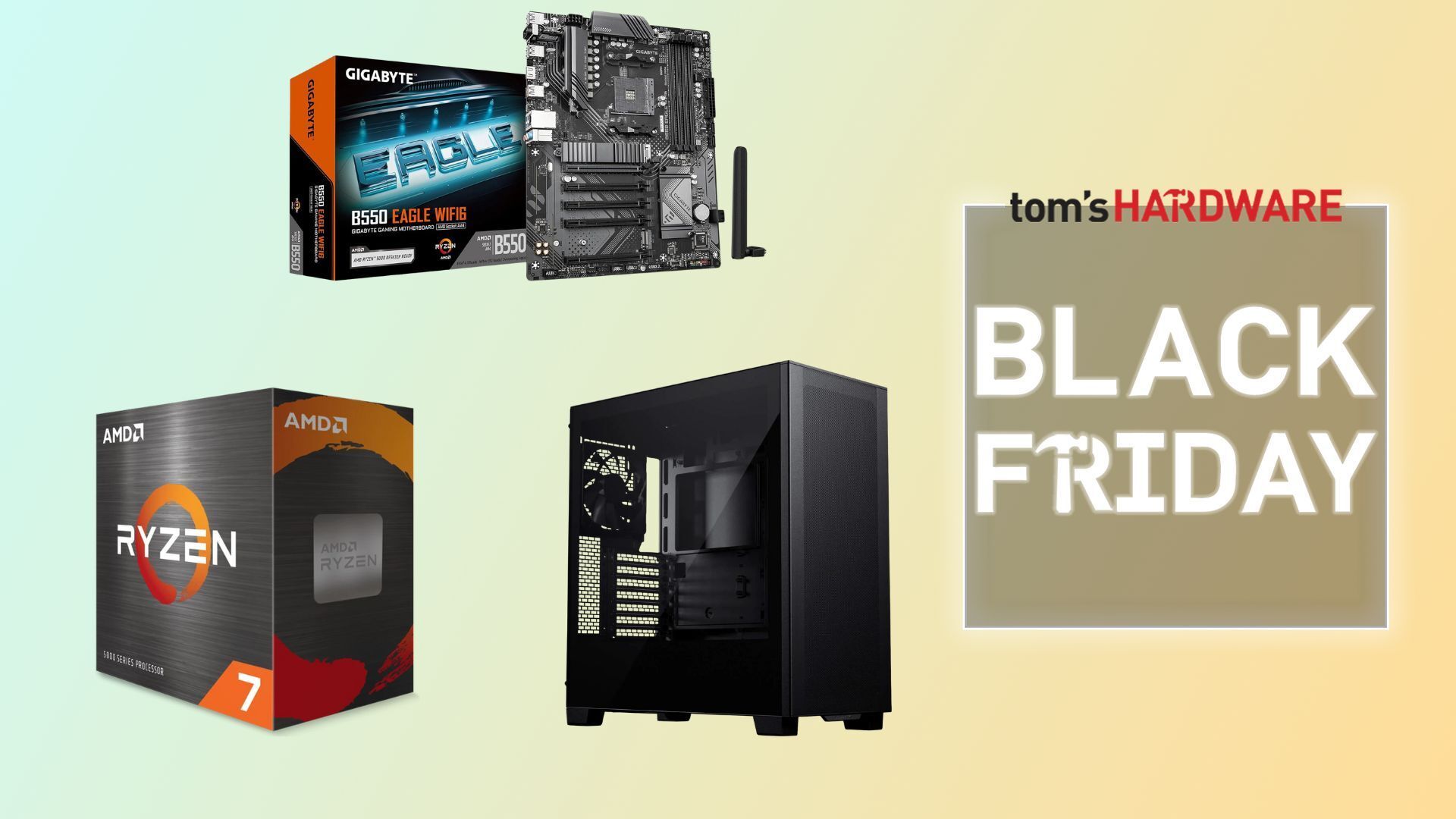
A budget Black Friday gaming PC was assembled for about $950, featuring an AMD Ryzen 7 5800XT ($183), Gigabyte B550 Eagle motherboard ($89.99), PowerColor RX 9060 XT 16GB GPU ($349), 32GB DDR4 RAM ($139.99), and a 1TB PCIe 4 SSD ($79.99). The piece highlights meaningful component price inflation (RAM rising from $69 to $140, SSDs ~$20 higher) and ongoing GPU/parts supply constraints that are keeping a previously $800–$850 build nearer to $950, signaling margin and pricing pressure across PC retail and component markets.
Market structure: Black Friday pricing shows a bifurcation — AMD's RX 9060 XT at $349 (16GB) undercuts equivalent Nvidia 16GB offerings (> $400), giving AMD clear pricing power in the sub-$400 discrete GPU segment for the holiday quarter. Rising DDR4/SSD prices (RAM up ~100% vs months ago, SSD +~20) signal constrained midstream inventory and sticky component inflation that inflates build costs and benefits retailers (AMZN) and component suppliers if sustained over 1–3 quarters.
Risk assessment: Tail risks include an AI-driven GPU demand shock that pushes prices up (benefiting NVDA/AMD) or a China/Taiwan supply disruption that chokes fab output; either could swing margins >10% for GPU vendors within 3–6 months. Hidden dependency: consumer budget sensitivity means memory price normalization (threshold: RAM kit back to <$80) would quickly reduce DIY demand and compress short-term ASPs; catalysts to watch are AMD/NVDA earnings and DRAM contract pricing releases in next 60–90 days.
Trade implications: Tactical window is next 30–90 days around post-Black Friday inventory updates and holiday sales cadence. Expect modest share gains for AMD in midrange GPUs over the next two quarters, and transient upside for AMZN’s marketplace hardware volumes; bond markets likely see negligible immediate move but FX/commodity flows could react to memory/semiconductor supply news.
Contrarian angle: Consensus underestimates the long-term positive feedback of cheaper midrange AMD GPUs boosting install base and software optimization (2–5 year tailwind); conversely, shorting NVDA based solely on midrange pricing is risky because its AI moat can reprice the whole sector quickly — any trade should be size-limited and volatility-hedged.
AI-powered research, real-time alerts, and portfolio analytics for institutional investors.
Request DemoOverall Sentiment
mildly positive
Sentiment Score
0.25
Ticker Sentiment
