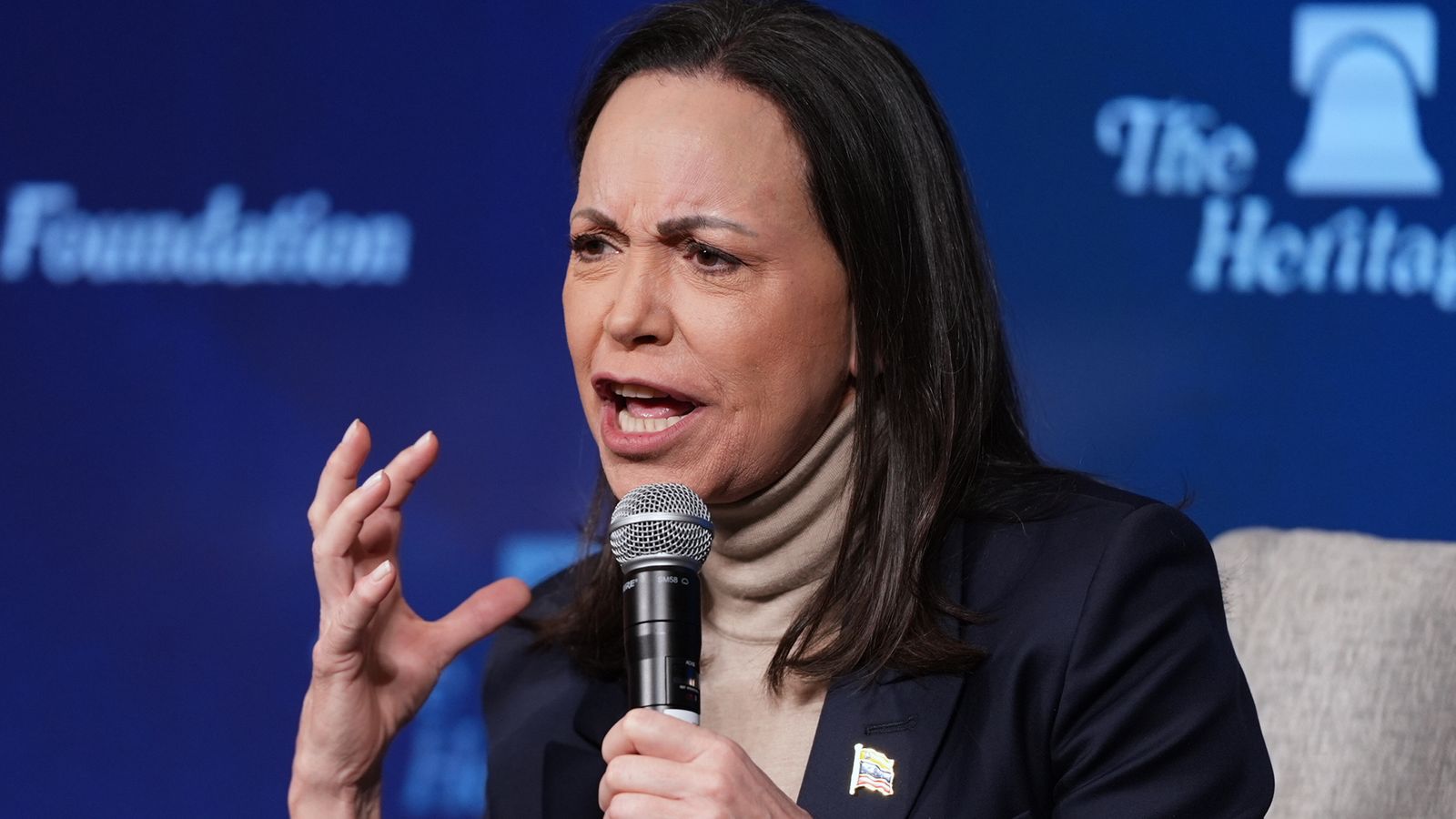
Venezuela faces acute political turmoil after the US military captured President Nicolás Maduro and his wife on 3 January to face charges in New York, an event followed by claims that a US strike killed 47 Venezuelan soldiers. Opposition leader María Corina Machado, who met President Trump and donated her Nobel Peace Prize to him, said she is confident of an orderly transition to free elections, while Trump has voiced support for vice‑president Delcy Rodríguez; the White House cautioned Machado currently lacks short‑term support. High‑level US contacts, including a CIA visit to Caracas, and the Norwegian Nobel Committee's statement on prize ownership underscore heightened geopolitical risk and leadership uncertainty that could raise political and country risk premia for investors with Venezuelan or regional exposure.
Market structure: A US-backed regime change scenario in Venezuela asymmetrically benefits US defense contractors, political-risk hedges (gold), and short-duration oil backwardation trades while directly harming PDVSA-linked production, Venezuelan sovereign creditors and regional importers. A further loss of 0.3–0.8 mb/d of crude (plausible given current ~0.5 mb/d baseline) would likely add $5–$20/bbl to Brent in 1–3 months absent offsetting OPEC+ production, shifting pricing power to global crude suppliers and traders.
Risk assessment: Tail risks include a protracted insurgency, strikes on regional infrastructure, or US secondary sanctions on Chinese/Indian buyers; each could produce multi-month supply shocks and >500bp widening in Venezuelan CDS. Immediate window (days) will see volatile FX and CDS moves; weeks–months will determine oil and regional-credit trajectories; structural normalization could still take years if assets are seized or sanctions remain. Hidden dependencies: China/India buying flows, OPEC spare capacity, and Venezuelan military cohesion — small changes in any produce nonlinear market moves. Key catalysts: formal US recognition of Rodriguez, seizure/transfer of oil assets, or an OPEC+ emergency meeting.
Trade implications: Tactical trades favor 3–6 month oil upside protection (Brent call spreads) and 6–12 month longs in defense primes and gold; avoid unilateral long EM LatAm credit until CDS stabilizes. Relative value: long US defense (LMT, RTX) vs short Venezuelan credit/EM sovereign exposure; use option structures to cap capital and leverage event risk. Entry/exit: size for event risk (0.5–2% portfolio per trade), tighten stops if Brent reverts below $75 for 30 days or if Maduro/PDVSA resumes >70% of prior flows.
Contrarian angles: The market may overprice a sustained oil shock — a negotiated transition could restore 0.4–0.7 mb/d within 3–9 months, capping upside; therefore cap option theta losses by using call spreads, not naked calls. Historical parallels (Iraq 2003, Libya 2011) show sharp supply hits often mean revert within 6–12 months when exports are re-routed or producers fill the gap. Unintended consequences: aggressive US moves could prompt buyers to pay premiums off-market, increasing volatility and rewarding physical traders and storage positions.
AI-powered research, real-time alerts, and portfolio analytics for institutional investors.
Request DemoOverall Sentiment
moderately negative
Sentiment Score
-0.30
