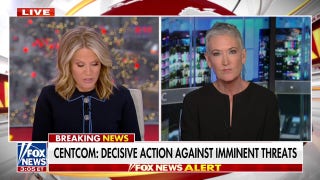
President Trump defended Operation Epic Fury — a series of strikes on Iran he described as preemptive — while Senate Democrats led by Chuck Schumer and Tim Kaine criticized the action for lacking congressional authorization and an exit strategy and pushed a war powers resolution to restrict further military action. The administration told lawmakers the strikes were intended to blunt anticipated attacks following an Israeli action, and senators will receive a classified briefing that could determine the fate of the legislative challenge. The dispute raises short-term geopolitical risk and policy uncertainty that could affect defense-related equities, oil and safe-haven flows depending on escalation and the outcome of the congressional vote.
Market structure: Near-term winners are US defense primes (LMT, NOC, RTX, GD) and commodity exporters (XOM, CVX) from risk-premium re-pricing; losers include airlines (AAL, UAL), tourism/cruise (CCL, RCL) and EM cyclicals exposed to global trade. Pricing power shifts to defense contractors via potential surge orders and to oil producers if Strait of Hormuz insurance/shipping premia reappear; consumer discretionary faces margin compression from higher fuel and risk-off demand destruction. Cross-asset: expect immediate flight-to-quality—10y UST yields -10–30bps, USD +1–2%, gold +3–6%, and oil (Brent) +3–10% in days if localized, or +$10–$30/bbl under broad escalation.
Risk assessment: Tail risks include a broader regional war or major tanker strike (low-probability, high-impact) that could push Brent > $120 (+$20–30) and trigger S&P -8–12% shock; regulatory tail includes US export controls/secondary sanctions disrupting commodity flows. Time horizons: days—volatility and liquidity shocks; weeks/months—order visibility boosts for defense and short-term reflation in energy; quarters/years—possible sustained higher defense budgets if policy hardens. Hidden dependencies: marine insurance/LP shipping capacity, semiconductor/defense supply-chain lead times, and Congress’ war-powers vote could act as policy limiter.
Trade implications: Direct plays—establish 2–4% long positions in LMT and RTX (target +12–20% over 1–3 months, stop -8%), 2% long XOM/CVX as oil hedge. Short 1–2% positions in AAL/CCL or buy puts (3–6 month) to capture travel demand drawdown. Options—buy 3–6 month call spreads on LMT/NOC and long-dated Brent call spreads (WTI/BRN) sized to implied vol; buy 1–2% GLD for tail hedging. FX/bonds—increase UST duration by +1–2% portfolio weight and 1–2% long USD (UUP) to hedge EM FX exposure.
Contrarian angles: Consensus assumes persistent escalation; history (Soleimani strike) shows initial defense/oil spikes often fade 4–8 weeks absent sustained kinetic campaign—risk of mean reversion if Congress constrains action. Mispricing opportunity: buy 3–6 month staggered LMT call spreads on any 5–12% pullback; conversely, avoid levering energy exposure unless clear shipping disruptions occur. Key unintended consequence: higher defense budgets can take 6–18 months to convert to revenue, so avoid paying up for multi-year valuation premia today.
AI-powered research, real-time alerts, and portfolio analytics for institutional investors.
Request TrialOverall Sentiment
moderately negative
Sentiment Score
-0.45
