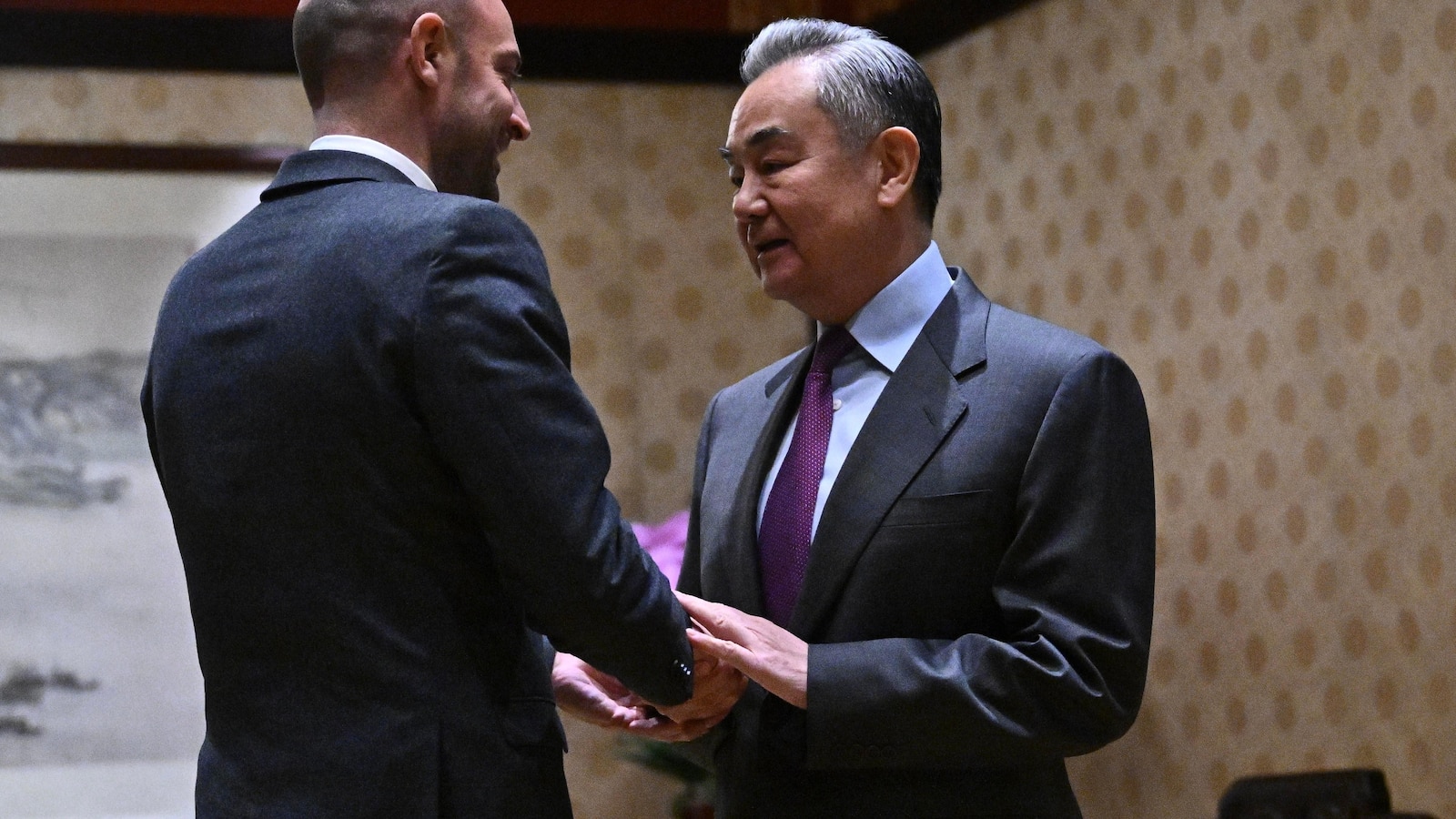
Beijing condemned a record U.S. arms package to Taiwan valued at more than $11 billion — including missiles, drones, artillery systems and military software — as Chinese Foreign Minister Wang Yi oversaw two days of military drills around the island and reiterated aims of reunification. The episode, tied to heightened rhetoric from Taiwan pro-independence figures and Japan’s new prime minister, raises regional geopolitical risk that could support U.S. defense suppliers while increasing downside pressure on Taiwan- and Asia-exposed risk assets amid elevated military tensions.
Market structure: The immediate winners are U.S. defense primes (Lockheed Martin LMT, Northrop Grumman NOC, Raytheon RTX, L3Harris LHX) and specialty drone/missile suppliers where backlog and pricing power rise; losers are Taiwan-listed exporters (TSM) and regional shipping/logistics players via higher insurance/freight costs. Expect defense order book visibility to firm over 6–18 months (potential revenue upside +5–15% for primes on incremental sales) while semiconductor output from Taiwan faces intermittent 1–3 month disruptions, tightening supply and pushing spot chip prices higher.
Risk assessment: Tail risks include a sustained blockade or kinetic clash (low prob <10% over 12 months but high impact: global semiconductor supply shock, oil +10–30%, equity drawdown >15%) and secondary sanctions/ export controls that could re-route supply chains. Near-term (days–weeks) expect volatility in TWD/CNY and Asian equities; medium-term (months) accelerated capex for onshoring; long-term (years) structural reordering of semiconductor footings and defense budgets.
Trade implications: Favor 6–12 month bullish exposure to US defense via call spreads on LMT/NOC (captures revenue realization without paying full premium) and buy 3-month put spreads on iShares MSCI Taiwan (EWT) or TSM to hedge supply interruptions. Rotate 2–4% AUM from China large-cap (FXI) into semiconductor capital equipment (ASML, LRCX) on a 6–18 month thesis of onshoring-driven capex uplift; use options to size convexity.
Contrarian angles: Markets may overprice immediate escalation; historical parallels (1996 Taiwan crisis) show rapid risk-off then normalization with durable policy shifts—so defence equities already discount only part of long-term budget uplift. Unseen winners include European defense primes (BA.L) and semiconductor equipment makers (LRCX, AMAT) from sustained capex; downside is diplomatic de-escalation within 1–3 months causing defense multiple contractions of 10–20%.
AI-powered research, real-time alerts, and portfolio analytics for institutional investors.
Request DemoOverall Sentiment
moderately negative
Sentiment Score
-0.45
