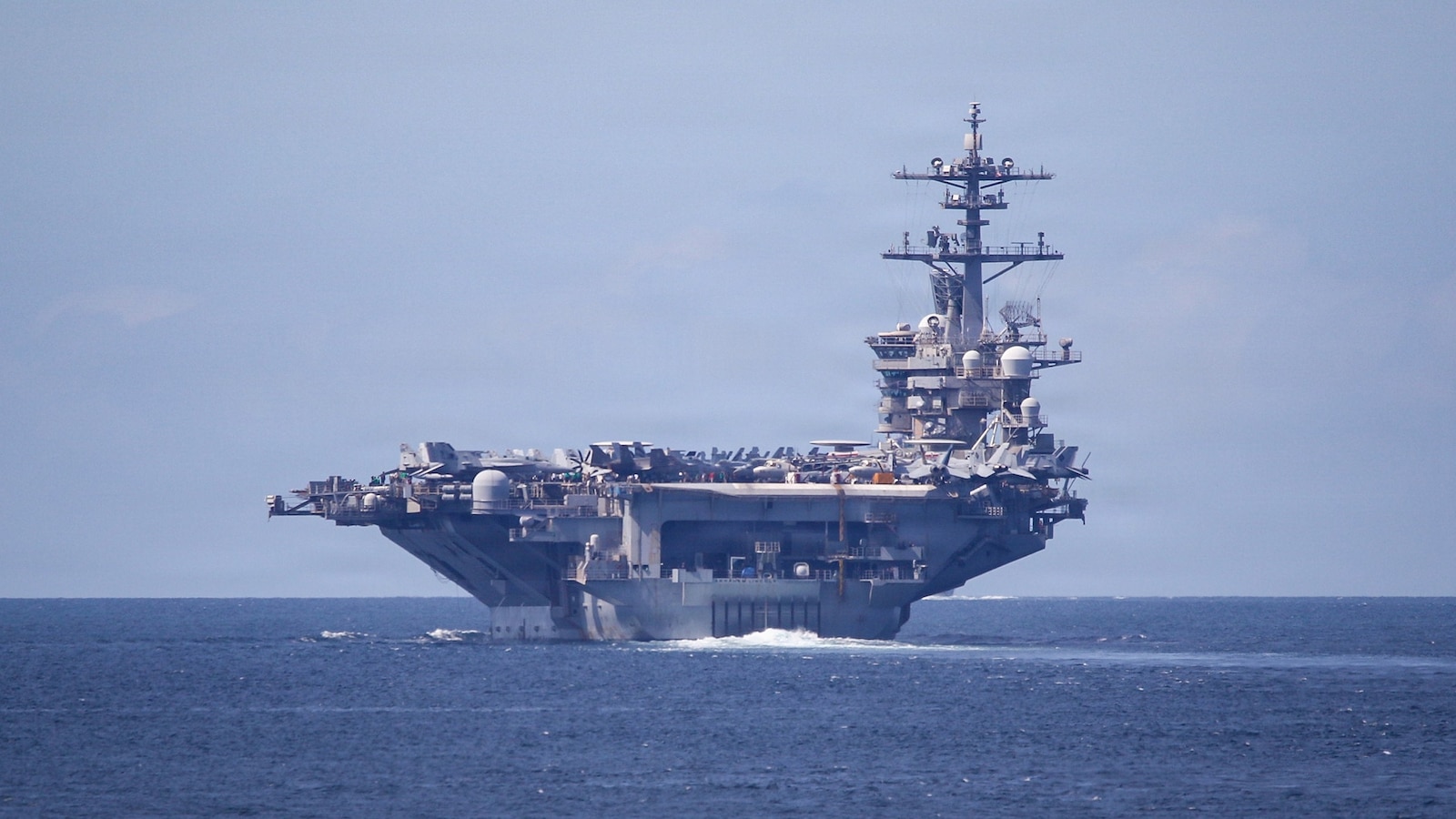
A U.S. fighter jet shot down an Iranian drone after it approached the aircraft carrier USS Abraham Lincoln in the North Arabian Sea, U.S. Central Command said; earlier a U.S. destroyer assisted a U.S.-flagged tanker that was harassed by multiple Iranian small boats transiting the Strait of Hormuz. The incidents increase geopolitical risk in a critical oil-shipping corridor and could lift regional risk premia for energy, shipping insurance and logistics, warranting monitoring of short-term oil price volatility and sector-specific exposures.
Market structure: The immediate winners are Energy producers and defense primes; losers are small tanker owners, commercial shipping and insurers exposed to Persian Gulf transits. The Strait of Hormuz carries roughly 20% of seaborne oil, so even limited harassment increases time-charter and war-risk premiums, boosting upstream pricing power while compressing refiners' margins if spreads widen by 200–400bps over weeks.
Risk assessment: Tail risk is a short-duration closure or effective blockade that removes 1–3 mb/d of supply and could drive Brent +$30–$60 in weeks; lower-probability escalation to wider conflict would push safe-haven flows into USTs and USD and spike oil/volatility. Near-term (days) expect spikes in oil and marine insurance, short-term (weeks–months) shipping reroutes add 7–14% voyage costs, long-term (quarters) could accelerate defense budgets and supply-chain re‑routing. Hidden dependencies include OPEC spare capacity (~2–3 mb/d), US SPR policy, and reinsurer capacity which can blunt or magnify price moves.
Trade implications: Favor tactical long Energy (majors) and Defense primes, hedge with call spreads to limit premium; short small-cap tanker names and shipping volatility plays. Options are attractive: buy 3‑month WTI/Brent call spreads if implied vol <45% or after a 10% move; add if Brent sustains >$90 for 3 trading days. Rotate from cyclical transport/airlines into Energy/Defense until risk premium decays (target 6–12 weeks for premium compression).
Contrarian angles: The market may overpay for permanent disruption despite OPEC/SPR buffers — a sustained Brent >$90 is the real regime change signal, not a single incident. Historical parallels (2019 tanker attacks) show sharp but short-lived spikes; overlevered long oil or defense positions risk mean reversion if diplomatic de‑escalation occurs within 2–6 weeks. Protect positions with directional hedges: sell oil call spreads or buy long-dated puts if prices rally >20% rapidly.
AI-powered research, real-time alerts, and portfolio analytics for institutional investors.
Request DemoOverall Sentiment
moderately negative
Sentiment Score
-0.35
