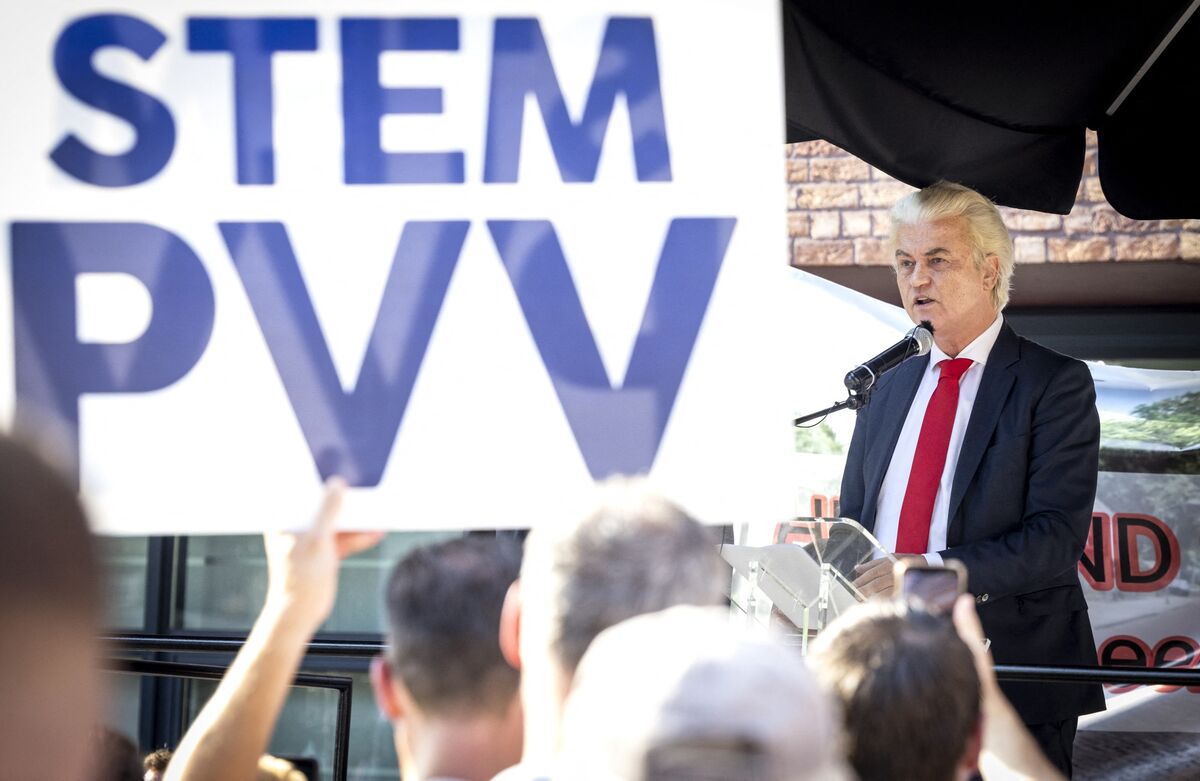
A July poll by Ipsos I&O Research projects Geert Wilders' far-right Freedom Party (PVV) to become the largest party in the October Dutch parliamentary election, securing an estimated 27 of 150 seats. This potential outcome signals a significant political shift in the Netherlands, a key EU member, which could introduce policy uncertainty and warrants close monitoring by investors.
A July poll from Ipsos I&O Research indicates a significant potential political shift in the Netherlands, projecting Geert Wilders' far-right Freedom Party (PVV) to emerge as the largest party in the October parliamentary election. The projection of 27 out of 150 seats, while far from an outright majority, would grant the PVV a pivotal role in post-election coalition negotiations. This development introduces a notable degree of policy uncertainty for a core EU member state, potentially impacting its positions on fiscal discipline, trade, and European integration. The market's current neutral sentiment and low impact score of 0.15 suggest that investors are viewing this as a developing risk rather than a definitive outcome, reflecting the preliminary nature of polling data. The primary risk highlighted is macroeconomic and geopolitical, as the article does not identify any specific companies that would be directly affected.
AI-powered research, real-time alerts, and portfolio analytics for institutional investors.
Request DemoOverall Sentiment
neutral
Sentiment Score
0.00
