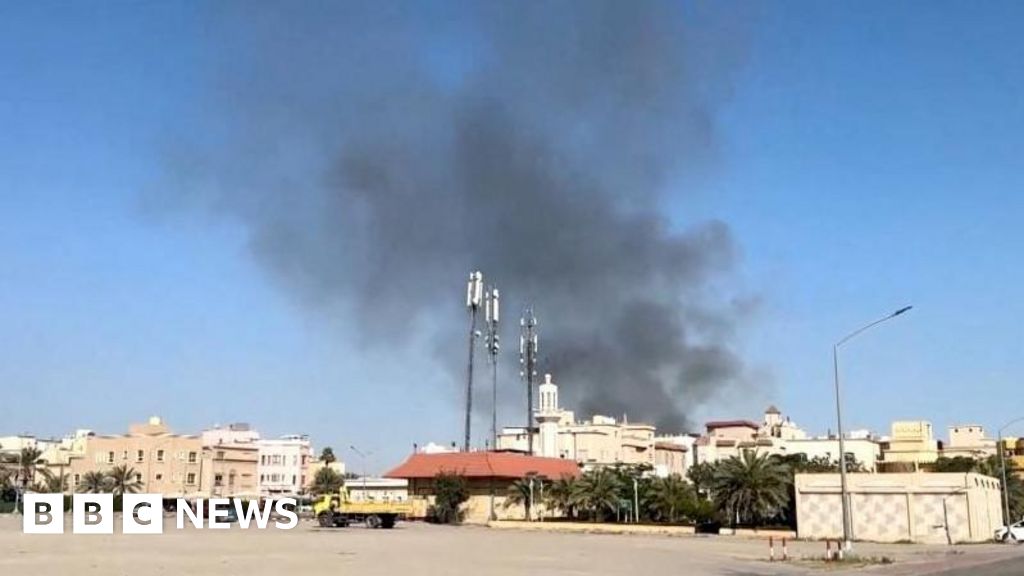
An Iranian missile strike on a U.S. facility in Kuwait killed six American service members after an initial toll of three was revised upward; Defense Secretary Pete Hegseth said a fortified tactical operations center was struck when a missile evaded air defenses. The incident — the first confirmed U.S. fatalities since Washington launched a new campaign alongside Israel — coincided with three U.S. fighter jets downed in a separate 'friendly fire' incident; the escalation raises the risk of regional instability, potential energy-market volatility and defensive positioning by investors.
Market structure: Immediate winners are defense primes (LMT/RTX/NOC) and upstream energy producers (XOM/CVX, XLE) via higher near-term pricing power; losers include Gulf-dependent logistics, regional airlines (JETS) and EM credit exposed to Gulf sovereigns. Expect Brent to jump 5–15% within days on risk-premium (roughly +$3–$12/bbl) absent supply interruptions; implied volatility in oil and defense equities should rise 30–70% in options markets over next 2–6 weeks. Cross-asset: expect a classic risk-off — USTs bid (TLT +), USD stronger (DXY +1–2%), gold (GLD) +3–8%, credit spreads +20–60bp in GCC-linked credit.
Risk assessment: Tail scenarios include (A) Strait of Hormuz closure → oil spike $30–50/bbl and global recession trigger within 1–3 months, and (B) US mobilization expanding conflict → sustained defense budget upside over 12–36 months. Hidden dependencies: Kuwait basing and insurance cost pass-through to logistics, and OPEC+ spare capacity decisions which can materially mute or amplify price moves within 7–30 days. Key catalysts: reciprocal strikes, OPEC+ meetings, US diplomatic moves and satellite intelligence releases — any credible de-escalation within 2–6 weeks would compress premiums rapidly.
Trade implications: Tactical plays: accumulate 2–3% long in LMT/RTX/NOC (equal-weight) with 3–6 month horizon; buy Brent call spreads (e.g., calendar or Jun $80/$100) sized to 1–2% NAV to capture $5–15 move; establish 1–2% long GLD and 2–3% TLT as hedges. Short 0.5–1% positions in JETS or regional travel names and 1% in EMB-sized EM Gulf credit exposures; consider pair trade long LMT vs short UAL (equal notional) to hedge market beta.
Contrarian angles: Consensus may overprice sustained oil shocks — if OPEC+ increases output or diplomacy succeeds within 4–8 weeks, cyclical energy names could mean-revert 15–30%. Historical parallels (1990 Iraq/Kuwait) show outsized immediate spikes but subsequent 6–12 month normalisation; avoid overleveraging on single-call directional oil bets. Watch implied vol and defense multiples: if LMT/RTX rally >25% quickly, trim to lock 10–15% realized gains and redeploy into short-dated volatility strategies.
AI-powered research, real-time alerts, and portfolio analytics for institutional investors.
Request TrialOverall Sentiment
strongly negative
Sentiment Score
-0.75
