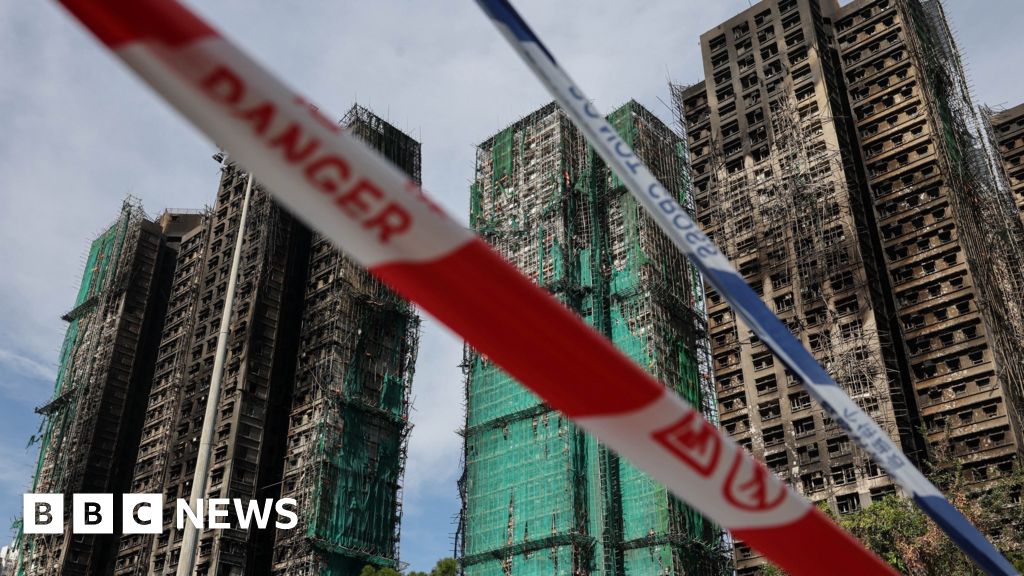
A catastrophic fire at Wang Fuk Court in Tai Po has killed at least 128 people and injured 79, spreading across seven of eight blocks in a subsidised housing estate undergoing renovations; fire spread was aided by external flammable materials (Styrofoam/netting) and investigators say alarms were not working. Authorities have arrested three renovation overseers on manslaughter charges and opened a corruption inquiry, raising potential legal, regulatory and reputational fallout for contractors, building managers and insurers, and increasing scrutiny of renovation materials and safety enforcement across Hong Kong housing.
Market structure: The immediate winners are large, compliant retrofit contractors and suppliers of non-flammable cladding/fireproofing (multi-month procurement cycles), while small renovation firms, owners of older subsidised HK residential blocks and certain local insurers are direct losers. Pricing power should shift to certified suppliers and large contractors able to underwrite guarantees; expect a short-term pause in elective renovations (weeks) followed by a concentrated retrofit wave (6–36 months) — rough TAM in HK plausibly HKD 10–30bn for public/old private stock remediation.
Risk assessment: Tail risks include a broad regulatory mandate forcing retrofits across pre-1990 stock, criminal/compensation liabilities for landlords/contractors and a material rise in developer bond spreads (+50–150bps scenario). Time horizons: sentiment hit (days), legal/investigative uncertainty (30–90 days), mandated capex and corporate P&L impact (6–36 months). Hidden dependencies: insurer reserve adequacy, contractor solvency, migrant-labour claims; catalysts are government policy announcements (watch 30–90 day window) and first civil suits/verdicts (3–12 months).
Trade implications: Tactical moves include hedging HK equity exposure (index puts) and shorting exposed residential developers while going long large-cap contractors/materials suppliers that can service mass retrofits. Use options for asymmetric risk: 1–3 month puts to capture sentiment and 6–12 month call exposure on contractors to capture capex. Entry thresholds: act on >8–10% developer price moves or on formal retrofit policy announcements; re-evaluate at 90 days.
Contrarian angles: The market may over-extrapolate a single-estate tragedy into a systemic collapse; history (e.g., Grenfell) shows long retrofit demand benefiting large contractors while smaller players are squeezed. Mispricing risk: quality developers with low leverage could be oversold (>10% gap) — catalyst-driven mean reversion once government outlines funding/compensation frameworks in 1–3 months. Unintended consequence: higher compliance will consolidate the remediation market, favoring scale players.
AI-powered research, real-time alerts, and portfolio analytics for institutional investors.
Request DemoOverall Sentiment
moderately negative
Sentiment Score
-0.45
