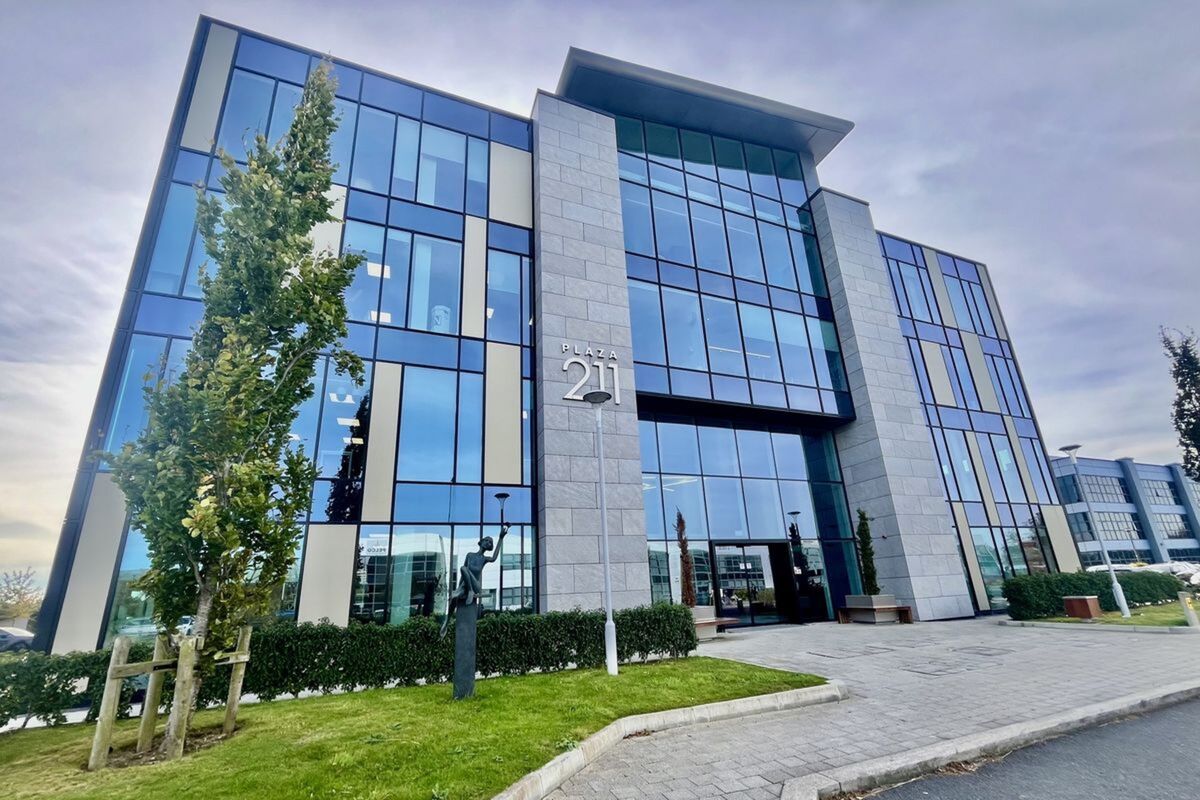
A U.S. pharmaceutical company significantly reduced its planned Dublin office lease, from 15,000 to 5,000 square feet, following President Trump's tariff announcement in April. The deal, brokered by Lisney, now accommodates a maximum of 40 workers instead of the initially planned 100, signaling trade uncertainty's impact on corporate expansion and commercial real estate decisions in Ireland.
The decision by a U.S. pharmaceutical company to drastically reduce its planned Dublin office lease, from an initial 15,000 square feet designed for 100 workers to 5,000 square feet for a maximum of 40 workers, directly followed U.S. President Donald Trump's tariff announcement in April. This specific instance, involving a lease brokered by Lisney at Channor Real Estate Group’s Plaza 211, highlights the tangible impact of trade policy uncertainty on corporate expansion strategies and, consequently, on the commercial real estate market in Ireland. The significant downsizing, a reduction of approximately 67% in space and 60% in potential headcount, signals increased caution among U.S. firms regarding international investments amidst perceived trade turmoil. The strongly negative sentiment (-0.65) associated with this development underscores the immediate adverse effect of such geopolitical factors on real estate investment decisions and business confidence.
AI-powered research, real-time alerts, and portfolio analytics for institutional investors.
Request DemoOverall Sentiment
strongly negative
Sentiment Score
-0.65
