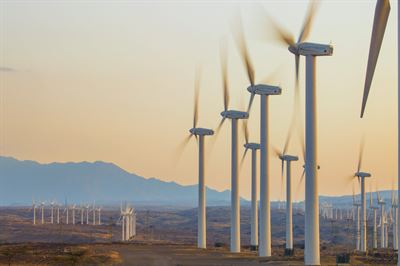
Finnfund has anchored its energy and infrastructure financing in the planetary boundaries framework and runs an energy portfolio of ~35 projects (~850 MW capacity) with a book value of about €170m and €100m in undisbursed commitments; the firm typically provides €10–20m per large wind/solar project and invests in 5–7 energy projects annually. The investor is shifting toward distributed generation and electric mobility (notable exposures: Vinfast, Transvolt Mobility, Fortum Charge & Drive), focuses on small hydro, bioenergy and waste/recycling, and aims to catalyze private capital in emerging markets—particularly Africa, India and Latin America—while limiting fossil-fired plants to backup-only roles.
Market structure: Finnfund’s pivot toward distributed renewables, small hydro, EV charging and storage favors developers (solar/wind IPPs), BOS suppliers, battery integrators and copper/lithium miners; incumbents with coal-heavy fleets and large centralized utility models face margin pressure as private corporate PPAs and rooftop ~1 MW projects reduce grid off-take. Development-finance catalytic capital (~€10–20m per project co-invest) will compress returns on early-stage deals but raise deal flow; expect more competition for bankable projects over 12–36 months.
Risk assessment: Tail risks include policy reversals (subsidy cuts or retroactive tariff changes in India/EMs), currency devaluations eroding local revenues, and supply-chain shocks for panels/batteries that can push capex +10–30%. Immediate (days) risks are news-driven (auction outcomes, FX shocks); short-term (weeks–months) are permitting and tariff announcements; long-term (years) are grid-integration limits and commodity cycles. Hidden dependency: growth in distributed renewables increases demand for short-duration storage and flexible gas peakers—neglected in many forecasts.
Trade implications: Favor equipment and integrator names (solar ETF TAN, ENPH, FSLR; storage integrator FLNC) and copper/lithium exposure (FCX, ALB) while trimming integrated oil exposure (XOM/CVX) and merchant thermal generators in EMs. Use pair trades (long solar/short XLE) and option-defined bullish exposure (12-month call spreads) to limit downside; act within next 30–90 days to position for 12–24 month structural growth.
Contrarian angles: Consensus underestimates downside price pressure from over-capitalised development finance—PPAs may compress to structurally low levels, hurting thin-margin developers; conversely, storage and O&M services are underpriced winners. Historical parallel: 2010–2015 solar module crash benefited low-cost module manufacturers and downstream consolidators; here, expect similar winners in battery stack suppliers and distributed O&M platforms. Watch for unintended consequence: too-cheap electricity depressing network reinvestment and raising future reliability CAPEX.
AI-powered research, real-time alerts, and portfolio analytics for institutional investors.
Request DemoOverall Sentiment
moderately positive
Sentiment Score
0.45
