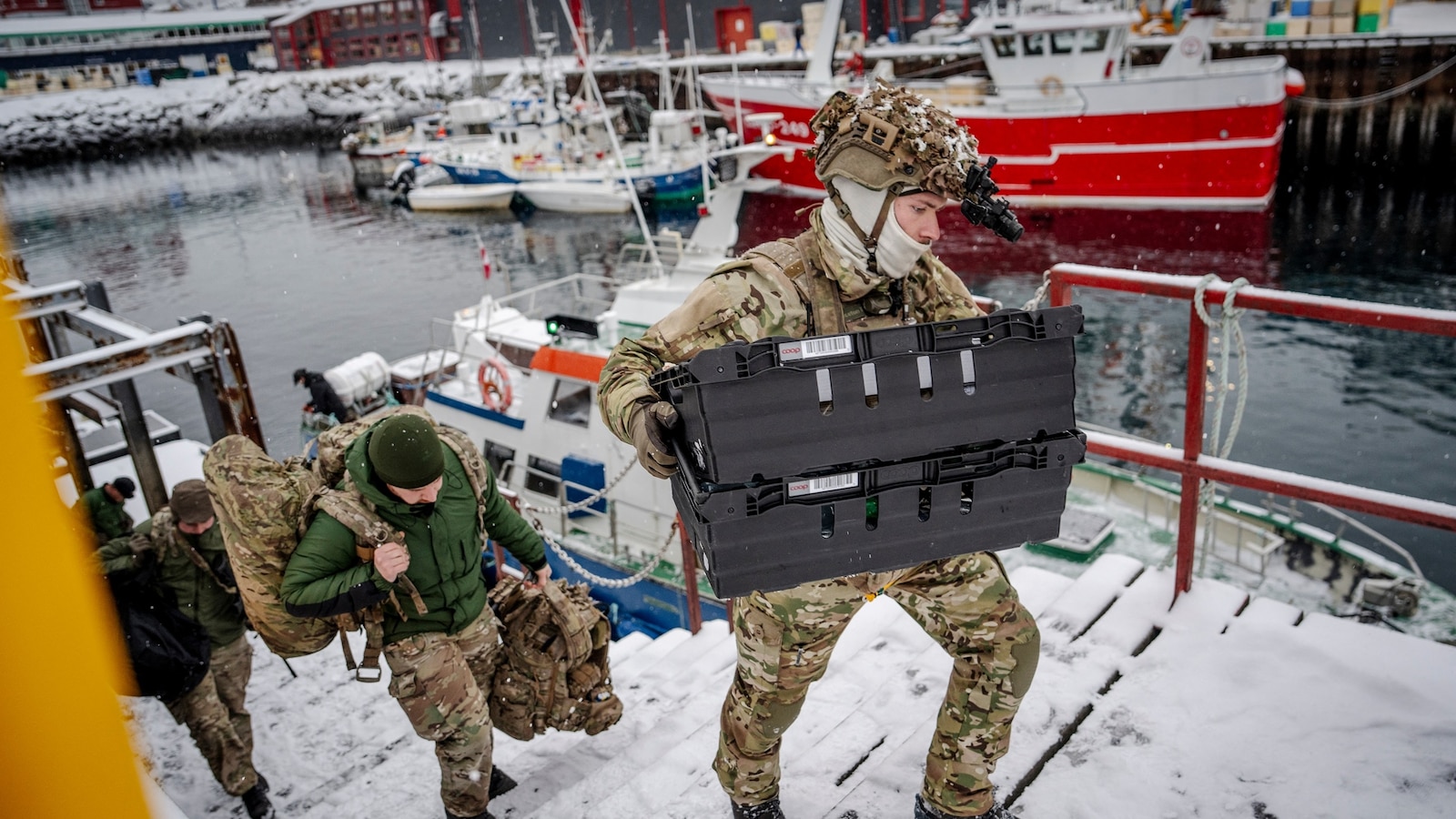
President Trump announced phased tariffs on goods from eight NATO countries (10% from Feb. 1, rising to 25% on June 1) tied to those nations' troop deployments to Greenland, and said measures will remain until the U.S. can purchase Greenland. The EU has called an extraordinary in-person summit in Brussels, signaled readiness to defend against coercion and may activate its anti-coercion 'trade bazooka' — potentially restricting U.S. investment, public procurement access and IP protections — raising the prospect of a transatlantic trade escalation. NATO, Danish and Greenlandic officials are engaging with allies as Denmark recently announced a $6.5 billion Arctic defense package; markets should monitor diplomatic escalation and the risk of retaliatory trade measures that could affect transatlantic trade flows and defense-related sectors.
Market structure: The announced 10% tariff rising to 25% (Feb 1 / Jun 1 triggers) is a targeted shock to exporters from Denmark, Norway, Sweden, France, Germany, UK, Netherlands and Finland — direct losers include EU auto (VW, BMW), aerospace (AIR.PA/airbus exposure via EADSY), luxury goods and food exporters; winners are US domestic producers of competing goods and defense contractors (LMT, NOC, RTX) if NATO spending rises. Pricing power shifts toward US suppliers for goods destined to the US and incentivizes near‑shoring; expect a 1–3% hit to EU export volumes to the US in H1 if tariffs are enacted and routings aren’t changed.
Risk assessment: Tail risks include rapid EU retaliation via the anti‑coercion instrument within 30 days (could trigger reciprocal sanctions on US services, IP and FDI), a protracted transatlantic trade war, or escalatory Arctic military incidents that spike commodities (nickel, rare earths) by >10%. Immediate risks cluster around Feb 1 (first tariff) and Jun 1 (25% cliff); short term (weeks–months) is policy noise and FX volatility, long term (quarters+) is supply‑chain realignment and higher defense budgets. Hidden dependencies: JIT supply chains and port capacity mean secondary winners (logistics, rerouting) and losers (just‑in‑time exporters) could emerge within 4–12 weeks.
Trade implications: Tactical: initiate a 2–3% portfolio long in large‑cap defense names (LMT, NOC, RTX equally weighted) targeting +15–25% upside over 6–12 months if NATO spending increases. Hedging: buy 3‑month puts on European exporter ETFs (EWG, EWQ total notional 0.5–1% of portfolio) to protect against Feb/Jun tariff cliffs; overlay a 3‑month VIX call spread (buy 3mo ATM, sell +10% OTM) sized to cover equity downside. FX: establish a 1–2% long USD position (UUP) with stop if EURUSD rallies >1.5%; target EUR weakness of 2–4% if tariffs hit.
Contrarian angles: The market may overprice a long, irreversible rupture — historical precedent (2018 US‑China) shows tariff headlines spike volatility then retrace on deals: if EU activates measured countermeasures rather than full bans, EU exporters can rebound 8–15% within 3–6 months — present opportunity to buy on dislocations. Also, aggressive EU anti‑coercion moves could harm US firms (AAPL, MSFT, AMZN exposure to EU services/IP) — consider asymmetric hedges rather than binary shorts. Monitor the Brussels summit outcome (48–72 hours) and EU activation signals as a trigger to scale positions.
AI-powered research, real-time alerts, and portfolio analytics for institutional investors.
Request DemoOverall Sentiment
moderately negative
Sentiment Score
-0.40
