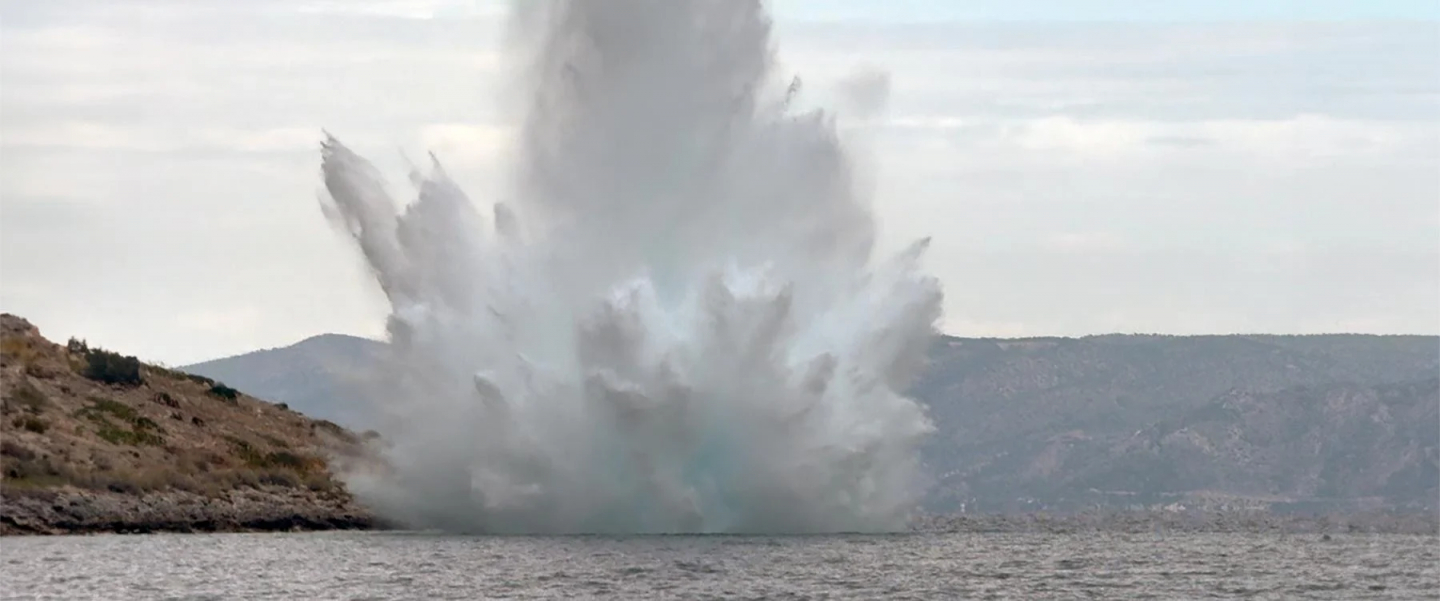
Opinion piece flags a crisis in U.S. mine countermeasures and calls for renewed, sustained investment in MCM capability as the solution. Implication: potential pressure for higher defense procurement/budgeting and heightened maritime supply-chain risk if capability gaps persist.
A sustained U.S. rebuild of mine-countermeasure (MCM) capability disproportionately favors firms that provide sensors, autonomy and integration over pure shipbuilders. Small-to-mid cap specialists in UUV/USV platforms, advanced sonar and mission systems can see program-level revenue spikes (20–40% incremental on small bases) faster than large yard contracts, because initial MCM buys will prioritize modular, rapidly-deployable kits and commercial-tech integration. Export aftermarket upside to allies (NATO, Japan, Australia) amplifies multi-year revenue visibility if interoperability becomes a requirement.
Key catalysts are political and operational: a high-profile mine incident or a narrow chokepoint disruption can compress appropriations and emergency buys into a 30–90 day window, whereas formal procurement and shipbuilding appropriations follow a 12–24 month DoD planning cycle. Tail risks include program re-prioritization, multi-year cost overruns, or rapid civilian tech commoditization that drives prices down; those scenarios flip winners from hardware OEMs to low-cost integrators and service providers. Monitor FY+1 DoD budget language, Navy Program Objective Memoranda inputs, and committee earmarks as 3–12 month triggers.
Consensus is underweighting the distinction between R&D/prototype funding and large-scale hull construction: if Congress funds prototypes and recurring fielding instead of new MCM hull lines, sensors and autonomy suppliers will capture most early profits while yards see backloaded wins. That implies a tactical tilt to mission-systems, software and sustainment-exposed names for 6–24 months, and selective exposure to yards only after fixed-price contracts are awarded and funded, typically 18–36 months out.
AI-powered research, real-time alerts, and portfolio analytics for institutional investors.
Request DemoOverall Sentiment
neutral
Sentiment Score
0.00
