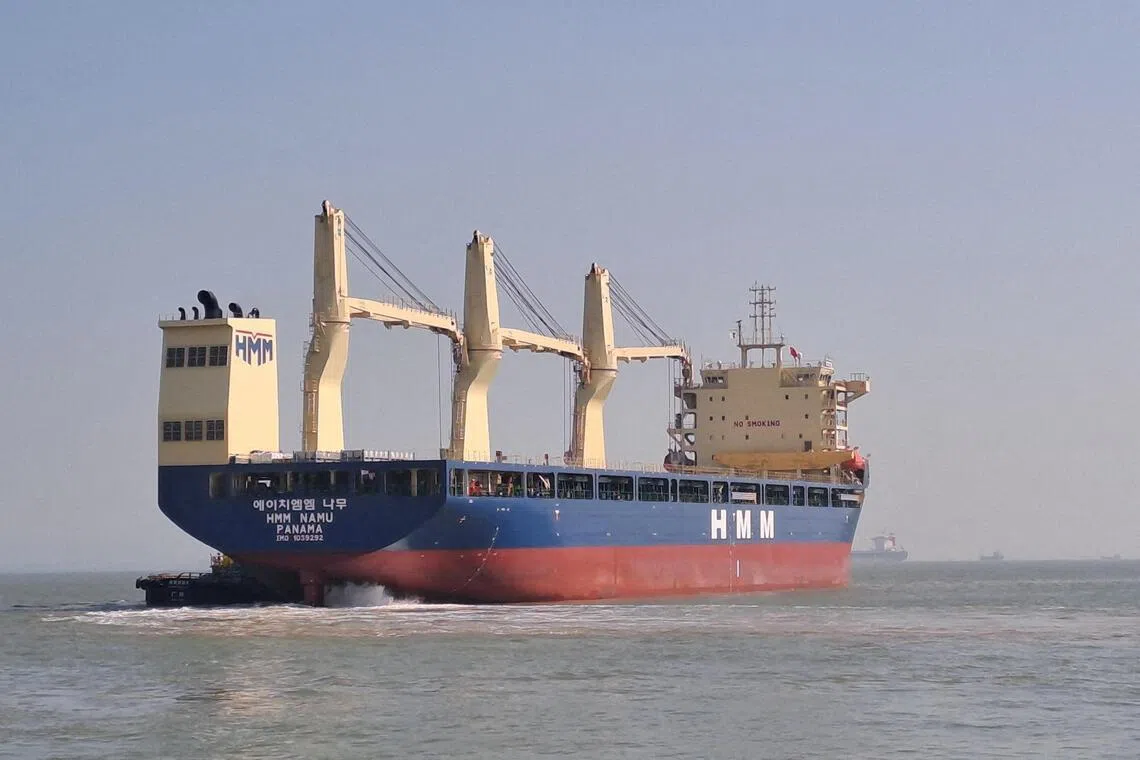
A South Korean HMM bulk carrier was struck by an unidentified object on May 4 in the Strait of Hormuz; no injuries were reported, and the vessel was later towed to Dubai. Seoul said it is still investigating after an on-site inspection and plans to collect debris for analysis. The incident raises renewed security concerns around a critical shipping lane and could unsettle regional maritime traffic.
This is less about the damaged hull and more about the pricing of transit risk across the entire Gulf logistics stack. Even a one-off, unattributed strike in the Strait of Hormuz tends to widen the gap between headline calm and actual freight/security costs: war-risk premiums, convoy delays, insurance exclusions, and charterer hesitation can all tighten effective tanker and dry-bulk capacity within days. The first beneficiaries are not the obvious ocean carriers but adjacent, less-visible bottlenecks such as reinsurance, security contractors, and non-Gulf routing options that can absorb diverted cargo flows.
For shippers and commodity end-users, the second-order effect is inventory behavior. If counterparties conclude that passage risk is episodic but unpriced, they’ll pre-buy and front-load cargoes, which pushes spot freight and demurrage higher even if physical supply is unchanged. That dynamic usually hurts refiners, Asian industrials, and import-dependent manufacturers more than it helps upstream energy, because they absorb the cost spike before end-demand can reprice.
The key catalyst is whether this stays an isolated event or becomes a template for deniable disruption. If there are no follow-on incidents over the next 2-4 weeks, the market will likely fade the headline and compress war-risk premiums quickly; if there is a second strike, expect a regime shift in shipping rates and a materially higher probability of state-backed naval escorts or rerouting, which would be a months-long margin headwind for global trade-sensitive sectors. The market is probably underestimating how quickly charter availability can tighten once owners start refusing Gulf exposure altogether.
Contrarian take: the immediate move may be over-owned in crude but under-owned in freight/insurance. Oil has a geopolitical risk premium already; the more asymmetric trade is in logistics friction, where small disruptions can compound through vessel scheduling and working-capital needs. The best risk/reward is to express a modestly bearish view on trade-exposed cyclicals while keeping optionality on a broader escalation tail.
AI-powered research, real-time alerts, and portfolio analytics for institutional investors.
Request DemoOverall Sentiment
mildly negative
Sentiment Score
-0.20
