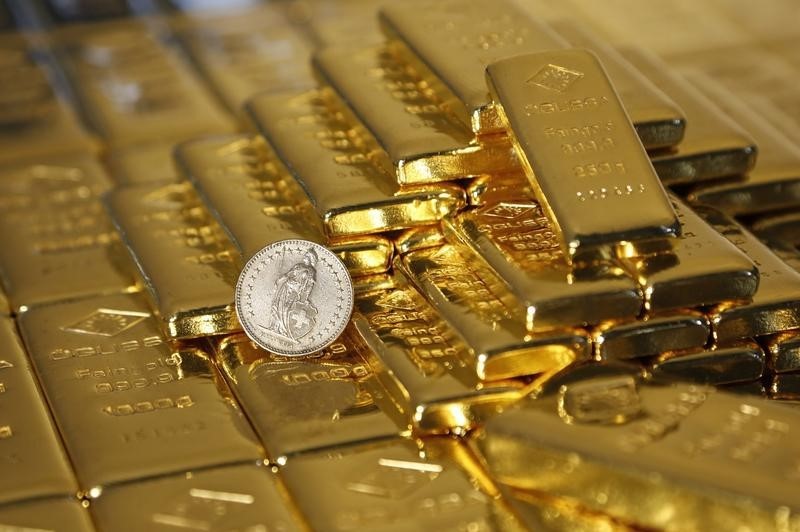
Gold rose 0.4% to $4,707.31/oz and June U.S. gold futures gained 0.4% to $4,713.86 after a 2.9% jump on Wednesday, as easing U.S.-Iran tensions and a sharp drop in oil prices reduced inflation fears. The dollar index slipped 0.1% in Asian trading after a 0.4% overnight decline, while Treasury yields also moved lower. Investors are watching Friday's U.S. non-farm payrolls data for clues on the Fed path, with silver up 0.7% to $77.85/oz and platinum flat at $2,065.17/oz.
The immediate market read is less about gold itself and more about the repricing of macro volatility premia across oil, rates, and FX. If the de-escalation path holds even for a few sessions, the first-order winner is duration: lower energy-driven inflation should keep front-end yields pinned and support higher-quality growth, while the marginal loser is the inflation hedge complex that had been bid on geopolitical tail risk. The move is also a signal that positioning was crowded enough for a fast unwind; when crude drops hard and the dollar softens together, bullion tends to overreact for 24-72 hours before re-coupling to real yields.
The second-order effect is that this is not a clean bearish oil story unless diplomacy visibly advances. Any perceived Saudi-mediated de-risking lowers the probability of a sudden supply shock, but it also removes a justification for defensive energy exposure, which can trigger systematic selling in commodity volatility and commodity-linked equities. That creates a window where upstream names with high beta to spot can underperform even if the macro impulse is only temporary; the more resilient trades are in companies that benefit from lower input costs and easier financial conditions rather than from the headline itself.
The contrarian point: the market may be too quick to price a durable peace premium. Negotiations in this region often produce sharp two-way moves because the probability distribution is fat-tailed; one failed meeting can retrace a multi-day oil drop faster than fundamentals would imply. The key risk over the next 3-10 trading days is not inflation re-acceleration from oil, but a reversal in risk sentiment if any official language indicates talks are stalling. Over a 1-3 month horizon, the more important catalyst is whether lower energy prices bleed into weaker nominal prints enough to give the Fed room to sound less hawkish at the margin.
AI-powered research, real-time alerts, and portfolio analytics for institutional investors.
Request DemoOverall Sentiment
mildly positive
Sentiment Score
0.18
