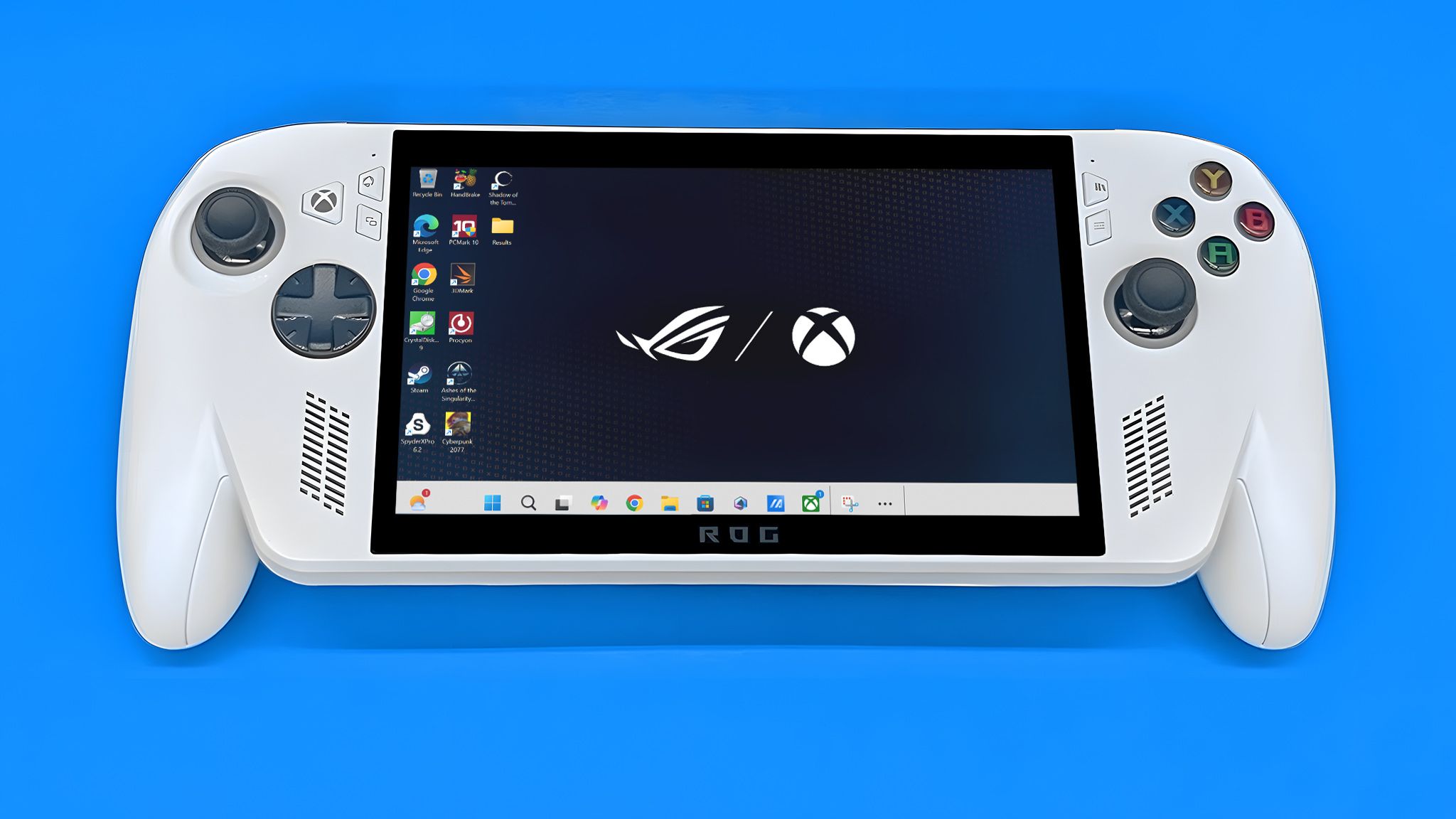
The ASUS ROG Xbox Ally, a Windows 11 handheld released in October 2025, is being promoted at Amazon for about $489 versus a $599.99 MSRP, with limited stock showing. The device features a 7-inch 1080p IPS display with up to 120Hz VRR, an AMD Ryzen Z2 A processor, 512GB storage (expandable via microSD), soldered RAM, and 2–7 hour battery life depending on workload, positioning it as a direct competitor to Valve's Steam Deck particularly for cloud gaming. The price reduction could intensify pricing competition in the handheld gaming segment and influence short-term consumer demand, though hardware limits on high-end local AAA performance and fixed RAM constrain its broader competitive upside.
Market structure: The $599→$489 sale (~18% markdown) signals aggressive Xmas promotion to capture share vs. Valve’s Steam Deck; immediate winners are ASUS/Xbox ecosystem (market-share), AMZN (retail volume) and AMD (Ryzen Z2 A component sales), while Valve and handheld OEMs with higher ASPs face pricing pressure and margin compression. Cloud gaming providers (Microsoft/Xbox Game Pass, NVIDIA GeForce NOW) gain demand leverage as lower-priced Windows handhelds shift purchase intent from local high-CPU devices to streaming-capable hardware.
Risk assessment: Short-term (days–weeks) risk is elevated returns/returns and holiday-sideways sales—inventory signals (13 units listed) may mask localized stock; medium-term (1–6 months) risks include weaker-than-expected attachment rates for microSD/accessories and latency-driven user churn from cloud services; long-term (quarters) downside could materialize from component shortages, chipset ASP erosion, or regulatory moves around platform bundling. Tail risks: a high-return/recall event, a major cloud-outage, or a surprise GPU pricing war could depress sentiment >20% in sector names.
Trade implications: Direct plays: tilt portfolio toward AMD (AMD) — beneficiary of handheld APU volume — and modestly favor AMZN (AMZN) for holiday retail upside; NVDA (NVDA) is a secondary beneficiary via cloud-GPU demand but has higher valuation sensitivity. Use defined-risk options: buy 3–6 month AMD call spreads and 60-day AMZN call spreads around holiday data; consider a 6–12 month NVDA call (or call spread) to capture incremental datacenter/cloud bookings.
Contrarian angles: Consensus understates accessory and subscription upside — microSD, chargers, Game Pass ARPU could add recurring revenue that fuels OEM upgrades; alternatively, the market may be underestimating ASP deflation: if competing handhelds converge on sub-$500, expect 10–20% ASP compression across the category over 12–18 months, pressuring smaller OEM suppliers and cyclically sensitive parts vendors.
AI-powered research, real-time alerts, and portfolio analytics for institutional investors.
Request DemoOverall Sentiment
mildly positive
Sentiment Score
0.32
Ticker Sentiment
