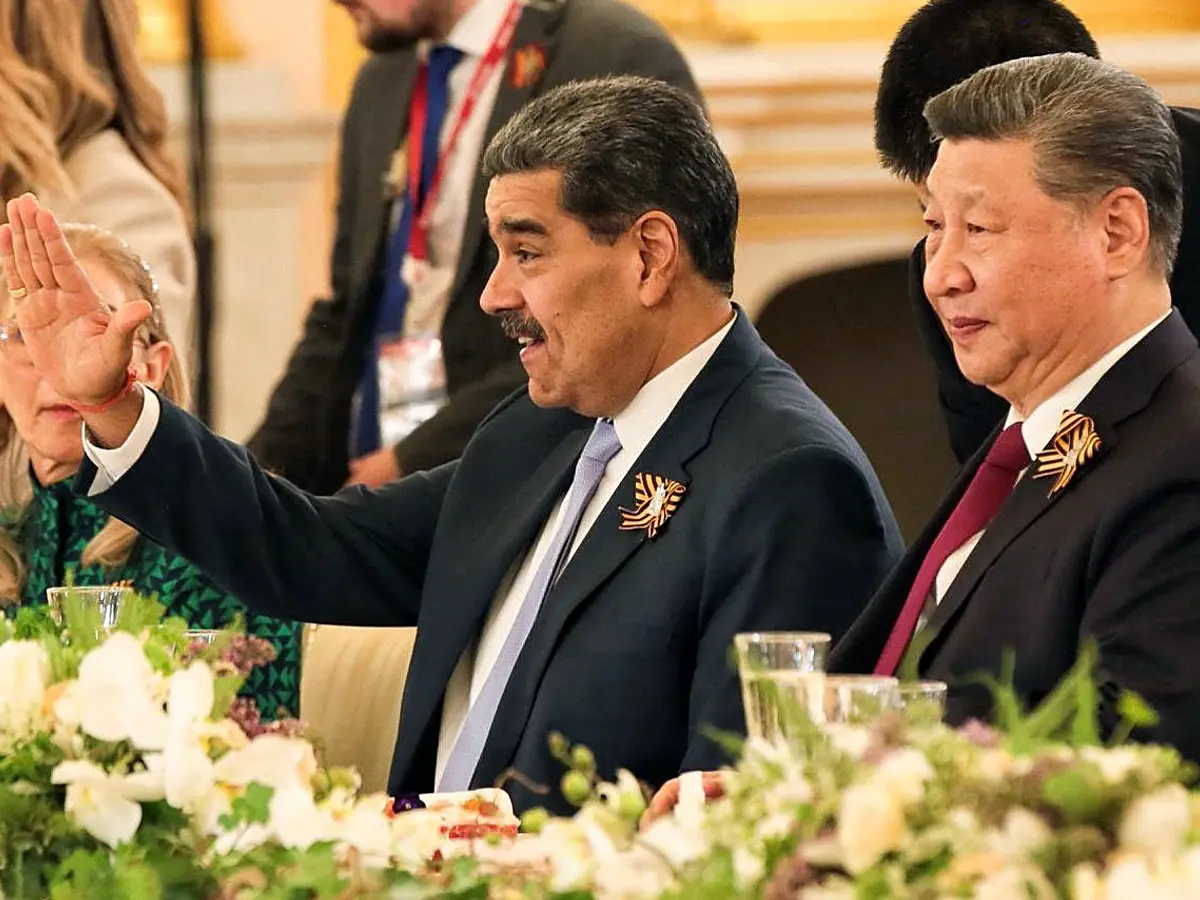
Venezuela’s turn to state-led policies under Nicolás Maduro — including nationalisation of over 1,000 firms and heavy central-bank money printing to cover deficits — precipitated a collapse in output and public welfare: oil production fell from about 3.5m b/d to ~1.1m b/d, annual inflation peaked at an estimated 130,060% in 2018 and the country still records the world’s highest inflation. The economic breakdown has produced extreme social distress (over 80% in poverty, 53% in extreme poverty), left roughly 7.6 million people needing humanitarian aid and prompted about 7.7 million refugees since 2014, undermining the petro-state’s production base and posing ongoing risks to regional stability and commodity supply dynamics.
Market structure: Venezuela’s policy-induced collapse removed roughly 2.4mn bpd of capacity (from ~3.5mn to ~1.1mn), a ~2–3% structural reduction in global crude supply that benefits global oil producers and integrated majors (XOM, CVX) and US shale (PXD, MRO) while crushing local banks, sovereign creditors and PDVSA bondholders. Price-setting power shifts to non-Venezuelan suppliers and traders—short-term spare capacity lies with US shale and OPEC+, supporting higher marginal prices absent rapid political change.
Risk assessment: Key tail risks are rapid political normalization (+1–2mn bpd returned within 3–12 months) that could knock crude -10–20%, or further sanctions escalation that chokes exports and spreads EM contagion. Immediate (days) risks are FX volatility and remittance flows; short-term (weeks–months) are oil/credit spread moves; long-term (years) are permanent human-capital loss and chronic production underinvestment. Hidden dependencies include illicit trading routes and contractor pullouts that can delay any recovery by 6–18 months.
Trade implications: Construct directional oil exposure via selective equity and option call spreads (XOM/CVX, XLE) sized 2–5% with explicit stop if Brent < $65 for 6–12 months, and hedge EM credit via 3-month HYG put spreads sized to cover ~50% of EM debt exposure. Avoid direct PDVSA/VE sovereign bonds; if available buy cheap CDS protection (5y) at small notional (0.25–0.5% portfolio) as asymmetric hedge. Add 1–2% GLD as crisis hedge and consider 0.5–1% exposure to WU/MGI for durable remittance upside over 6–12 months.
Contrarian angles: The market consensus prices chronic supply shortfall; that could be overdone if a negotiated political compact restores 1–2mn bpd within 6–12 months—this is the asymmetric downside to energy longs and argues for capped-cost call spreads and protective puts. Conversely, EM credit spreads may overreact (selling into hysteresis); selectively buying high-quality LatAm credits on >150bp dislocations could capture mean reversion. Historical parallel: Iran’s post-sanctions return of supply shows rapid rebound is possible but contingent on capital and service access, which for Venezuela could take 6–24 months.
AI-powered research, real-time alerts, and portfolio analytics for institutional investors.
Request DemoOverall Sentiment
extremely negative
Sentiment Score
-0.90
