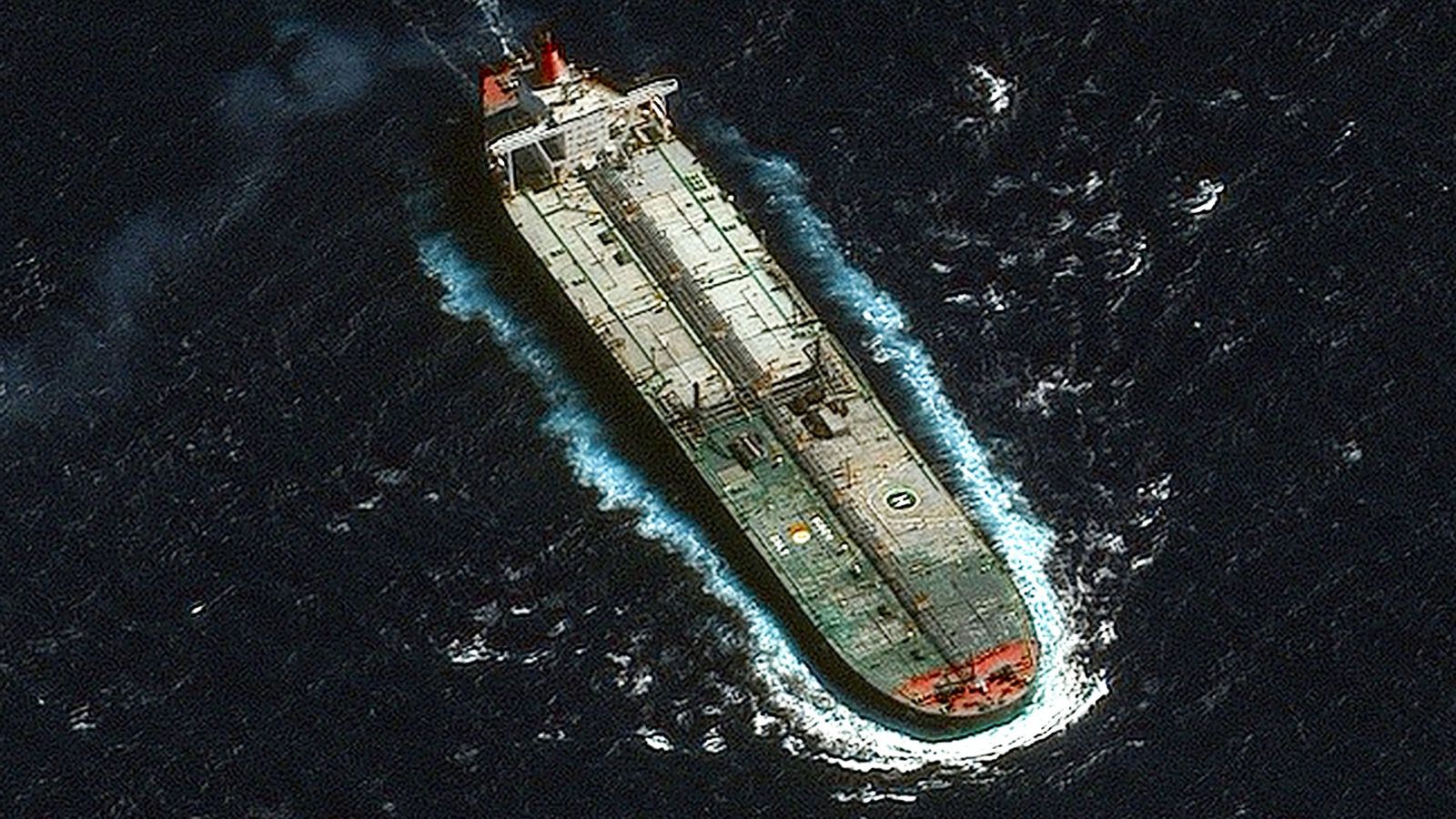
The White House has directed the US military to enforce a two‑month 'quarantine' of Venezuelan oil as part of an economic-pressure strategy against President Nicolás Maduro, while keeping substantial forces in the Caribbean (>15,000 troops, an aircraft carrier, 11 warships and more than a dozen F‑35s). The US Coast Guard has intercepted two fully loaded Venezuelan crude tankers and is pursuing a third, and US officials say Venezuela could face severe economic strain by late January absent concessions; the move raises near‑term geopolitical risk and a potential supply/disruption premium for oil markets.
Market structure: A US-enforced quarantine of Venezuelan oil is a tangible short-term supply shock concentrated in heavy-sour barrels — realistically 0.6–1.0 mbpd of effective crude removed from global seaborne markets within 2–8 weeks — which favors upstream producers (XOM, CVX, COP) and oil services (SLB, HAL) while pressuring refiners that rely on heavy sour feedstock (VLO, PBF, MPC). Pricing power shifts toward sellers of light sweet and storage/transport owners; expect Brent/WTI implied vols to jump 15–40% in the front month and heavy-light differentials to widen. Cross-assets: USD and oil-linked currencies (NOK, CAD, RUB) should strengthen; US Treasury yields could rise 10–30bps as oil-driven inflation expectations increase; EM FX and sovereign CDS widen.
Risk assessment: Tail risks include kinetic escalation or wider maritime interdictions that could send Brent >$100 (+25–50% from recent levels) within days and spike tanker rates and insurance premia 2x–5x; conversely third-party circumvention (shadow sales via intermediaries) could limit the supply impact to <0.3 mbpd. Time horizons: immediate (days) see volatility and freight shocks; short-term (4–12 weeks) sees re-routing and refinery margin compression; long-term (6–18 months) depends on policy durability and OPEC response. Hidden dependencies: insurance market behavior, bunkering hubs (Curacao, Trinidad), and buyer tolerance to sanctions; catalysts include OPEC supply moves, US legal rulings, or a switch to military options.
Trade implications: Tactical direct plays: establish 2–3% NAV long positions in XOM and CVX for 3–6 month horizon for crude upside; pair with 1–2% short positions in refiners VLO or PBF to capture margin squeeze. Options strategy: buy 3-month Brent call spreads via BNO (buy 1x, sell 1x higher) sized to 0.5–1% NAV to cap premium; alternatively buy 3-month XLE calls for leveraged exposure. Rotate portfolios overweight Energy (XLE), Materials, and Defense (LMT, NOC) by +3–5% overweight funded by -3–5% underweight in EM sovereign debt and US refiners; enter within 5 trading days, set profit targets at +25–30% and stop-losses at -15%.
Contrarian angles: Market consensus likely prices a sustained large shock; underappreciated is rapid substitution (Russian/Mexican heavy flows, US SPR sales) that historically capped oil spikes within 3–6 months (Iran 2018 analogue). The overreaction risk: refiners’ share prices may be oversold relative to crack spreads if heavy-sour differentials normalize — a 6–12 week mean-reversion short-squeeze is plausible. Unintended consequences: aggressive US action could prompt reciprocal moves (e.g., Russia increasing bids into Caribbean) or domestic fuel-policy responses that blunt oil upside; size positions accordingly and be ready to flip within 30–90 days.
AI-powered research, real-time alerts, and portfolio analytics for institutional investors.
Request DemoOverall Sentiment
moderately negative
Sentiment Score
-0.45
