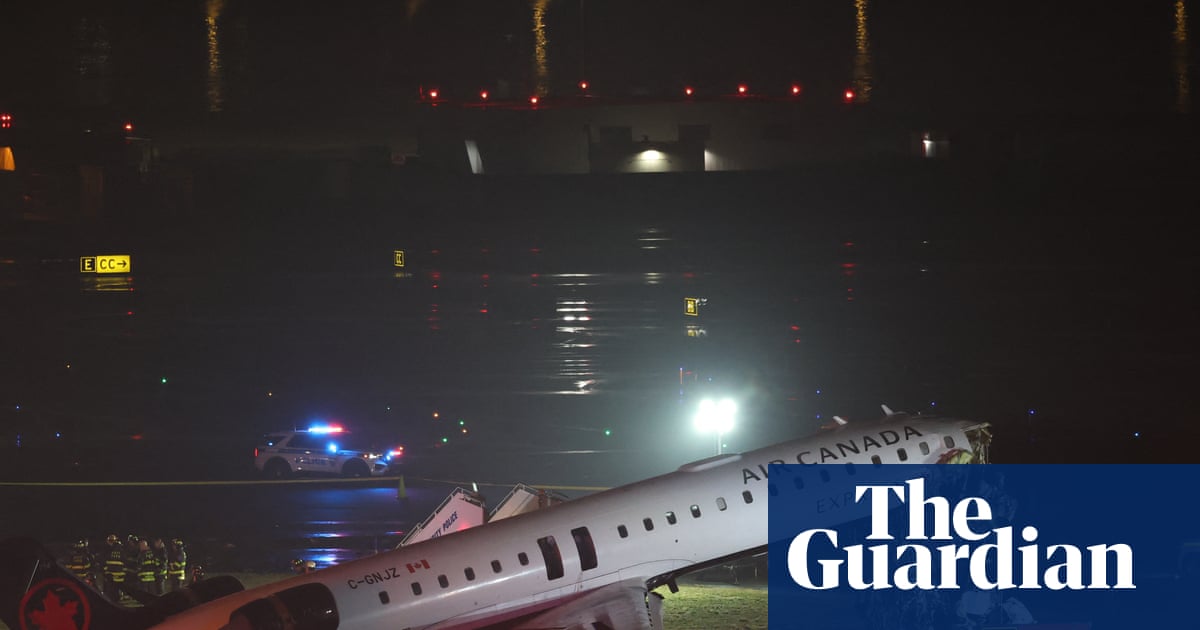
LaGuardia airport was closed after a Jazz Aviation flight operating for Air Canada struck a Port Authority aircraft rescue and firefighting vehicle on Runway 4 at ~11:38–11:40pm; a preliminary passenger manifest lists 72 passengers and 4 crew. The FAA issued a ground stop and warned the airport could remain closed until 2pm local (1800 GMT), prompting expected cancellations, road closures and traffic delays that will cause short‑term operational disruption for carriers and ground handlers.
This incident is a micro shock to operational continuity that creates outsized second-order costs: out-of-service aircraft reallocation, crew rest rules triggering multi-leg cancellations, and accelerated dispatch of replacement ARFF assets. Expect localized schedule churn to produce 48- to 96-hour revenue leakage for regional operators feeding transborder and NYC domestic networks, with incremental cash costs (repositioning, accommodations, delay payments) likely in the low single-digit millions per significant disruption but concentrated on smaller regional partners.
Regulatory and legal follow-through is the higher-variance channel. FAA and Port Authority probes typically take weeks to months and can force temporary SOP changes (e.g., adjustments to runway incursion protocols) or targeted inspections that raise CapEx/opex for operators and airport authorities; a finding of procedural fault could produce fines, increased insurance premiums or contract renegotiation pressure on subcontractors within 3–12 months.
Winners are firms positioned to supply immediate contingency capacity (larger US network carriers with spare seats and flexible fleet allocation) and manufacturers of ARFF/airport safety equipment, where order cadence can spike after high-visibility incidents. Losers include the regional operator/contractor in the spotlight (contract risk, reputational hit) and short-term cash flow for any single-airport dependent carriers; market reaction should be front-loaded (days–weeks) while structural contractual and regulatory consequences play out over quarters.
Monitor three catalysts: (1) initial FAA/Port Authority interim findings (days–2 weeks), (2) insurance claim magnitude and who bears it (2–8 weeks), and (3) any mandated equipment/SOP changes that imply incremental CapEx (3–12 months). Each stage materially changes which names carry risk versus reward.
AI-powered research, real-time alerts, and portfolio analytics for institutional investors.
Request DemoOverall Sentiment
mildly negative
Sentiment Score
-0.20
Ticker Sentiment
