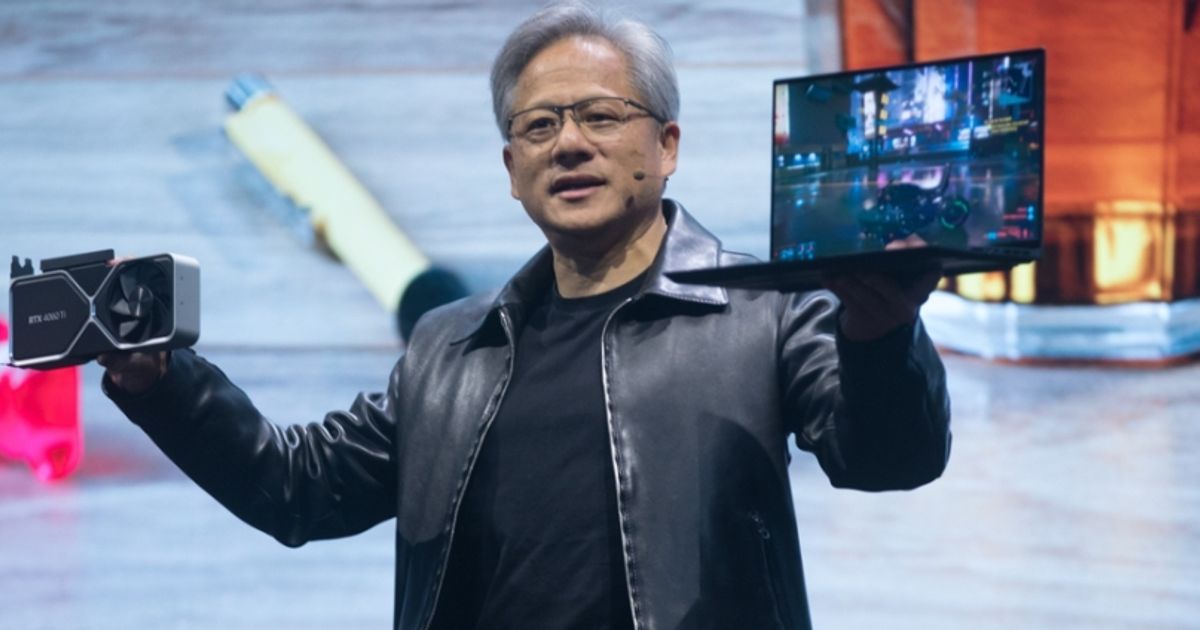
Nvidia unveiled its next-generation Vera Rubin platform at CES 2026, now in full production and targeted for launch in H2 2026, introducing six new chips including the Vera CPU (88 custom cores, 3x system memory vs prior Grace) and the Rubin GPU (up to 5x inference and 3.5x training vs Blackwell on NVFP4). The company also announced NVLink 6, ConnectX-9 800G SuperNIC, BlueField-4 DPU and Spectrum-6 (102.4 Tb scale-out with co-packaged silicon photonics), and highlighted software-hardware co-design that management says will sustain ~10x cost reductions per generation and a 4x cut in GPUs needed for training; Bank of America framed the developments as reinforcing Nvidia’s competitive moats. Beyond data centers, Nvidia showcased ‘physical AI’ initiatives—Alpamayo for autonomous vehicles and GR00T for robotics—with the first passenger vehicle using its reasoning model expected in early 2026 on the DRIVE platform.
Market structure: Nvidia (NVDA) further consolidates a vertically integrated AI stack—compute (Rubin GPU/CPU), networking (Spectrum‑6, NVLink‑6) and DPUs—giving it incremental pricing power versus standalone component suppliers. Direct winners: NVDA, TSMC (foundry-dependent capacity), and specialist photonics/optics suppliers; direct losers: incumbent switch vendors (pressure on AVGO switch margins), traditional CPU providers (INTC/AMD in HPC niches) and any OEMs slow to adopt Rubin. The 5x inference/3.5x training claims plus a 4x GPU reduction for training imply unit-level economics that can expand addressable AI workloads even if unit demand per model falls.
Risk assessment: Key tails are antitrust/export controls (China restrictions or EU probe) and manufacturing/yield shortfalls at TSMC or HBM supply constraints—each plausibly 10–30% probability over 12–24 months with >$10B revenue swing potential. Near term (days–weeks) expect sentiment-driven volatility; short term (months) inventory and multiple re-rating; long term (H2 2026–2027) revenue inflection tied to Rubin ramp and cloud contract wins. Hidden dependencies include advanced packaging, photonics supply chains and hyperscaler willingness to cede architecture to Nvidia.
Trade implications: Establish a 2–3% portfolio long in NVDA via time‑spread options (buy 12–18 month LEAP calls, sell nearer-term calls to fund) aiming for 30–60% upside by H2 2026; set a 20% stop. Pair trade: long NVDA vs short AVGO or reduced exposure to AVGO by 0.5–1% to play switch-market share shift. Add 0.5–1% tactical longs in photonics/optics (LITE/II‑VI) and monitor TSMC allocation reports; avoid increasing INTC exposure.
Contrarian angles: Consensus assumes perpetual demand growth; missing is the elasticity that a 4x GPU reduction creates—total GPU unit TAM could stagnate even as dollars per model fall, pressuring near‑term ASPs. Hyperscalers can accelerate bespoke accelerators (AWS, GOOGL) which would cap NVDA pricing power; historical parallels include server CPU cycles where dominant incumbents lost share despite technical lead. Action trigger: if cloud capex guidance weakens or TSMC allocation is delayed, reduce NVDA exposure quickly.
AI-powered research, real-time alerts, and portfolio analytics for institutional investors.
Request DemoOverall Sentiment
moderately positive
Sentiment Score
0.60
Ticker Sentiment
