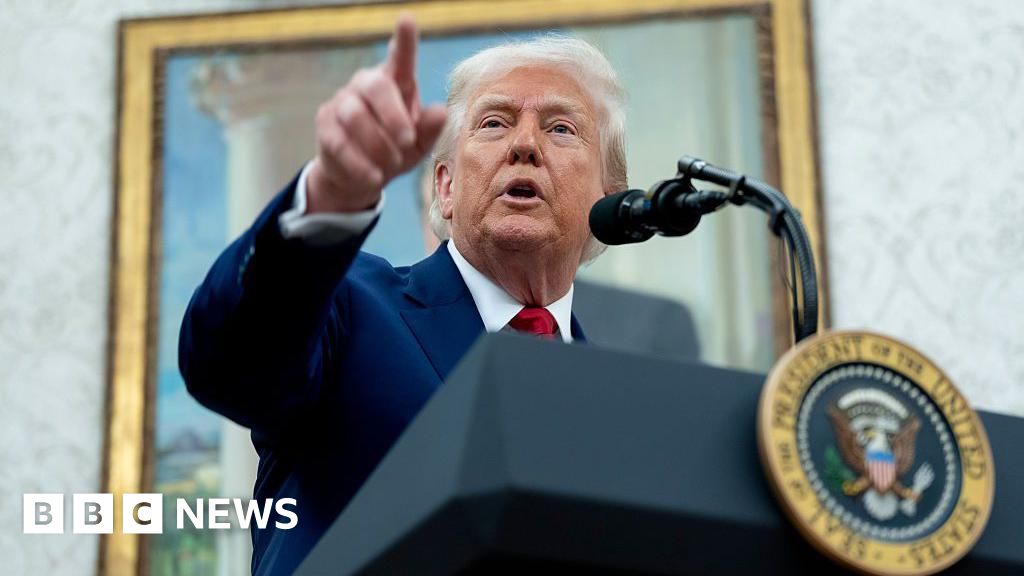
A US federal court has ruled that President Trump overstepped his authority in imposing global tariffs, stating the International Emergency Economic Powers Act (IEEPA) does not grant the president unilateral power to impose sweeping tariffs. The ruling, a victory for small businesses challenging the tariffs, represents a significant legal blow to Trump's trade policies and has prompted an immediate appeal from the administration. Global financial markets have experienced volatility since the initial tariff announcements, and the long-term impact of this ruling on international trade remains to be seen.
The U.S. Court of International Trade has delivered a significant ruling against President Trump's global tariff policy, determining that the executive branch overstepped its authority by invoking the International Emergency Economic Powers Act (IEEPA) of 1977 for widespread tariff imposition. The court affirmed that the constitutional power to regulate international commerce resides exclusively with Congress, a decision stemming from a legal challenge by five small businesses impacted by the "Liberation Day" tariffs. This ruling, while a notable setback for the administration's trade agenda, is being immediately appealed, indicating prolonged legal and policy uncertainty. Global financial markets have historically reacted with volatility to the tariff announcements since April 2nd, and this legal development, while potentially viewed as moderately positive in alleviating tariff burdens, introduces a new phase of unpredictability pending the appeal's resolution. The existence of six other legal challenges underscores the broad opposition and complexity surrounding these trade policies.
AI-powered research, real-time alerts, and portfolio analytics for institutional investors.
Overall Sentiment
moderately positive
Sentiment Score
0.45
