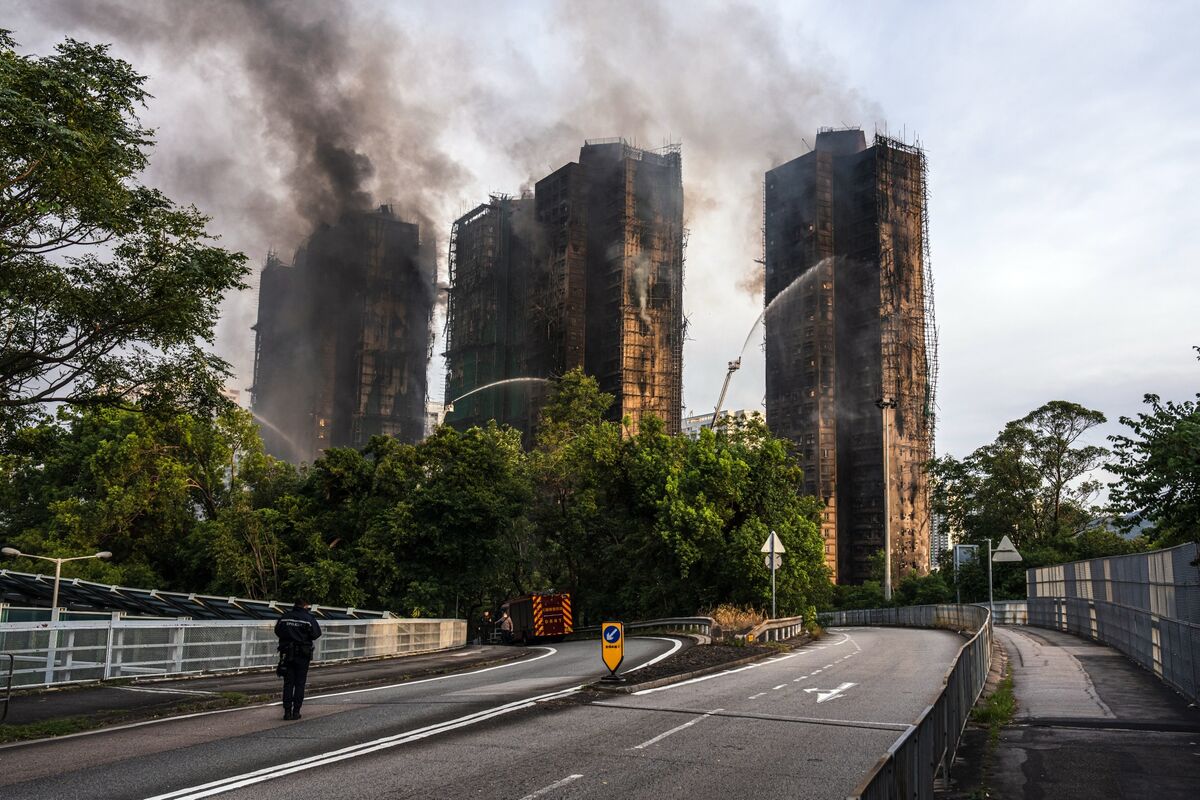
A wind-driven blaze ripped through seven of eight towers at Wang Fuk Court in Tai Po, Hong Kong, killing 44, hospitalizing 45 and leaving nearly 300 residents unaccounted for as flames climbed bamboo scaffolding around buildings under renovation. Authorities have launched a criminal probe, creating potential for litigation, regulatory scrutiny and insurance/repair costs that could weigh on local developers, insurers and property-related sentiment, though the immediate market impact is likely localized.
Market structure: The immediate losers are Hong Kong residential landlords/developers and estate managers (weak sentiment => likely 3–8% near-term price impact on names tied to mass housing), while construction, retrofitting and fire-safety services stand to gain incremental demand. Credit spreads on Hong Kong property names (developer bonds and CDS) should widen; expect a 10–30bp move in near-term secondary credit for weaker issuers and a 1–3% rise in implied volatility on HSI real-estate subindex options over 2–6 weeks.
Risk assessment: Tail risks include a regulatory retrofit mandate or blanket moratorium on sales/occupancy in aged estates—if enacted within 30–90 days this could force developers to accelerate capex (+10–20% year-on-year for affected owners) and impair cashflow. Hidden dependency: banking covenants for smaller landlords could trigger liquidity events if rental income falls 5–10% and repair costs spike; catalysts are criminal probe findings, citywide inspections, and an emergency policy package within 2–8 weeks.
Trade implications: Short-biased trades on large-cap Hong Kong developers with leverage and high local residential exposure (0016.HK, 0688.HK) for 1–3 months; hedge macro with HSI put spreads to limit cost. Long ideas: contractors/engineering exposure (3311.HK) and selective insurers/long-term life names (1299.HK) on any >5% sentiment-driven dip; allocate 1–3% NAV per theme and use options to cap downside.
Contrarian angles: Consensus will likely oversell high-quality landlords with low LTVs — names with LTV <30% and >50% recurring retail income could rebound when inspections clear (window 3–6 months). Historical parallels (localized fatal fires) show policy overreaction is often corrected within one quarter; position sizing should reflect a 20–30% probability of permanent regulatory tightening versus 70–80% of transient sentiment shock.
AI-powered research, real-time alerts, and portfolio analytics for institutional investors.
Request DemoOverall Sentiment
strongly negative
Sentiment Score
-0.70
