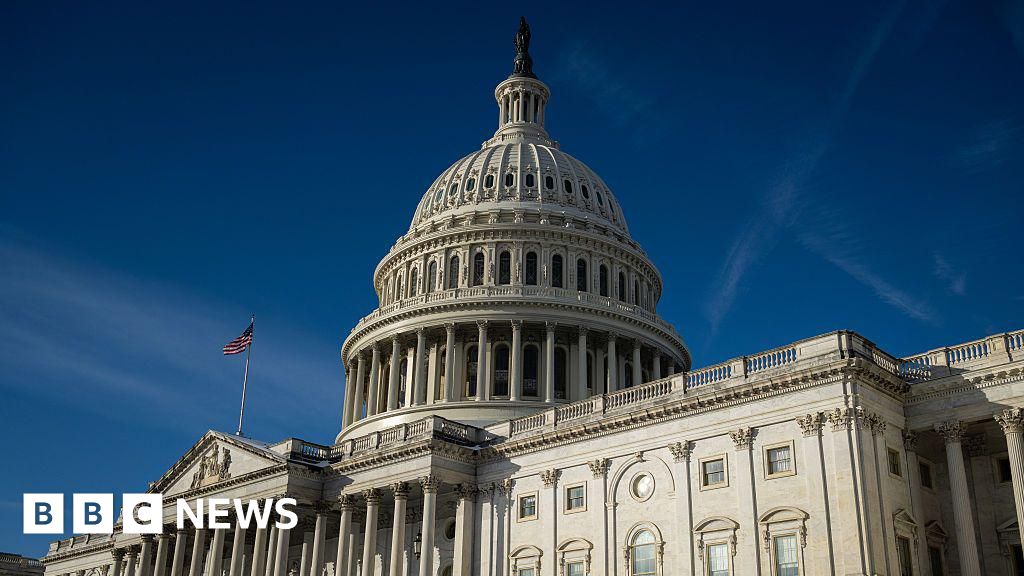
The US House voted via voice vote to end a 76-day partial shutdown by restoring funding to the Department of Homeland Security, with the bill now headed to President Trump for swift signature. The measure reopens most DHS operations but does not add new funding for ICE or US Border Patrol. The resolution should reduce operational disruptions, including the hours-long airport delays tied to the funding lapse.
The immediate market read is not about the shutdown ending; it is about restoration of operational capacity in a politically sensitive enforcement lane. DHS normalization should relieve near-term bottlenecks in travel processing and reduce the probability of headline-driven operational slippage, which matters for sentiment more than for direct earnings. For ICE specifically, the per-ticker impact is effectively zero because funding continuity is a maintenance event, not a growth re-rate. The second-order effect is on policy optionality: by reopening the department without adding incremental ICE or Border Patrol resources, lawmakers have implicitly capped near-term enforcement acceleration. That reduces the odds of a rapid surge in detention, transport, and contractor spending that some vendors may have been pricing in. The bigger beneficiaries are likely to be operational contractors exposed to steady-state federal throughput rather than pure enforcement expansion, while any names levered to an aggressive immigration crackdown lose a near-term catalyst. From a timing perspective, this is a days-to-weeks stabilization event, not a months-long secular driver. The main reversal risk is a fresh funding confrontation or a harderline immigration push that reintroduces shutdown odds and volatility in airport and federal workflow metrics. A secondary risk is that investors overestimate how much incremental spending will flow through after the reopening; if the bill is just a normalization step, the tradeable surprise may fade quickly. The contrarian view is that this is mildly bullish for the broad political-risk complex but bearish for the most obvious enforcement beta, because the absence of new money is the real signal. If the market had been leaning into a bigger DHS/ICE spending step-up, that expectation now needs to be unwound. That creates a narrow window to fade any knee-jerk pop in immigration-enforcement proxies and rotate toward contractors with more stable, recurring federal service exposure.
AI-powered research, real-time alerts, and portfolio analytics for institutional investors.
Overall Sentiment
mildly positive
Sentiment Score
0.15
Ticker Sentiment
