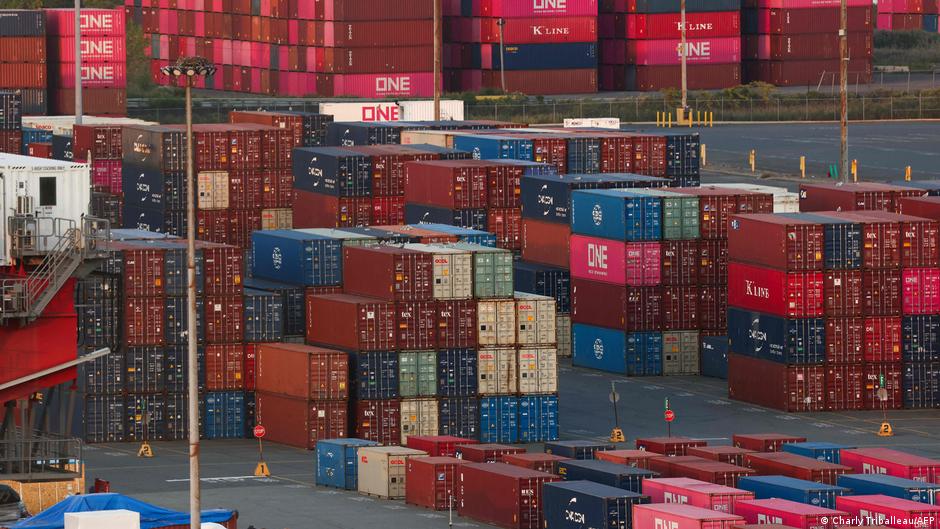
The Trump administration's April 2, 2025 'Liberation Day' tariffs established a 10% baseline (and up to 50% for 85 countries), triggering stock market turmoil and major supply‑chain shifts. US importers front‑loaded shipments (≈+20% Jan–Mar, ≈$184bn), gold imports surged to ≈$72bn, imports from China fell by $66bn (Apr–Jul) while Taiwan/Taiwan/Vietnam saw large gains; Canada’s exports to the US dropped ~$24bn but largely rebalanced. The US Treasury collected $287bn in customs duties in 2025 (~3x prior years, ≈5% of total tax revenue) and studies estimate the tariffs effectively cost US households about $1,000 each in 2025 amid ongoing legal and policy uncertainty (Supreme Court ruling and a new 15% blanket rate).
The policy shock has re-priced the economics of cross-border sourcing more than it has re-made the underlying comparative advantages of production. Short-term winners are incumbents that sell the plumbing of trade — freight brokers, warehousing landlords, air freight carriers and specialty contract manufacturers — because rerouting creates outsized margin on top of existing fixed-cost bases. Those gains are vulnerable to inventory normalization and capacity entry: once ledgers are rebuilt, utilization and exceptional freight spreads will mean-revert unless structural capacity is constrained.
Supply-chain substitution is creating concentrated capacity risk in a handful of alternative exporters and service hubs, which amplifies pricing power for those regional suppliers and for trade intermediaries providing quick-turn solutions. That makes capex cycles in Southeast Asian manufacturing and semiconductor packaging more investable than broadly reshoring plays; equipment vendors, contract fabs and regional logistics integrators will capture a disproportionate share of incremental dollars. Watch lead times, backlogs, and spot freight rates as real-time signals of whether substitution is sticky or merely front-loaded.
Political and legal volatility is the dominant catalyst path: policy reversals or broad trade détente would promptly unwind the premium in route-based winners, while escalation into retaliatory measures could entrench new trade corridors and accelerate automation-led onshoring over multiple years. Time horizons matter — tactical opportunities live in the 3–12 month window where pricing dislocations and capacity constraints persist, whereas structural manufacturing relocation is a 2–5 year trade driven by capex and labor economics.
The consensus underestimates how transient the fiscal windfall and earnings uplift will be for intermediaries. Positioning should target businesses with durable pricing power and capital-light models while explicitly hedging for inventory normalization and demand compression; fading the most crowded “trade-routing” longs after strong run-ups is a high-probability contrarian payoff.
AI-powered research, real-time alerts, and portfolio analytics for institutional investors.
Request DemoOverall Sentiment
strongly negative
Sentiment Score
-0.60
