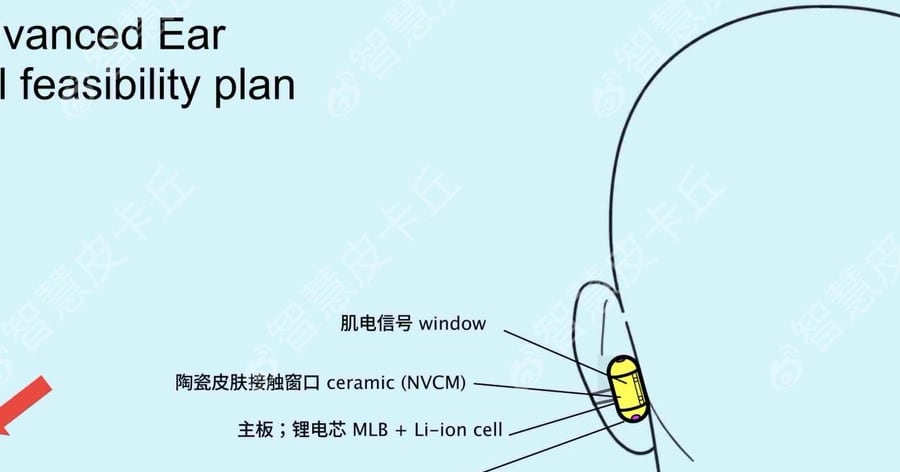
OpenAI plans to introduce an earphone-style consumer device that integrates ChatGPT, marking a strategic push from software into voice-enabled hardware and real-time conversational AI at the edge. The move could broaden OpenAI's user touchpoints and monetization paths while intensifying competition in the wearables and voice-assistant market, though no financials or launch timing were provided.
Market structure: OpenAI’s earbud device is likely to shift value toward cloud inference and chipset suppliers rather than legacy audio OEMs. Expect immediate demand tailwinds for data‑center GPU providers (NVDA) and cloud infra (AMZN, MSFT, GOOGL) as real‑time voice AI uses persistent low‑latency inference; consumer OEMs (AAPL, SONY) face incremental share risk over 12–24 months if device achieves 5–20m unit run‑rate. Pricing power will accrue to GPU/cloud providers via higher utilization and potential subscription ARPU uplift; hardware margins on earbuds will be contested and subsidized like Echo/Pixel Buds historically.
Risk assessment: Tail risks include privacy/regulatory action (EU/US privacy complaints or mandatory on‑device processing), supply‑chain GPU shortages, and product failure/recall that could compress OpenAI’s brand value. Immediate (days) volatility around partnership/newsflow is likely; short term (weeks–months) customer pre‑orders and carrier/retailer rollouts will determine commercial traction; long term (1–3 years) the device could either be niche or catalyze an AI audio hardware category. Hidden dependency: success hinges on cloud latency/cost economics—if streaming inference costs rise >20% per user, adoption stalls and local compute demand (new SoCs) becomes critical.
Trade implications: Favor semiconductor and cloud exposure: establish a 2–3% long position in NVDA to capture incremental datacenter GPU demand and hedge with a 6–12 month call spread (buy ATM, sell 25–35% OTM). Add 1–2% long in QCOM for SoC/Bluetooth content gains and 1–2% long in AMZN (cloud/retail distribution). Consider a small 0.5–1% hedge short AAPL or SONY if pre‑orders/trial metrics miss expectations by >30% in first 60 days.
Contrarian angles: The market may overrate consumer uptake—histor parallels (Echo, Pixel Buds) show hardware can be a distribution vehicle that mainly enriches cloud/AI vendors, not OEMs. Consensus may underprice regulatory risk and operating cost: if first‑year ARPU per device < $20/mo or pre‑orders <500k in 30 days, downgrade growth assumptions and trim cloud/semiconductor longs. Monitor: first‑30‑day pre‑orders, announced manufacturing partners, and any EU/FTC filings within 30–90 days as primary catalysts that will reprice the thesis.
AI-powered research, real-time alerts, and portfolio analytics for institutional investors.
Request DemoOverall Sentiment
mildly positive
Sentiment Score
0.30
