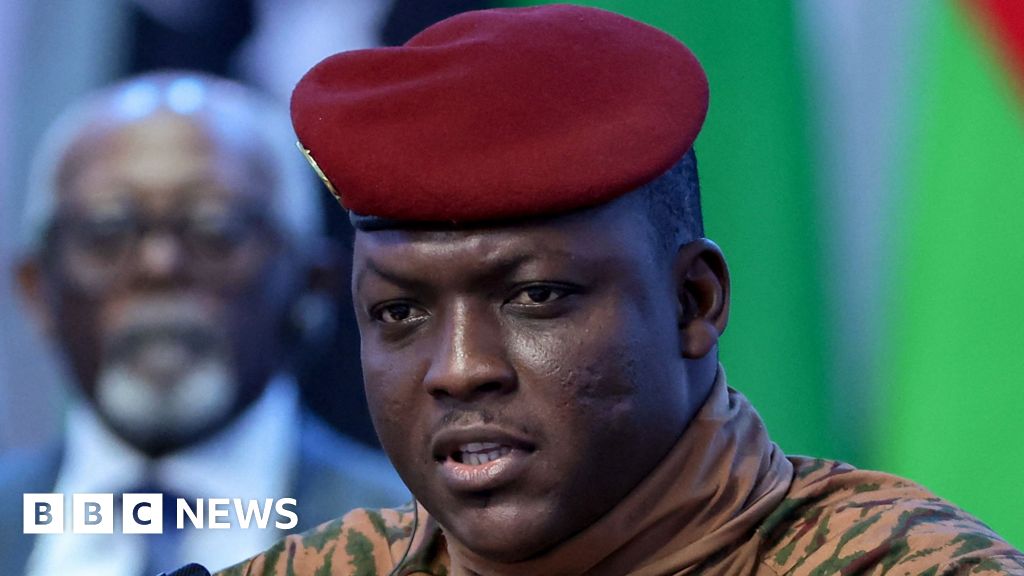
Captain Ibrahim Traoré announced Burkina Faso should 'forget' democracy after the junta extended its rule by five years and banned all political parties. Human Rights Watch reports more than 1,800 civilian deaths since Traoré seized power in 2023, with roughly two-thirds (~66%) attributed to the military and allied militias. The regime's pivot away from Western partners toward Russian military assistance and continued suppression of dissent elevates political and security risk for investors and operations in the Sahel region.
The junta’s explicit rejection of democratic transition and the multi-year entrenchment plan materially raises the political-risk premium across the Sahel, compressing the investable universe for frontier EM allocators. Expect a sustained rise in risk premia (sovereign spreads and equity volatility) over months-to-years as Western aid, technical assistance and some private contracts are re-priced toward counterparty and sanction risk; this is not a one-off kneejerk but a structural re-rating while alternative security suppliers build capacity.
Second-order flows: gold supply and insurance markets will be tightener — Burkina and neighbours are meaningful artisanal and mid-tier gold producers whose output is vulnerable to seizure, operational disruption or contract renegotiation. That creates a persistent bid for physical and miner equities even if militants, Russian PMCs or local militias continue to suppress production; mining insurers and political-risk underwriters will face rising claims and withdraw capacity, raising capital and working-capital costs for regional miners.
Defense and security procurement vectors shift from Western state-to-state channels to non-traditional suppliers and commercial contractors, increasing demand for ISR, drones and small-arms logistics from non-EU/US vendors. This creates a two-track opportunity: near-term disruption to incumbents with legacy West-Africa exposure (contract rollovers at risk) and medium-term secular upside to defense and surveillance providers as regional governments reallocate budgets away from development toward security.
Contrarian lens: markets may overprice immediate collapse risk. A five-year junta with domestic legitimacy could deliver predictable (if illiberal) governance and secure key resource flows, limiting downside for well-hedged miners and contractors who negotiate early. The trade is therefore asymmetric — pay a modest hedge to protect against expropriation and capitalize on the steady bid to gold and select defense contractors if the new order normalizes.
AI-powered research, real-time alerts, and portfolio analytics for institutional investors.
Request DemoOverall Sentiment
strongly negative
Sentiment Score
-0.70
