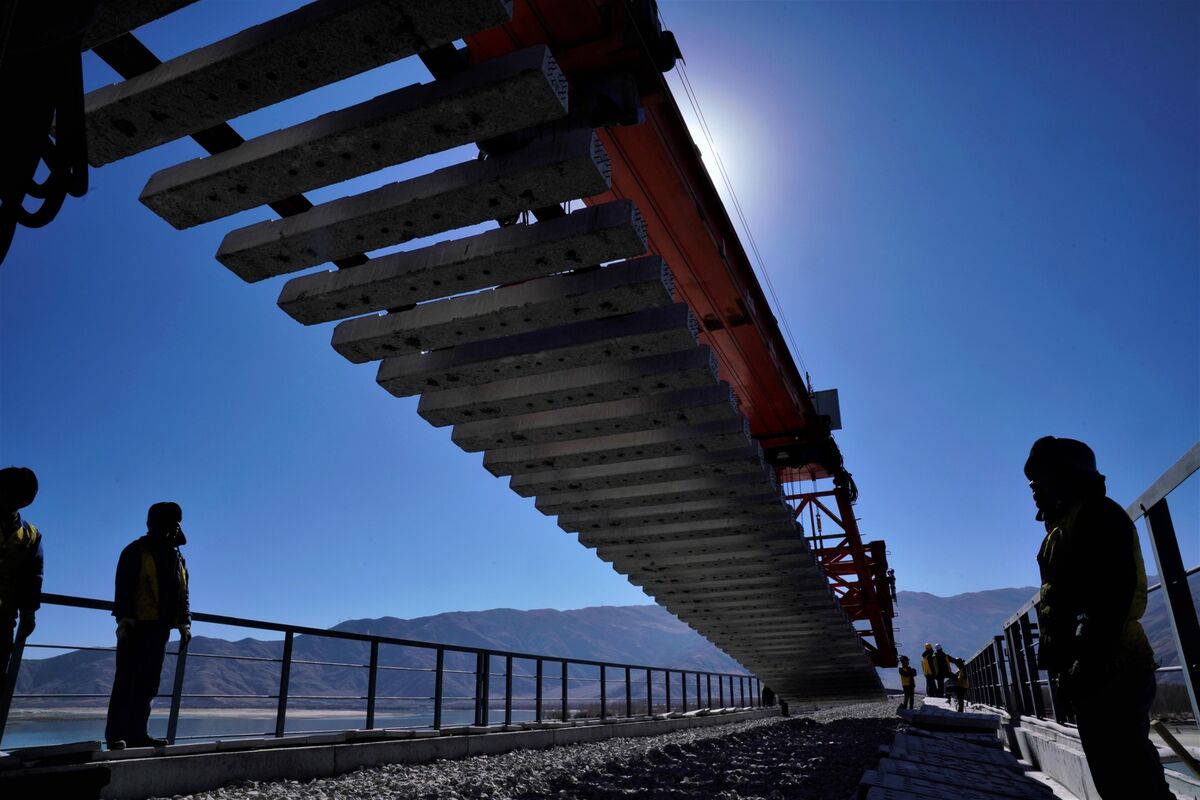
Chinese President Xi Jinping has directed an acceleration of major infrastructure projects in Tibet, notably the 1.2 trillion yuan ($167 billion) Yarlung Tsangpo mega-dam and the Sichuan-Tibet railway. This initiative, aimed at spurring regional development and integrating cultural and tourism industries, signals significant state investment and a strategic push to enhance economic activity and connectivity in the region.
China is embarking on a significant state-led infrastructure program in Tibet, directed by President Xi Jinping, with the explicit goal of spurring regional development. The initiative is distinguished by its massive scale, highlighted by the 1.2 trillion yuan ($167 billion) Yarlung Tsangpo hydropower project and the strategic Sichuan-Tibet railway. This represents a substantial fiscal commitment focused on key themes of renewable energy, transportation, and logistics. The directive to advance these projects with “strength, order and efficiency” signals strong political will and a high probability of execution, likely benefiting a wide range of state-owned enterprises and suppliers in the heavy construction, engineering, and materials sectors. The moderately positive market sentiment reflects optimism that this large-scale capital expenditure will serve as a targeted economic stimulus, although the lack of specific company mentions indicates that benefits will be distributed across the relevant industries rather than concentrated in a few publicly-listed entities.
AI-powered research, real-time alerts, and portfolio analytics for institutional investors.
Request DemoOverall Sentiment
moderately positive
Sentiment Score
0.55
