
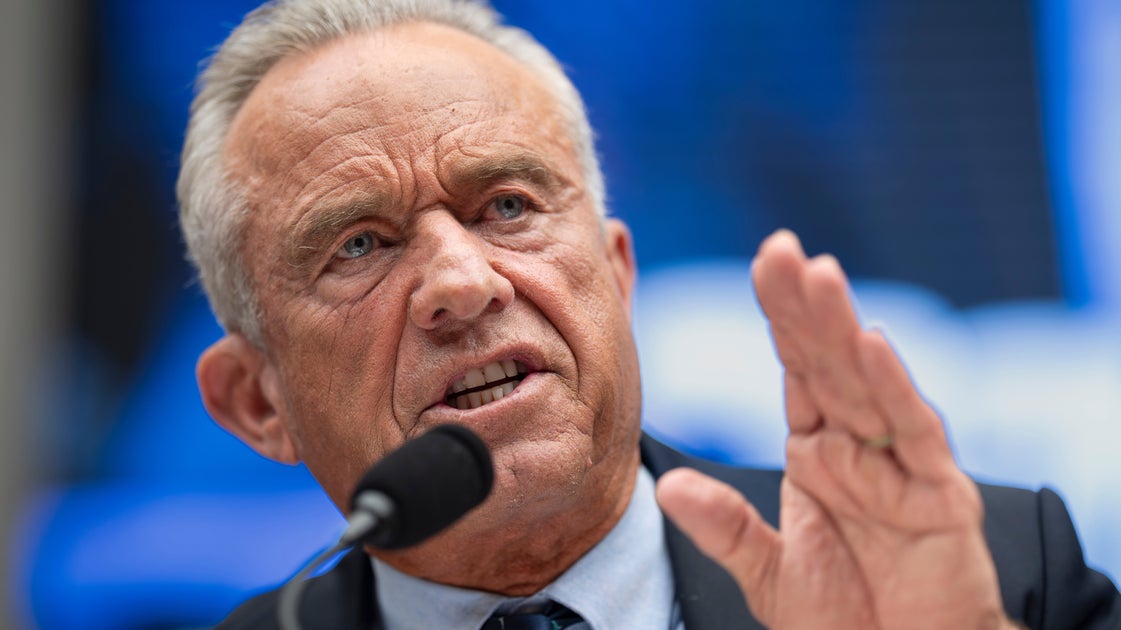
Health Secretary Robert F. Kennedy Jr. publicly rejected a Danish study of more than 1 million women that found no link between prenatal Tylenol use and autism, calling it "garbage" and "fraudulent." The dispute keeps scrutiny on acetaminophen use during pregnancy and on Tylenol maker Kenvue, though the article does not indicate an immediate regulatory action or direct financial impact. The broader takeaway is heightened controversy around a high-profile health claim, with limited near-term market implications.
KVUE is exposed less through direct liability today than through narrative drift: when a politically prominent health official keeps amplifying a safety scare, the market has a habit of repricing the brand as if litigation risk were already embedded in forward demand. That can pressure retailer shelf velocity, doctor recommendation behavior, and household trial rates before any formal regulatory action appears. The first-order move is reputational; the second-order move is persistent under-penetration in new-parent cohorts, which matters because this is a replenishment-driven franchise with high trust sensitivity.
The bigger setup is asymmetry around policy escalation. If federal agencies move from rhetoric to guidance, labeling, or procurement restrictions, the downside would likely hit within days to weeks via headline-driven de-stocking and private-label share gains. If the administration stays at verbal pressure, the damage is more gradual: fewer healthcare endorsements, more social-media churn, and a slow leak in premium positioning that can cap category growth for multiple quarters.
The contrarian point is that the market may be overestimating the probability of a true regulatory shock and underestimating the durability of OTC demand. Pregnancy-related usage is a narrow slice of total acetaminophen consumption, so the revenue risk to KVUE may be smaller than the cultural noise suggests, especially if consumers substitute rather than abandon the category. The more durable opportunity may be in competitors with stronger ibuprofen or generic substitution economics, while KVUE’s valuation multiple remains hostage to headline risk.
From a timing perspective, this is a better event-driven short than a structural thesis unless policy language sharpens. The near-term catalyst window is days to a few weeks around additional comments from HHS/White House or any state-level action; absent that, the trade likely mean-reverts as the market recognizes the gap between commentary and enforceable change. The key risk to shorts is a clarification from medical societies or regulators that sharply narrows the implied risk, which would relieve the brand overhang quickly.
AI-powered research, real-time alerts, and portfolio analytics for institutional investors.
Request TrialOverall Sentiment
mildly negative
Sentiment Score
-0.15
Ticker Sentiment
