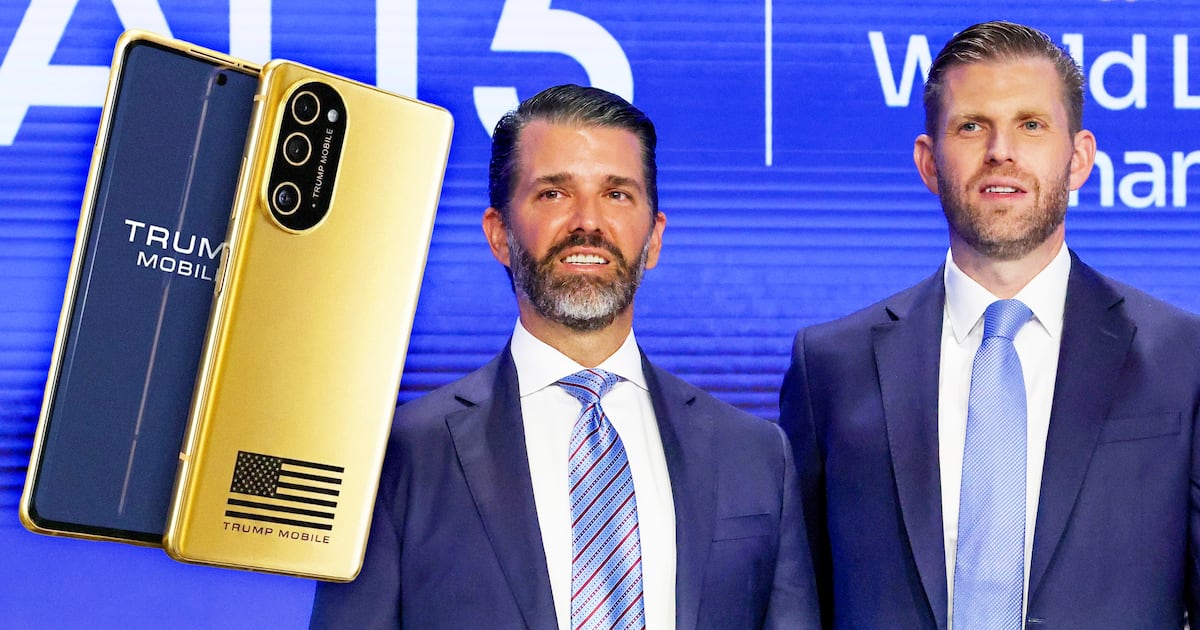
Nearly 600,000 customers paid a $100 deposit for the Trump Mobile T-1 smartphone, but the $499 device has been delayed multiple times and is now only expected to begin shipping this week. The rollout has triggered backlash from buyers, raising execution and credibility concerns around the venture led by Eric Trump and Donald Trump Jr. While the product launch is notable, the broader market impact should be limited.
This is less a handset story than a reputational/fulfillment stress test for a politically captive consumer franchise. The important second-order effect is trust decay: once early adopters believe the brand can miss a promised ship window while taking deposits, conversion rates on future launches usually compress faster than headline demand, because the most loyal buyers become the loudest skeptics. That creates a ceiling on lifetime value for any adjacent media, subscription, or commerce products tied to the same audience. The supply-chain angle is also telling. A genuinely U.S.-made smartphone would be uneconomic at this price point, so any credible path to delivery likely relies on offshore assembly with domestic branding, which increases legal/PR scrutiny and raises the odds of refund requests, chargebacks, and regulator attention if “made in America” language was ever operationally misleading. The customer-service outsourcing detail suggests a fragile operating model: high-touch support costs can scale nonlinearly when a product is sold as a political statement rather than a utility, and that can quickly overwhelm margins if only a small fraction of the 600k deposits convert into complaints. From a market perspective, the direct traded impact is limited, but the broader signal is negative for trust-based direct-to-consumer and celebrity-brand launches. The real loser is not any one carrier; it is the monetization of the MAGA consumer graph, which depends on premium pricing and low friction. If this launch lands poorly, expect slower take-up for future affiliated products and a sharper discount rate applied to any venture where governance, not product, is the core asset. Contrarian view: the market may underweight the possibility that controversy itself is the monetization engine. Even a botched rollout can preserve or increase engagement if supporters treat delays as proof of persecution, not failure, which means the “brand damage” trade can be early. The key inflection is not shipment confirmation, but refund behavior and the tone of social media over the next 2-6 weeks; if anger persists after delivery begins, that is when the flywheel breaks.
AI-powered research, real-time alerts, and portfolio analytics for institutional investors.
Request DemoOverall Sentiment
moderately negative
Sentiment Score
-0.35
