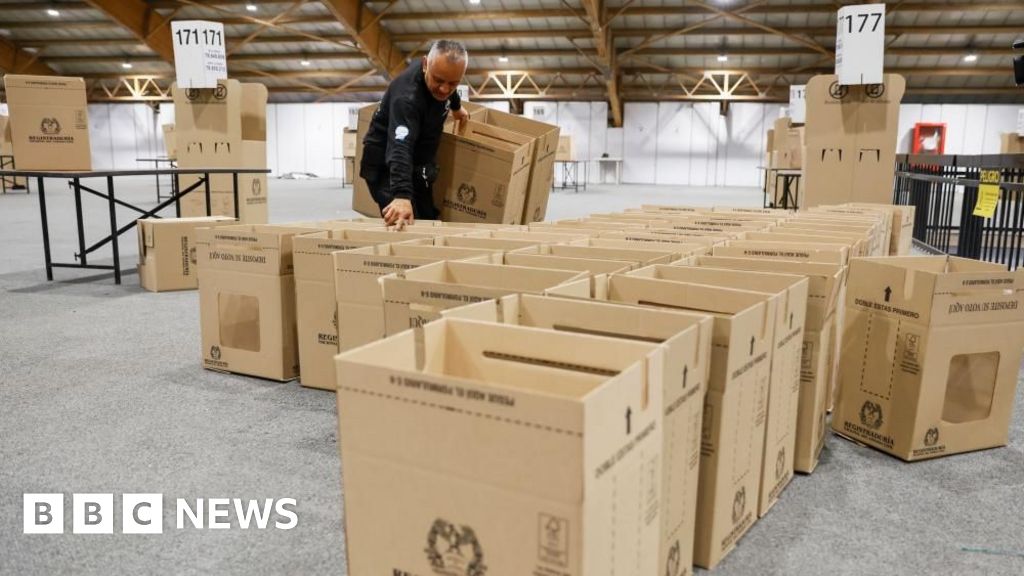
Colombia is voting in a presidential election that could reset its alignment with the US, with a runoff expected on 21 June and polls showing Iván Cepeda narrowly leading Abelardo de la Espriella. The race is centered on whether the next government continues Petro's 'total peace' approach or shifts to a tougher military crackdown on drug gangs amid record violence and record-high cocaine production. While the outcome matters for security and regional geopolitics, the immediate market impact is likely limited.
The immediate market read is not a Colombia beta event; it is a policy-variance event for the US security perimeter and for regional risk premia. A Cepeda win likely preserves a noisy but functional anti-narcotics channel with Washington, which limits downside for Colombian sovereign spreads and local financials. A de la Espriella/Valencia surprise would matter more through a faster reset of security cooperation than through any broad macro shift, because tighter coordination can improve convoy security, port throughput, and rural logistics within quarters rather than years.
The bigger second-order effect sits in the violence-to-capex transmission. If the next government leans into militarized enforcement, expect a near-term spike in operational risk for transport, agriculture, and infrastructure projects in affected corridors before any medium-term improvement in extractive and logistics reliability. Conversely, a continuation of negotiated peace without credible enforcement risks prolonging the productivity drag: more disruptions to roads and pipelines, higher insurance costs, and a wider spread between Colombia and cleaner EM peers as investors price policy paralysis.
The contrarian point is that the market may be overfocusing on ideological rhetoric and underpricing the institutional inertia of US-Colombia cooperation. Even with a left-leaning presidency, anti-drug coordination has historically persisted because both sides need intelligence sharing, interdiction, and trade continuity. That argues for fading any knee-jerk risk-off in Colombian assets after the election while staying long volatility into the runoff, since the real catalyst is not the first-round vote but whether the eventual winner can credibly govern security outcomes by late Q3.
AI-powered research, real-time alerts, and portfolio analytics for institutional investors.
Request TrialOverall Sentiment
neutral
Sentiment Score
-0.10
