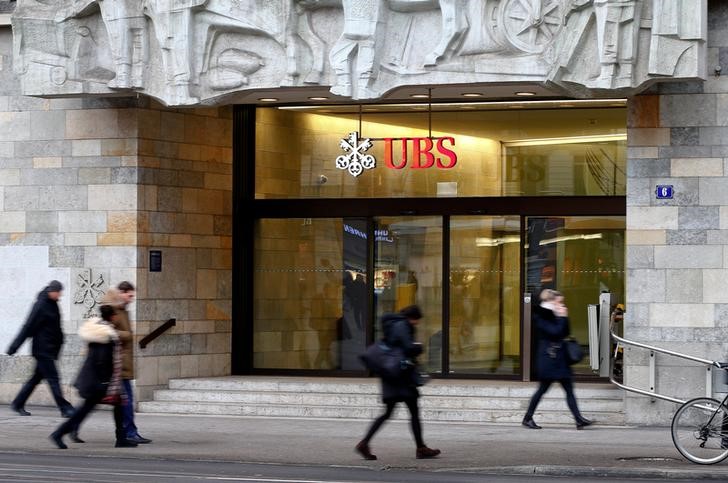
UBS shares rose about 3% after an FT report that senior Swiss parliamentarians privately indicated they would water down planned capital requirement increases, potentially reducing a proposed $22B uplift. The package's first component would tighten capital quality and add $2–3B to core requirements (analysts see a broader ~$11B impact), with government decisions possibly published as soon as April and parliamentary debate from May–June. Lawmakers likely have scope to dilute the foreign-subsidiary capital requirement, but UBS warns outcomes are uncertain and has privately suggested it could relocate if a compromise isn't reached.
Raising effective capital requirements (or even the credible threat of them) is a leveraging-of-costs exercise: management faces a binary choice between issuing equity/dilutive instruments, shrinking risk-weighted assets, or selling rate-accretive businesses — each path lops 200–500bps off near-term ROE under plausible moves. That math forces visible management actions (asset sales, dividend cuts, buyback halts) within quarters and tends to compress the bank’s trading and prime services franchises disproportionately because they are scale- and balance-sheet intensive.
The geopolitical and regulatory friction creates an asymmetric advantage for non-Swiss deposit and wealth hubs — IF relocation is credible, client flows and high-margin advisory mandates are the second-order knock-on that can depress Swiss leverage multiples for years. Funding markets will reprice earlier than equity: senior spreads and AT1s are the leading indicator; a 50–150bp widening in senior spreads typically precedes a 10–20% equity move in universal banks.
Catalysts to watch are binary political/legal outcomes and any management capital plan; both will resolve over months not days. The consensus risk is that investors treat this as a near-term headline story; the contrarian angle is that a parliamentary compromise that materially reduces foreign-subsidiary burden is plausible, which would limit downside but also cap a post-compromise rally because the underlying business model still faces structurally higher capital and governance scrutiny.
AI-powered research, real-time alerts, and portfolio analytics for institutional investors.
Overall Sentiment
mildly positive
Sentiment Score
0.15
Ticker Sentiment
