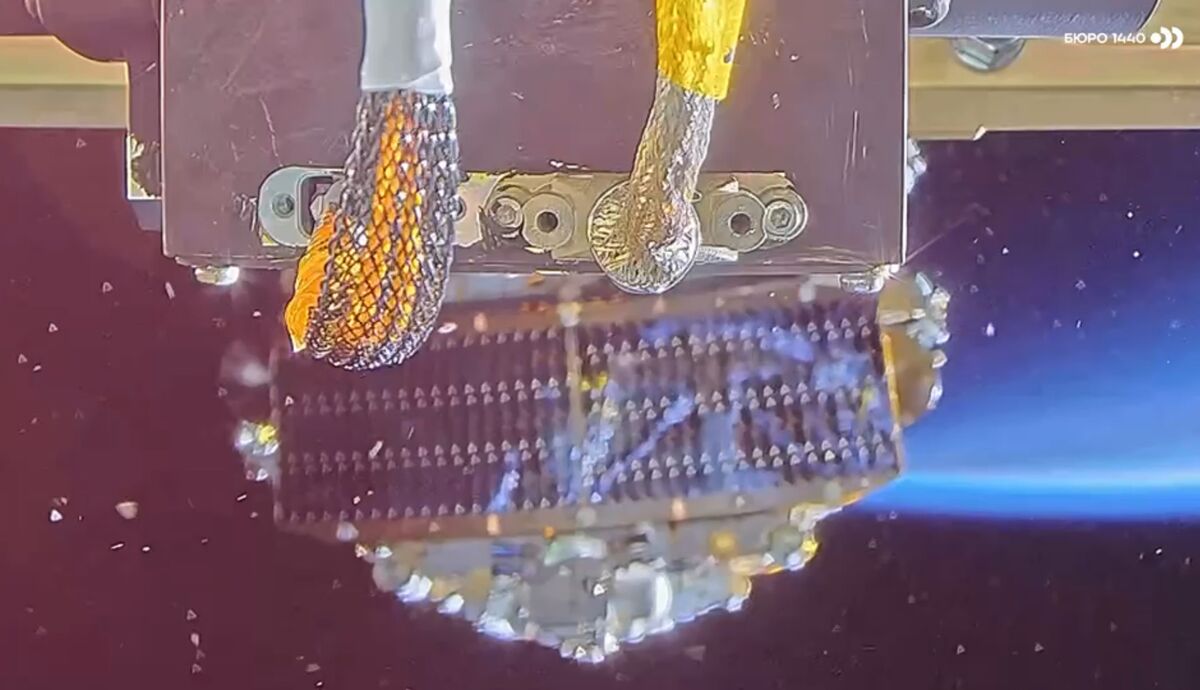
Russia's Bureau 1440 launched 16 broadband Internet satellites into low-Earth orbit (LEO) at 8:24 p.m. Monday; the satellites reached reference orbit and are now controlled by the company's mission control. The deployment is described by officials as an early operational step toward a domestic Starlink-style LEO broadband network, signaling a strategic push in Russia's space-based communications capabilities.
This development tightens the geopolitical axis of LEO communications: expect sovereign-driven demand for domestically controlled terminals, ground stations and secure links to grow meaningfully over 12–36 months as governments hedge dependence on Western providers. That creates a bifurcated market — low-cost commercial consumer LEO services remain a Volume/Scale game, while government and contested-country deployments favor vertically integrated suppliers who can guarantee provenance, firmware control and liability protections.
Supply-chain second-order effects will surface quickly. Sanctions and export controls will push procurement toward non-Western component vendors and create substitution opportunities for firms that can certify “clean” hardware; concurrently, Western defense primes that already have classified supply chains can capture premium contracts with 18–24 month procurement cycles. The increased on-orbit density also raises operational risk (collision, intentional jamming, RF interference), which will accelerate demand for space situational awareness, cyber-hardened terminals and space insurance capacity in the near-to-medium term.
Market winners are therefore not the obvious consumer-ISP plays but firms selling hardened terminals, ground infrastructure and launch cadence/insurance services — these capture higher unit economics and recurring maintenance revenues. Key catalysts to watch that could re-rate equities are: (1) formal ITU or regional frequency disputes in the next 6–18 months, (2) public procurement announcements from NATO/EU members within 12–24 months, and (3) any reported component import pathways that trigger additional export-control responses; reversals would come from rapid de-escalation or diplomatic sharing agreements that neutralize the need for parallel sovereign networks.
AI-powered research, real-time alerts, and portfolio analytics for institutional investors.
Request DemoOverall Sentiment
neutral
Sentiment Score
0.00
