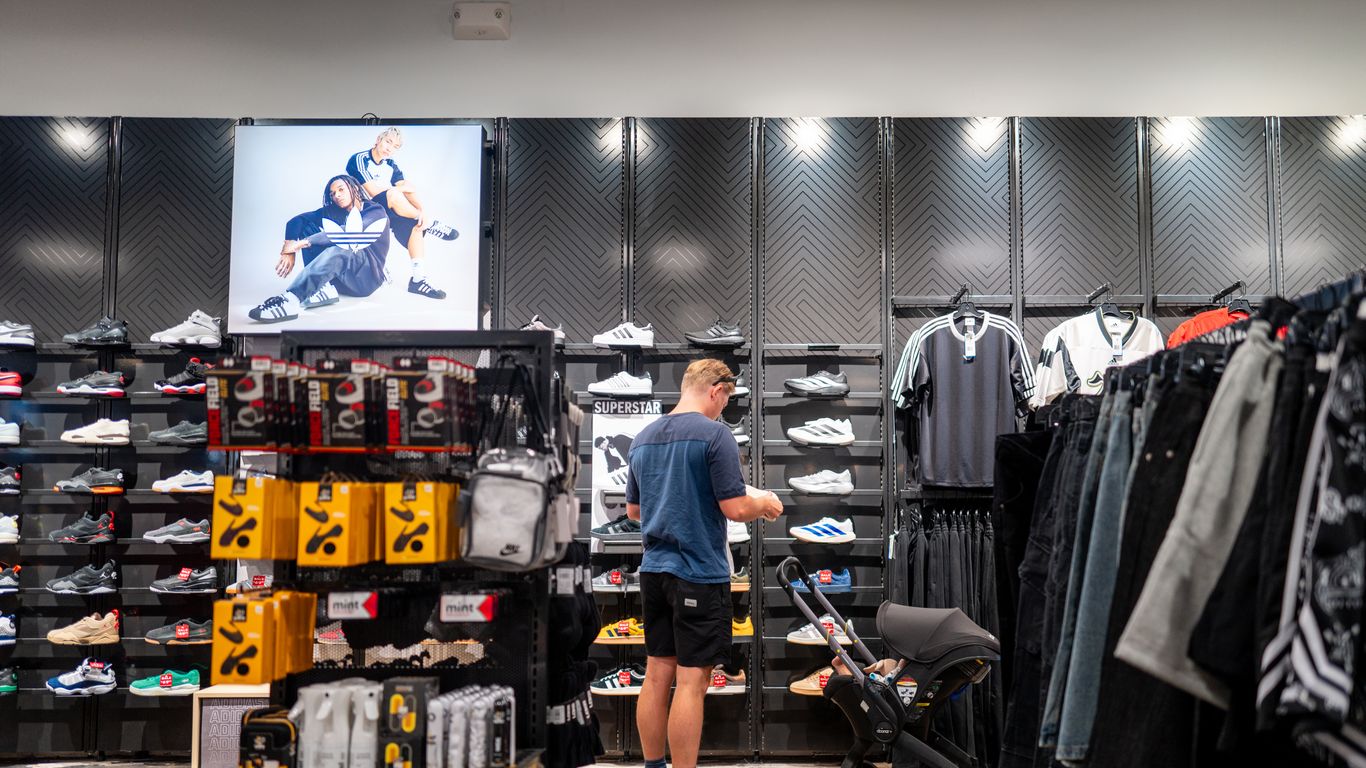
U.S. retail sales significantly exceeded expectations in August, rising 0.6%, with July's figures also revised higher to 0.6%. This robust consumer spending, which was double economist forecasts, signals unexpected economic resilience despite ongoing inflation and labor market uncertainties, presenting a key "bright spot" for an economy otherwise perceived to be slowing.
U.S. retail sales demonstrated unexpected strength in August, rising 0.6%, a figure that was double the consensus forecast and matched an upwardly revised 0.6% increase for July. This data indicates sustained consumer resilience and provides a significant bright spot for a U.S. economy otherwise feared to have slowed notably. The spending strength persists despite stated headwinds from rocky labor market conditions and higher inflation. Growth was led by specific categories, with e-commerce sites up 2.0% and clothing stores gaining 1.0%, while weakness was observed in sectors like department stores (-0.8%) and furniture (-0.3%), pointing to a selective consumer. Critically, the data is not adjusted for inflation, which is reported to be accelerating due to tariffs, implying that a portion of the nominal sales growth may be driven by price increases rather than higher sales volumes.
AI-powered research, real-time alerts, and portfolio analytics for institutional investors.
Request DemoOverall Sentiment
moderately positive
Sentiment Score
0.50
