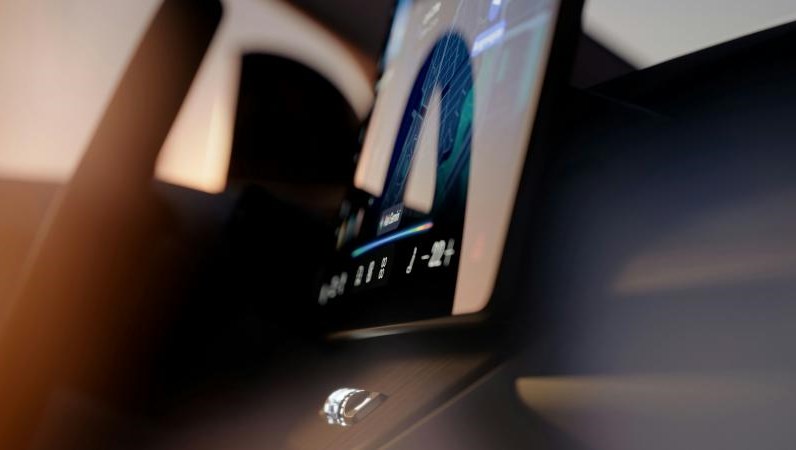
Volvo Cars will reveal the all-electric EX60 on 21 January 2026, a mid-size SUV built as a software-defined car centered on the new in-house HuginCore and deep integrations with Google Gemini, Qualcomm Snapdragon platforms and NVIDIA DRIVE AGX Orin to deliver advanced AI-driven infotainment, driver assistance and OTA-updatable features. The EX60 claims up to 640 km EPA-equivalent range (preliminary), can add ~270 km in 10 minutes on 400 kW charging, and touts over 250 trillion operations per second for continuous learning; Volvo also highlights four years of complimentary unlimited data. The announcement complements Volvo Car Group’s strong 2024 results (SEK 27bn core operating profit; SEK 400.2bn revenue; 763,389 cars sold) and may modestly influence investor views on Volvo’s differentiation in AI-enabled EVs and software-driven monetization potential.
Market structure: This lift in software-defined EVs disproportionately benefits NVIDIA (DRIVE Orin compute), Qualcomm (Snapdragon cockpit/connectivity) and Alphabet (Gemini + cloud), while traditional Tier-1 infotainment suppliers and low-tech OEMs face margin pressure and feature commoditization. Expect pricing power for high-end SoCs and auto-grade AI stacks to remain strong through 2026 as OEMs race to differentiate; supply-demand for Orin/auto Snapdragon capacity could tighten, supporting NVDA/QCOM ASPs by mid-2026. Cross-asset: stronger capex and software revenue expectations push equity risk premia lower for winners, modestly steepen corporate spreads for legacy suppliers, and increase copper/lithium intensity over 1–3 years.
Risk assessment: Tail risks include regulatory/privacy backlash (camera/AI monitoring) and a single high-profile safety incident causing OTA rollbacks and ~20–40% equity hits to Volvo and partners; chip supply interruptions or Qualcomm/NVIDIA design flaws are second-order risks. Timeframes: immediate (days) for event-driven volatility around Jan 21 reveal; short-term (weeks–months) for order flow and supplier bookings; long-term (quarters–years) for service monetization and recurring revenue. Hidden dependency: Volvo’s experience is tightly coupled to Google cloud/GPU stack and telco data economics (4-year unlimited data liability).
Trade implications: Establish a tactical 2–3% long in VOLCAR B into the Jan 21 reveal (expect short gamma; hedge with Feb call spreads: buy Feb 26/35 call spread sized to cap max loss). Add 1–2% long NVDA for structural auto-AI exposure and 1–2% long GOOGL for Gemini platform monetization; size QCOM at 1% for connectivity upside and sell OTM short-dated calls to finance. Pair trade: long GOOGL (2%) / short a legacy Tier-1 infotainment supplier (size 1–1.5%) for relative software capture through 2026.
Contrarian angles: Consensus overestimates immediate monetization — expect software-service revenue to lag by 4–8 quarters; NVDA is priced for perfect auto penetration and may be partially overbought near-term. Volvo could outperform if dealer experience and OTA cadence beat expectations (histor parallel: Apple CarPlay adoption accelerated supplier shakeouts but delayed OEM monetization). Watch for unintended consequences: cybersecurity events, data-privacy regulation within 6–12 months, or carrier pushback on unlimited-data economics which would materially cut QCOM/GOOGL service margins.
AI-powered research, real-time alerts, and portfolio analytics for institutional investors.
Request DemoOverall Sentiment
moderately positive
Sentiment Score
0.60
Ticker Sentiment
