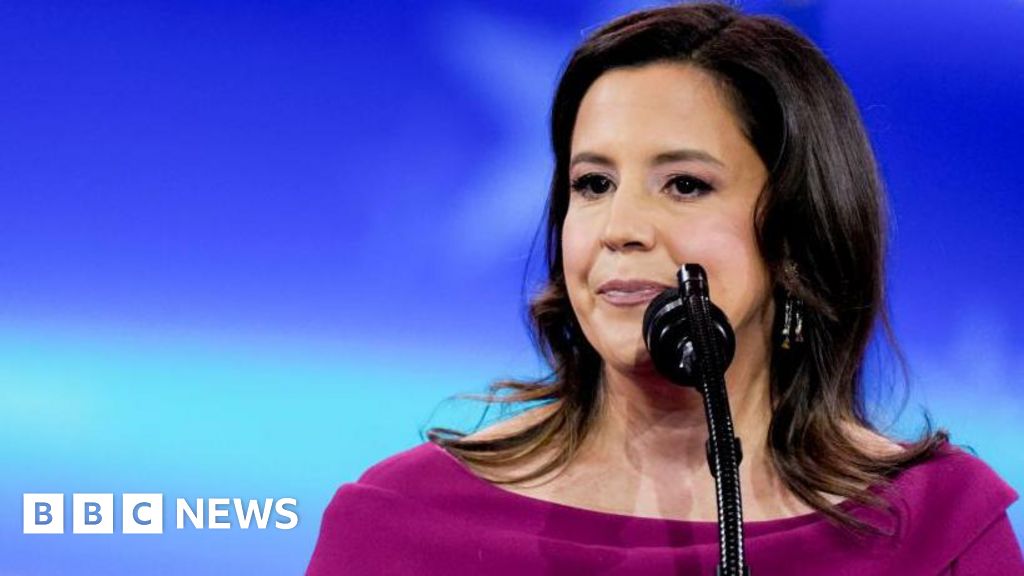
Republican Congresswoman Elise Stefanik has ended her bid for New York governor and announced she will not seek re-election to Congress, citing family priorities after facing an expected primary challenge from fellow Trump ally Bruce Blakeman. Stefanik, 41, who has represented NY-21 since 2014 and was earlier floated for U.N. ambassador by Trump, said a prolonged primary would be an inefficient use of resources; the move reshuffles the GOP primary landscape in New York but carries minimal direct market implications beyond political positioning and potential downstream effects on House representation.
Market structure: Stefanik's exit reduces one axis of volatility in New York state politics and modestly increases probability of incumbency/continuity under Gov. Hochul, favoring state-regulated cashflow names (utilities, Medicaid providers) and reducing immediate event-risk premia in NY munis. Expect NY-specific muni spreads to Treasuries to tighten 5–25 basis points versus current levels over the next 1–3 months if no new high-profile primary emerges. National macro, FX, commodities and Treasuries will see only idiosyncratic, low-amplitude moves (single-digit bps), not regime shifts.
Risk assessment: Tail risks include a sudden Trump endorsement of Blakeman or another insurgent that re-inflames a contentious primary (high-impact, low-probability) and the unexpected flip of Stefanik's congressional seat altering House margins and legislative risk for tax/regulatory policy. Time horizons: immediate (days) — implied vol drop in NY political instruments; short (weeks–months) — muni spread repricing; long (quarters–years) — electoral outcomes that affect state budget/tax policy. Hidden dependency: the vacuum in NY-21 may attract national fundraising and shift House-level legislative dynamics, second-order affecting federal aid to states and banking/regulatory sentiment.
Trade implications: Tactical positions should be small and state-specific: long NY-focused munis if spreads tighten, paired with short national muni exposure to isolate NY carry; overweight regulated NY utilities for 6–12 months on policy continuity. Use option collars or put spreads to cap downside vs outright longs because political reversals are binary and can widen spreads 20–40 bps quickly. Entry window: next 5–30 trading days while primary noise subsides; reassess at key calendar points (30/60/90 days) and after any Trump public endorsement.
AI-powered research, real-time alerts, and portfolio analytics for institutional investors.
Request DemoOverall Sentiment
neutral
Sentiment Score
0.00
Contrarian angle: The market underestimates that Stefanik's withdrawal increases the probability of a less ideologically extreme Republican nominee, which paradoxically raises re-election odds for a Democrat and therefore favors continuity trades in NY (munis, regulated utilities). Reaction is likely underdone: NY munis often over-discount local political stability by 10–30 bps; that gap is exploitable. Unintended consequence: a Democratic pickup of Stefanik's House seat would raise odds of federal regulatory initiatives unfavorable to certain financials — keep a nimble hedge for regional-bank exposure.
