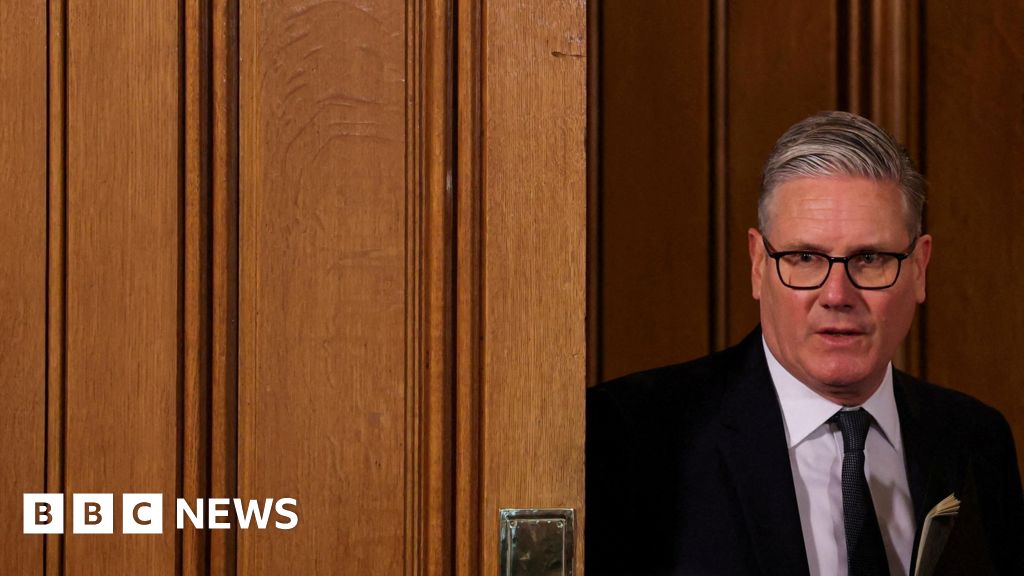
Sir Keir Starmer has temporarily reasserted control in a Labour leadership challenge, using party rules that require 81 MPs to back a specific opponent before he can be forced into a contest. Health Secretary Wes Streeting has not moved to trigger a challenge, while the party’s soft left continues to weigh Andy Burnham or another alternative. The article is political and procedural rather than market-moving, with only limited indirect implications for UK policy stability.
This is a classic intra-party control shock, not a policy shock, and markets usually misprice the distinction. The near-term effect is less about legislation and more about whether ministers, donors, and junior officials begin acting defensively, which raises execution risk across anything requiring Cabinet discipline over the next 2-6 weeks. For UK domestic assets, the first-order channel is sentiment: a leadership spiral tends to steepen UK political risk premia, widen gilt-swap spreads at the margin, and delay incremental allocation into UK cyclicals that depend on regulatory clarity.
The more interesting second-order effect is that a weak incumbent can still be tradable if the opposition cannot converge on a successor. That means the base case may be prolonged indecision rather than a clean regime change, which is typically worst for mid-cap UK domestics, public-sector contractors, and rate-sensitive REITs because they trade on policy stability more than on the identity of the leader. A prolonged contest also increases the odds of fiscal drift: even if headline policy does not change, departments slow hiring, procurement, and capex commitments, which can show up in weaker order intake 1-2 quarters later for UK-facing service companies.
The contrarian view is that the market may overreact to leadership noise while underpricing the probability that the incumbent survives this round and emerges temporarily strengthened. If the challenge fails to coalesce, the short-covering response could be sharp because positioning in UK domestic equities is already light and macro funds are more likely to prefer a cleaner London-exposed hedge than a directional political bet. In that scenario, the best risk/reward is not a blanket short UK beta, but a tactical expression against names with the most domestic policy leverage and weakest balance-sheet flexibility.
The key catalyst window is immediate: 24-72 hours for any formal challenge signal, and 2-4 weeks for evidence of ministerial defections or a leadership timetable becoming market-relevant. If there is no escalation by then, the trade should shift from crisis premium to slow-burn governance discount. The tail risk is a rapid alignment around an alternative candidate, which would reprice UK political expectations faster than most investors can reposition, especially in small- and mid-cap domestics with low liquidity.
AI-powered research, real-time alerts, and portfolio analytics for institutional investors.
Request DemoOverall Sentiment
neutral
Sentiment Score
0.00
