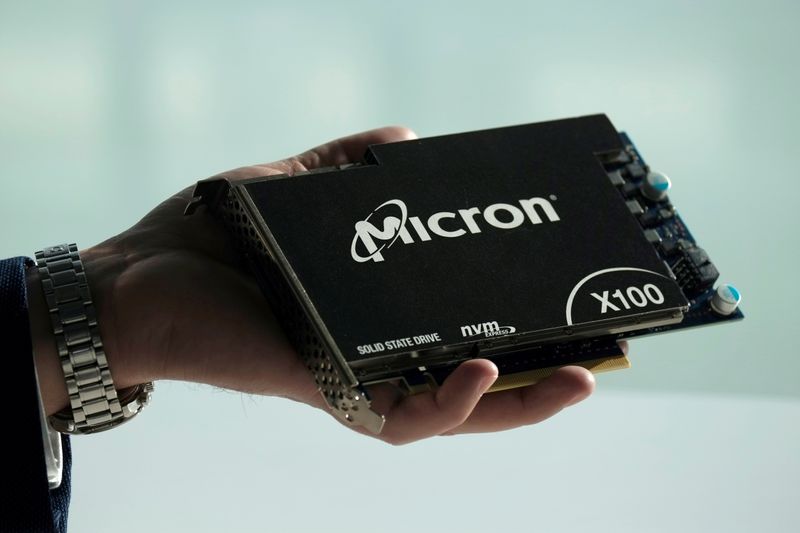
Erste Group downgraded Micron (MU) to Hold from Buy citing reduced free cash flow from necessary high capex despite strong demand; the stock has surged ~316% over the past year. Micron issued revenue guidance of $109 billion for FY2026, HBM3E sales are sold out for 2026, and LTM levered free cash flow was $10.3B, while management launched a $5.4B tender for senior notes maturing 2031–2035. Several analysts remain bullish: Argus raised its PT to $540 (Buy) and Cantor Fitzgerald set a $700 PT (Overweight), and Morgan Stanley/others maintained Overweight, reflecting strong AI-driven demand and triple-digit y/y revenue and adj. EPS growth in the fiscal Q2 report.
The immediate winners are the upstream capital goods and advanced-packaging ecosystem — wafer fab equipment, interposer/substrate suppliers and high-end test/assembly houses — because any meaningful HBM-led demand ramp requires multiyear tool and packaging commitments that are stickier than spot DRAM cycles. Expect orderbacklogs at equipment names to front-load revenue over the next 6–18 months even if module-level DRAM ASPs soften; that front-loading creates a window where equipment vendors re-rate on visible backlog while memory producers carry the cash burden of factory builds.
Heightened capex raises two layered risks: first, leverage and interest-rate sensitivity in the corporate bond market if funding costs stay above historical norms; second, execution risk on new nodes/packaging where a single yield miss or TSV/interposer throughput shortfall can push meaningful capacity online later than modeled. Watch three time buckets: 0–3 months for booking cadence and tender outcomes, 3–12 months for tool deliveries and construction timelines, and 12–36 months for aggregate DRAM supply response from incumbents.
Consensus positions currently trade as if HBM demand sterilizes classic DRAM cyclicality; that’s binary. If long-term contract penetration by cloud customers increases even modestly, upside is asymmetric; but if mainstream DRAM pricing reverts toward structural oversupply, margins and returns on new fabs could compress materially. The optimal play extracts exposure to the equipment/packaging squeeze and buys optionality on memory pricing while de-risking balance-sheet and funding exposures.
AI-powered research, real-time alerts, and portfolio analytics for institutional investors.
Request DemoOverall Sentiment
moderately positive
Sentiment Score
0.30
Ticker Sentiment
