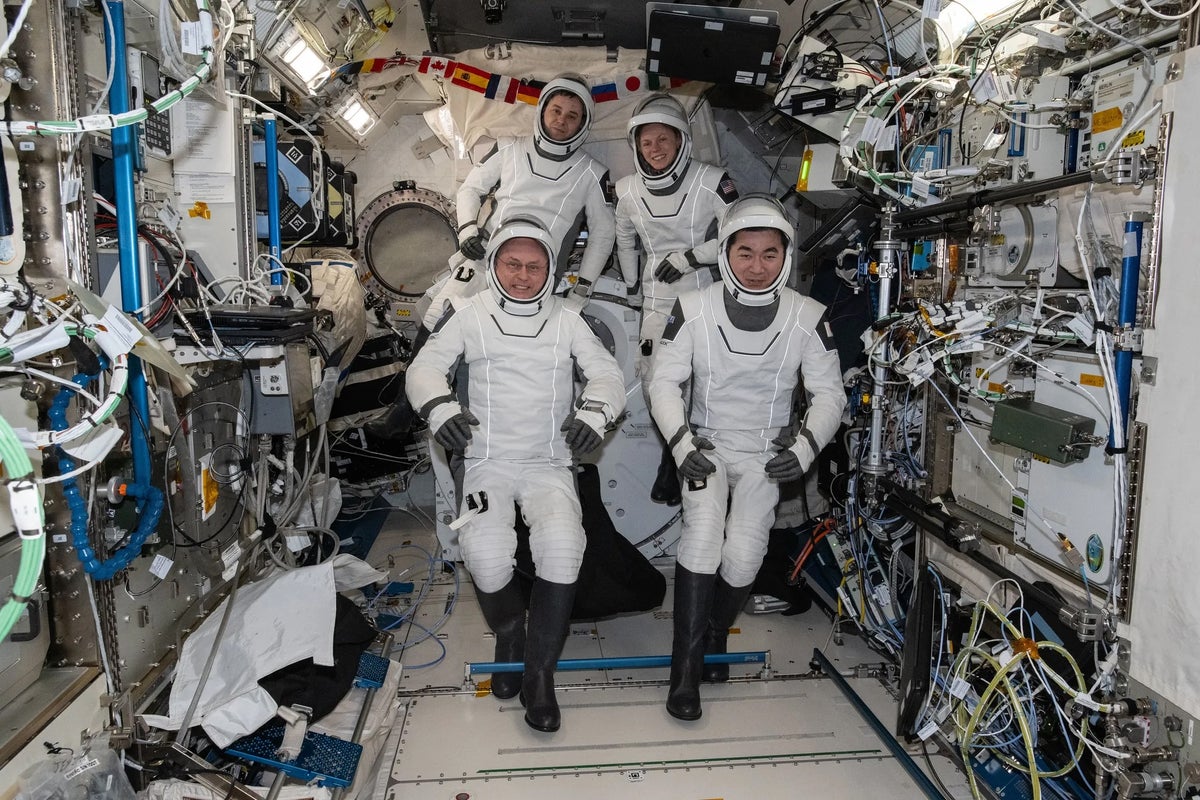
A SpaceX Crew Dragon carrying Crew-11 undocked from the ISS at 5:20 P.M. EST to begin a 10.5-hour return after NASA initiated a medical evacuation of one astronaut — unnamed and described as stable — prompting the early termination of the crew's mission roughly a month ahead of schedule. The capsule, carrying NASA astronauts Mike Fincke and Zena Cardman, JAXA astronaut Kimiya Yui and Russian cosmonaut Oleg Platonov, is expected to splash down off San Diego at about 3:41 A.M. EST with SpaceX and NASA recovery teams standing by; NASA leadership will brief media following recovery. Operationally significant as the first ISS medical evacuation, the incident may trigger procedural reviews but is unlikely to have material near-term market effects.
Market structure: The event is a reputational and operational signal more than a market-moving shock — winners are large, gov‑t‑tied aerospace/defense primes (LMT, NOC, RTX, LHX) and space life‑support/telemedicine suppliers who can win safety retrofit work; losers are consumer‑facing or heavily promotional space plays (BA commercial crew narrative, SPCE, small-cap launchers) that suffer headline risk. Expect a modest reallocation of program dollars: 2–5% incremental revenue uplift to prime contractors over 12–24 months as NASA and partners accelerate safety upgrades and medical capability investments.
Risk assessment: Tail risks include a severe on‑orbit medical outcome or a multi‑agency investigation that temporarily halts crewed rotations (low prob but high impact) — such scenarios could force a 3–12 month pause and push program costs up mid‑single digits for contractors. Near term (days) volatility will be headline-driven; short term (weeks–months) is driven by investigation releases and political messaging; long term (quarters–years) depends on budget cycles (FY27 NASA appropriations) and Russia coordination with ISS operations.
Trade implications: Tactical alpha favors overweighting large primes and underweighting headline‑sensitive aerospace names: establish size‑controlled longs in LMT/LHX and short/put exposure to BA and speculative launch plays (RKLB, SPCE). Use concentrated option structures (3–6 month call spreads on LMT/LHX; 3–6 month puts on BA or buying BA‑heavy put spreads) to limit capital and exploit likely asymmetric reactions around investigation milestones in the next 30–90 days.
Contrarian angles: The market will likely underprice the downstream increase in gov‑funding for safety and medical systems — history (post‑Columbia) shows program suspensions were followed by multi‑year prime contractor revenue tailwinds; that dynamic could produce 8–20% outperformance for selected primes over 6–18 months. Conversely, short‑term negative sentiment may oversell small‑cap space equities, creating tactical buy windows once initial headlines fade (monitor investigation releases at 30/60/90 days).
AI-powered research, real-time alerts, and portfolio analytics for institutional investors.
Request DemoOverall Sentiment
neutral
Sentiment Score
0.00
