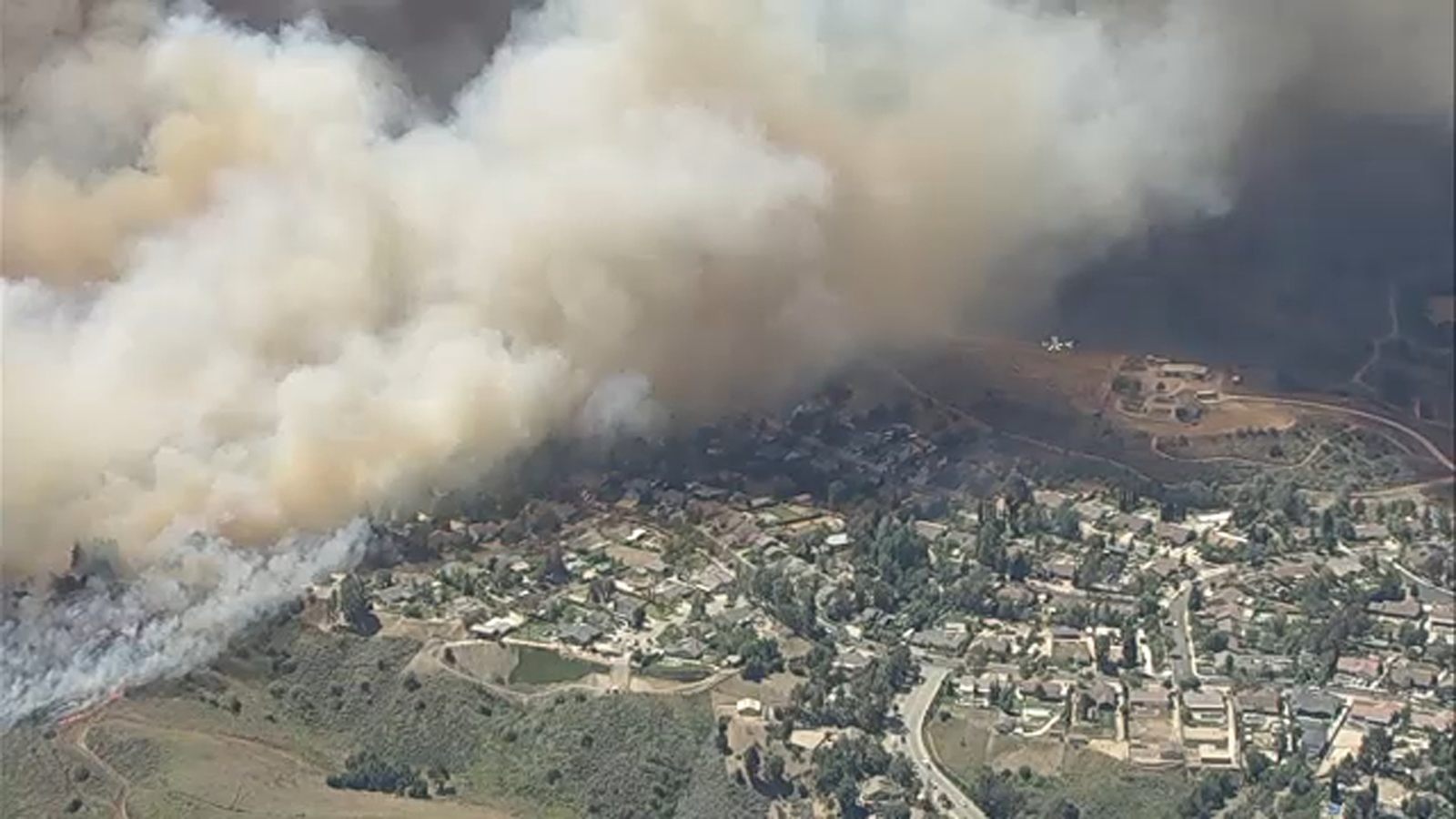
Three air tankers and five helicopters were deployed to battle the Sandy Fire in Simi Valley, with aircraft dropping fire retardant and 1,000-3,000 gallons of water on hot spots. Conditions were strong but not extreme, allowing an aerial response that had been limited in previous fires by excessive winds. The article is operationally informative rather than market-moving.
This is a near-term risk-off event for regional infrastructure names only if the fire escapes containment or the wind regime worsens; otherwise the market impact stays mostly localized and short-lived. The key second-order effect is that aerial suppression capacity is now functioning, which sharply lowers the probability of a multi-day escalation that would have forced broader road closures, utility de-energizations, and emergency procurement spikes. In other words, the “all clear” is not about the fire being solved; it is about the probability distribution shifting away from the tail outcomes that create tradable dislocations.
The more interesting tradeable angle is in municipal/utility and disaster-response suppliers, not the obvious fire-exposed assets. When aerial assets can work early, the damage curve is usually nonlinear: every 24 hours of successful suppression can save weeks of rebuild demand and materially reduce follow-on claims severity. That makes this a potential negative catalyst for insurers and catastrophe-reinsurance breadth only if this remains contained, because the market tends to price the first headline and then fade the probability of a large loss once containment visibility improves.
Contrarian view: the current calm may be fragile because the most dangerous phase is not peak wind but the transition back to sustained hot, dry conditions after initial engagement. If containment lines hold through the next 3-7 days, the event becomes a localized cleanup story; if not, the main losers quickly become regional power/telecom operators facing hardening and repair costs, while emergency services contractors see a temporary demand bump. The consensus likely overweights the immediate firefight and underweights the latent operational risk of utility shutoffs, which can hit commerce and transport even without major acreage expansion.
AI-powered research, real-time alerts, and portfolio analytics for institutional investors.
Request DemoOverall Sentiment
neutral
Sentiment Score
-0.05
